
Whole-system duct and dryer vent check with before-and-after photos - you see exactly what came out of your vents
That "$99 whole-house special" is a bait ad - the real number appears once they are in your hallway, or the "clean" is a shop-vac at the register. We photograph the inside of your ducts before and after instead.
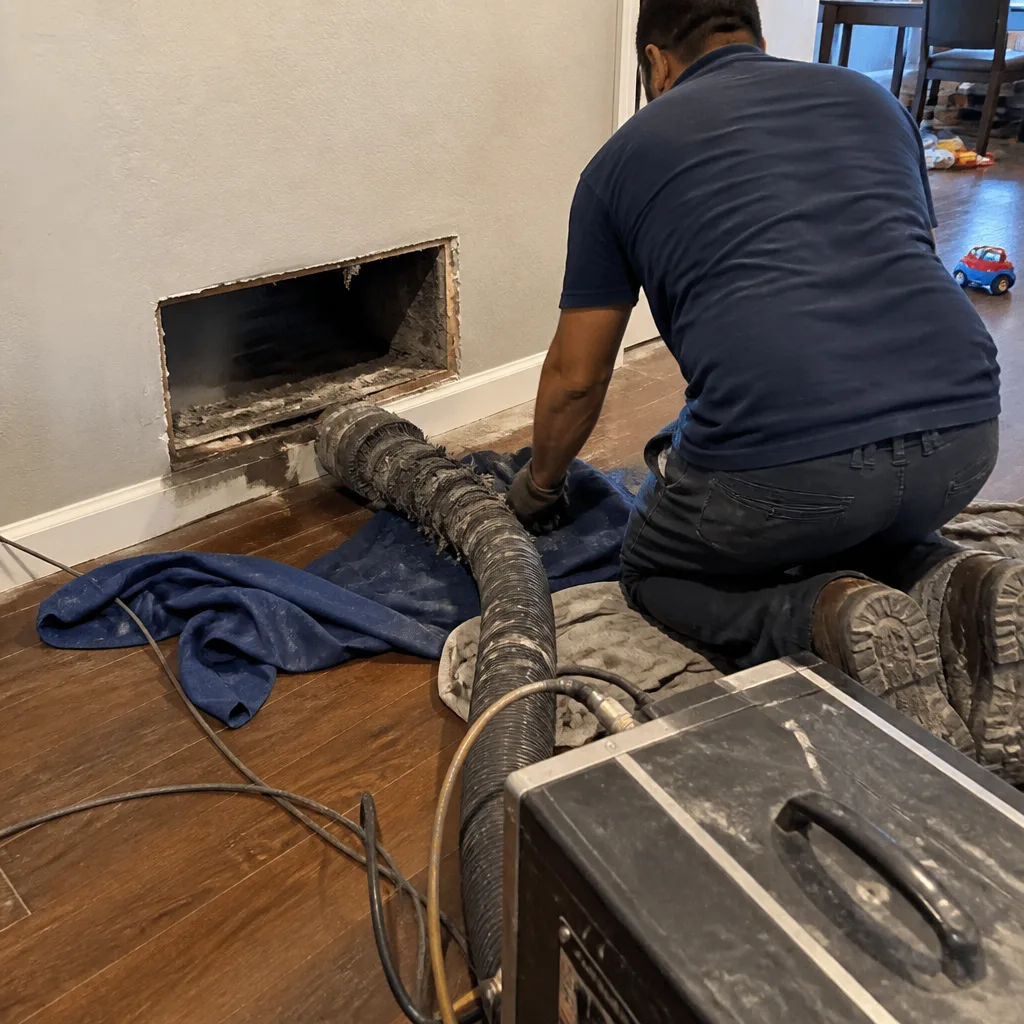 Before
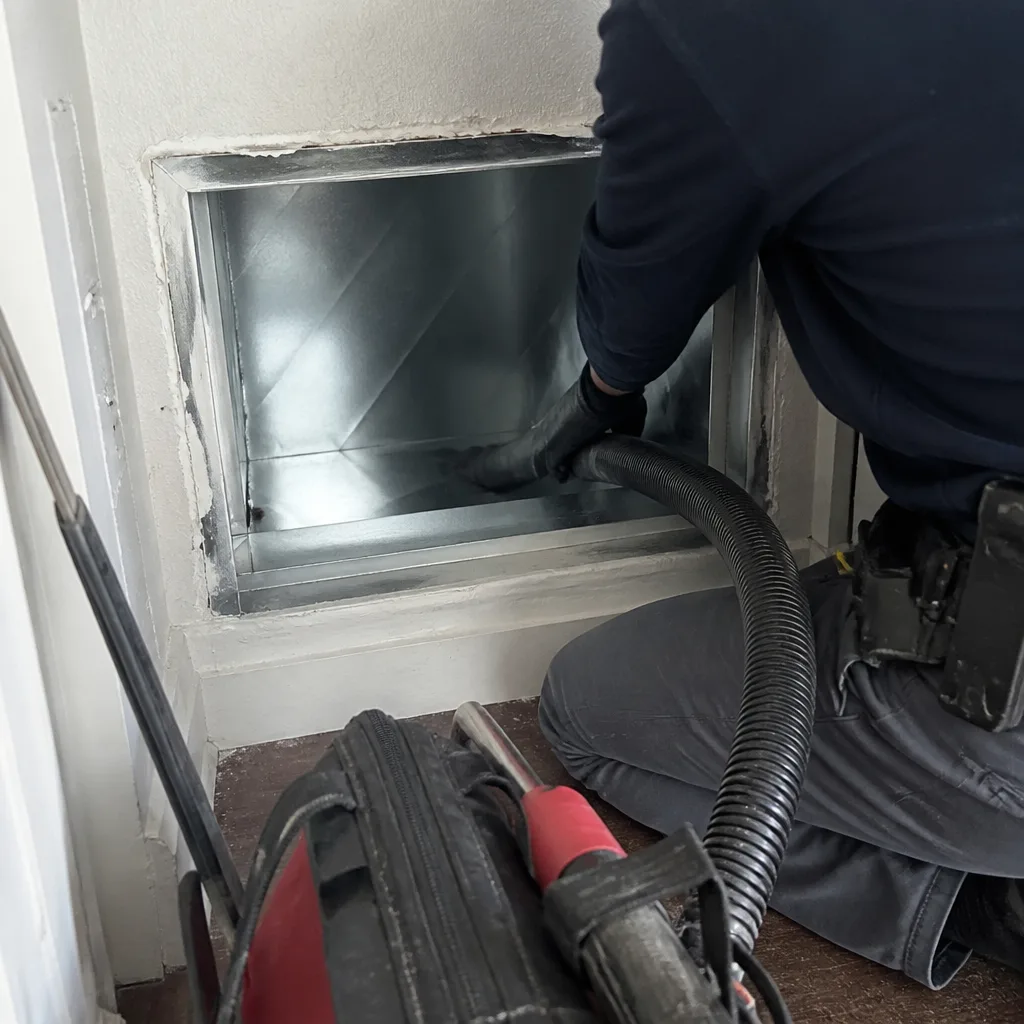 After
After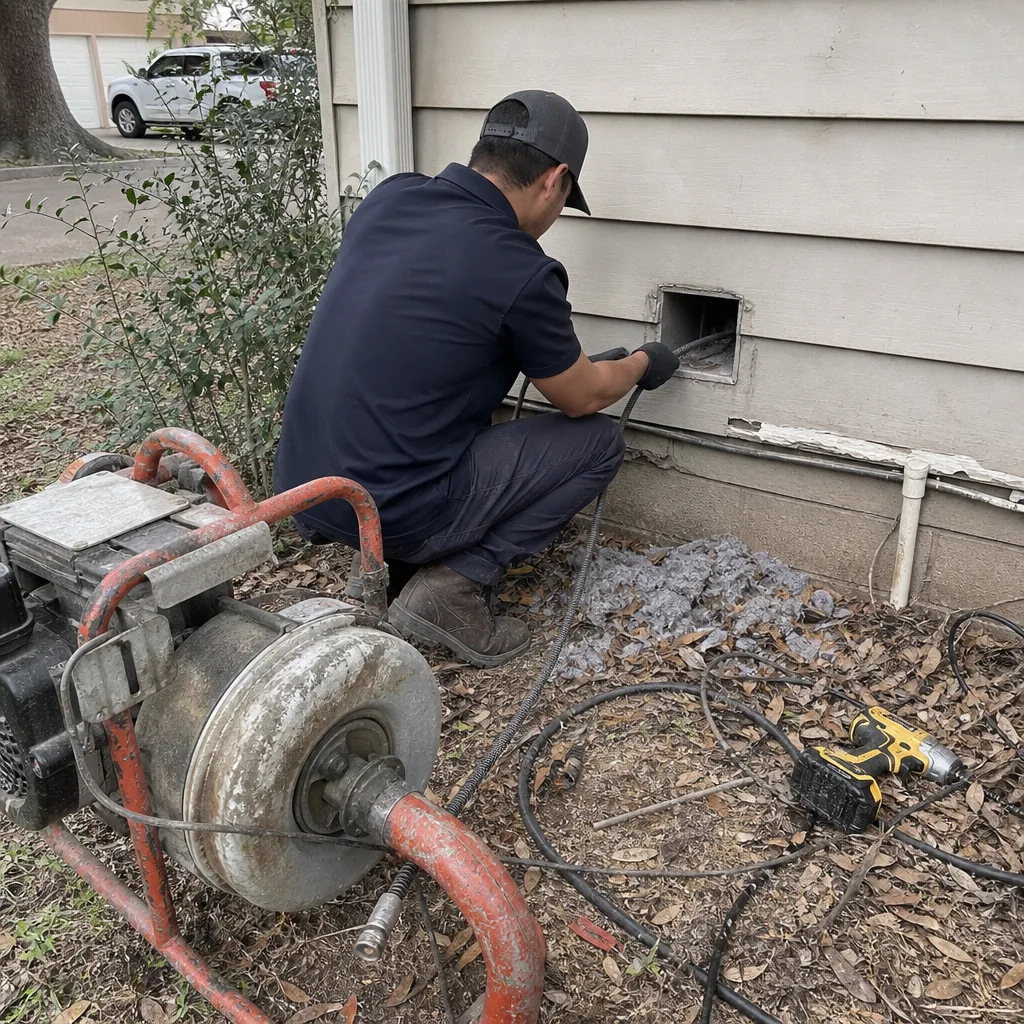 Before
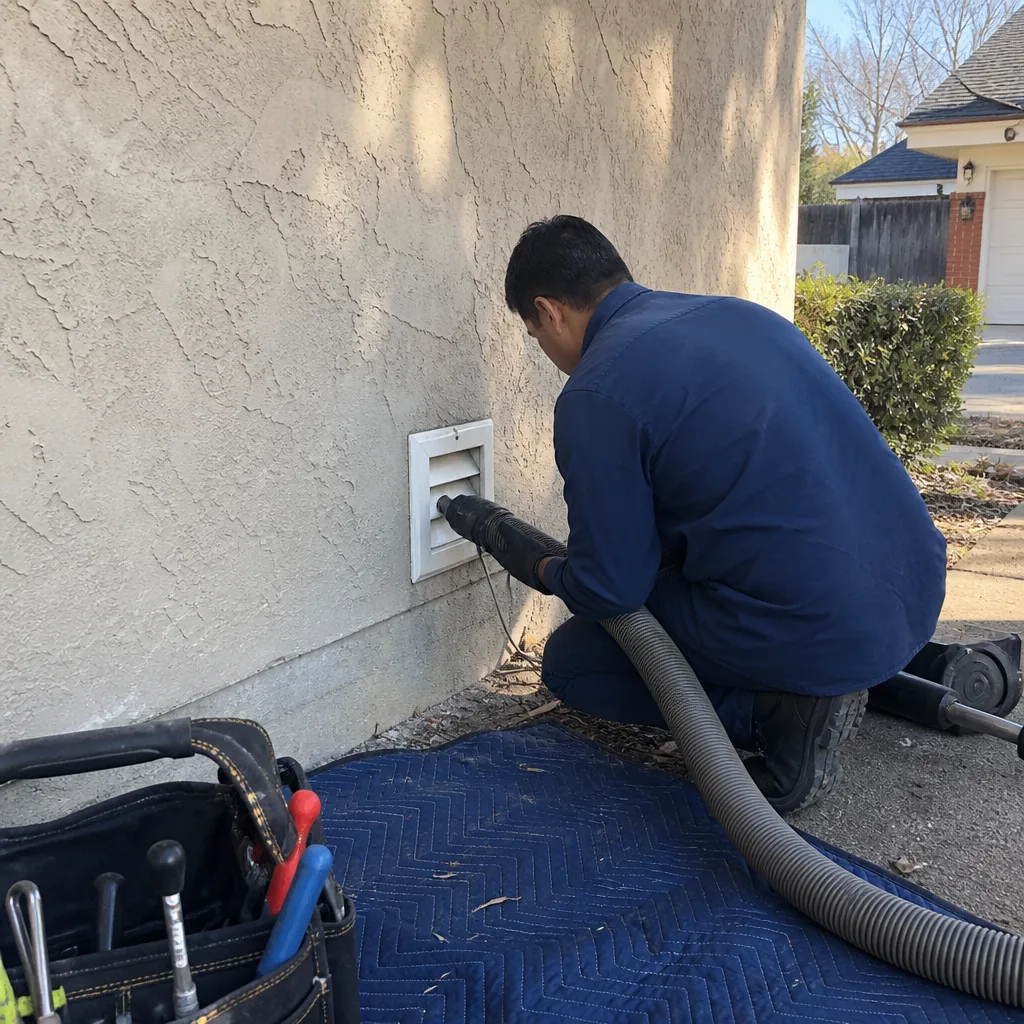 After
After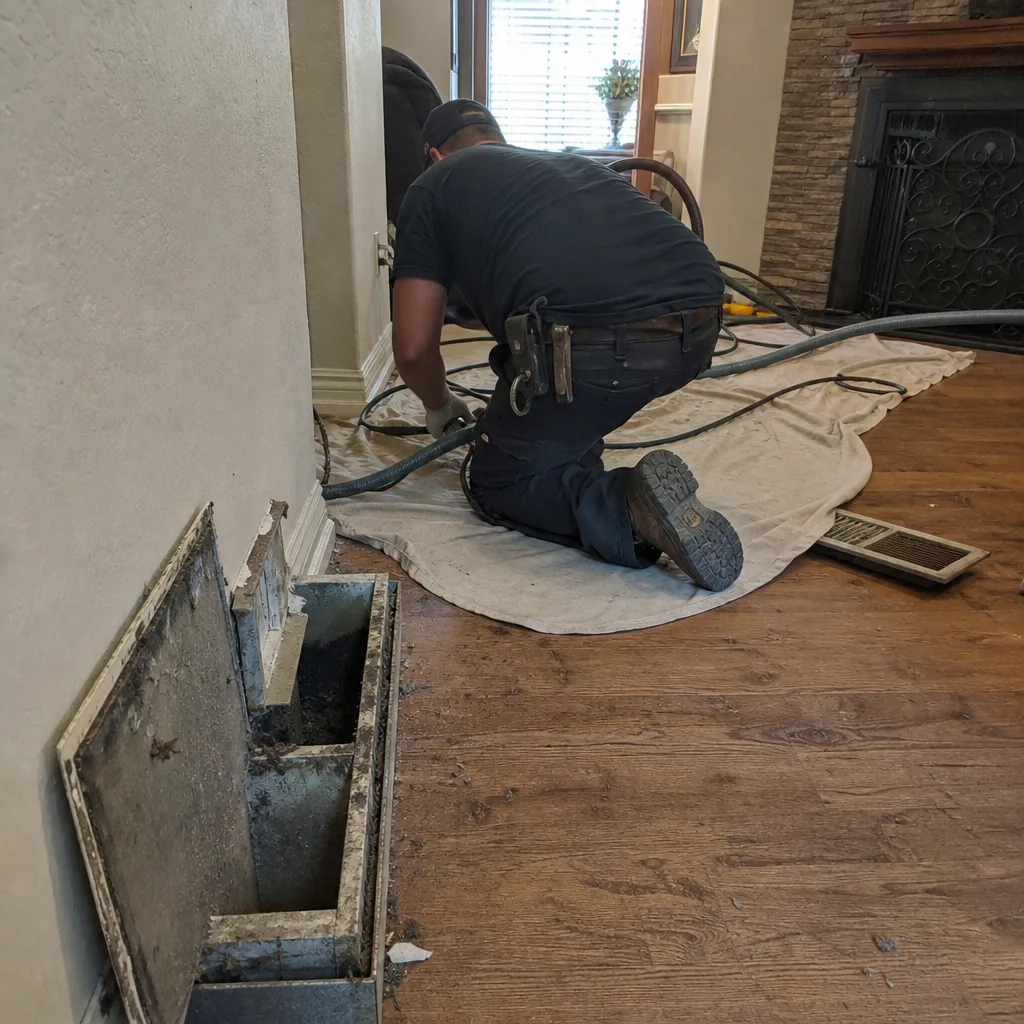 Before
 After
AfterReturn Duct Cleaning in Dallas, TX
Return duct cleaning focuses on the intake side of your HVAC system – the ducts that pull air from your living spaces back to the air handler before it’s conditioned and redistributed. In Dallas, return ducts accumulate dust, pet dander, and fine particulate faster than supply ducts because they’re constantly drawing air in, not pushing it out. Most homeowners don’t realize their return system exists until airflow drops, energy bills climb, or the HVAC tech flags it on a service call.
CleanRun Duct Repair & Cleaning has documented what’s inside Dallas return ducts since 2013 – over 52,000 homes served, every one with a written price before work started and a photo record of every duct run when the crew left. If you want to know what’s actually in your return system before deciding anything, call us at (469) 405-6133. A live person answers every call.
Return duct cleaning is a core part of what we do under Air Duct Cleaning in Dallas – and it’s one of the most frequently overlooked components when other companies quote a cheap visit and run a shop vac past the supply registers.
What Return Ducts Do (and Why They Foul Faster)
Your HVAC system runs in a loop. The Supply Duct Cleaning side pushes conditioned air through registers into each room. The return side pulls that air back – through return grilles, typically located in hallways, ceilings, or central areas – and routes it back to the air handler through a main return plenum. The plenum is the large collection chamber that feeds directly into the blower.
Because return ducts are always under negative pressure – meaning they’re actively drawing air rather than pushing it – they act as a continuous filter for everything airborne in your home. Dust, pet hair, skin cells, pollen, cooking particulate, and anything else floating in your air gets pulled toward those return grilles and deposited along the duct walls, at elbows, and especially around the return plenum. Dallas adds its own variables: the clay soil here generates fine red dust that gets tracked inside constantly, cedar and oak pollen seasons run heavy, and the extended cooling season means the system runs long hours for months at a stretch.
A return duct that hasn’t been cleaned in five or more years often shows a compacted debris layer at the first elbow behind the grille, another accumulation where the duct narrows before the plenum, and a felt-like coating along the plenum walls. The filter catches some of it – but filters are rated to protect the air handler’s mechanical components, not to stop every particle from contacting the duct walls upstream.
When You Need Return Duct Cleaning
- Visible dust on return grilles within days of cleaning them. If you wipe a return grille and it’s visibly dusty again inside a week, the duct behind it is shedding buildup back toward the opening every time the system cycles. This is common in older Oak Cliff and East Dallas homes where ductwork has never been professionally cleaned.
- Reduced airflow at supply registers across the house. When the return side is restricted by buildup, the blower works harder to pull the same volume of air. The result shows up as weaker airflow at supply registers – rooms that used to cool quickly in a Dallas July that now take significantly longer.
- HVAC system short-cycling or running longer than expected. A partially blocked return forces the system to strain for air volume. If your air handler is starved for return air, it may shut off on a safety limit before finishing a cooling cycle, then restart – wasting energy and adding wear to the equipment.
- Recent renovation work in the home. Drywall dust, insulation fibers, and construction debris are particularly dense and don’t behave like ordinary household dust. After any remodel in a Dallas home – even work limited to one room – return ducts should be inspected. The negative pressure in the return system pulls fine particles from every connected space.
- New pets, or an increase in occupant load. Pet dander and hair load the return system faster than almost anything else. A single medium-sized dog can meaningfully shorten the interval between return duct cleanings, particularly in homes with hard-surface floors where dander stays airborne longer.
- Post-occupancy gap – buying a resale home with no service records. A significant share of the homes we clean in Preston Hollow, Lakewood, and M Streets are resale properties where the buyers simply don’t know what was done to the system before they arrived. If there’s no record, the return ducts should be inspected as a baseline.
BeforeAfterOur Return Duct Cleaning Process
- Written scope and price before any panel comes off. Under Haven Standard Clause 1, every job starts with a written price. We look at your system’s configuration – number of return runs, plenum size, access points, and any visible concerns at the grilles – and give you a fixed number in writing. There is no situation at CleanRun where “call for a quote” is an acceptable answer. You see the price before you see a single tool come out of the truck.
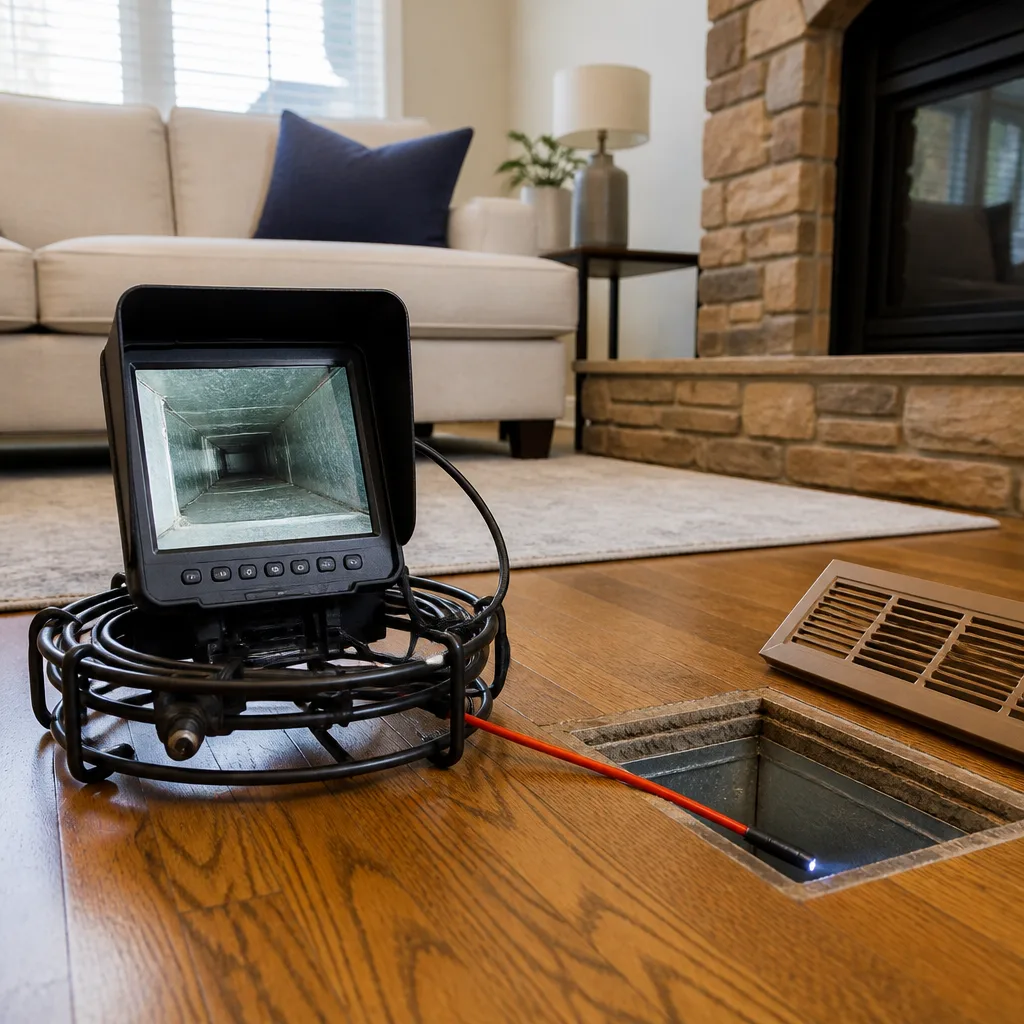
- Pre-cleaning camera documentation. Before any cleaning equipment touches your return ducts, our technician photographs inside each return run. The camera shows what’s actually there: the depth of debris at the first elbow, any visible microbial growth, insulation deterioration, or collapsed liner sections. These pre-cleaning images are the first half of your Documented Photo Record – the baseline that makes the after photos meaningful. This practice has been part of every CleanRun job since 2013.
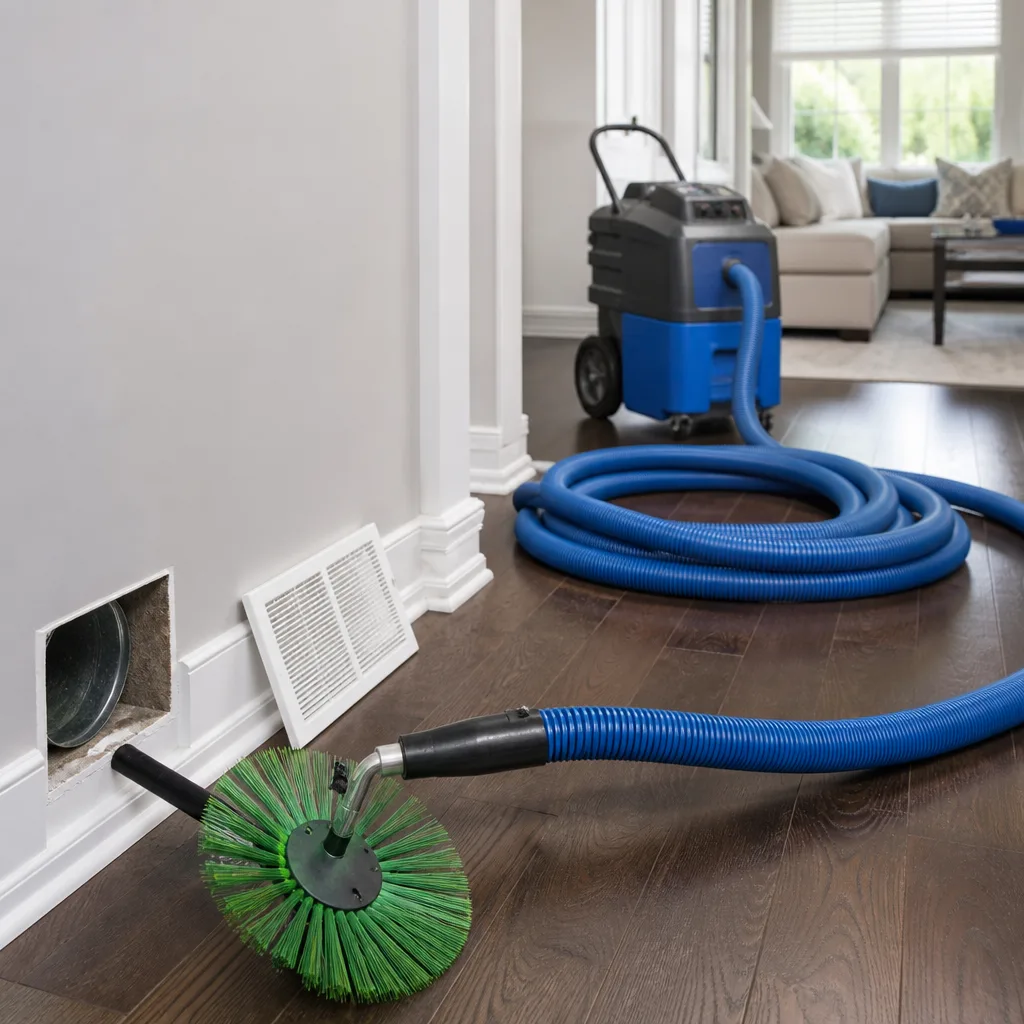
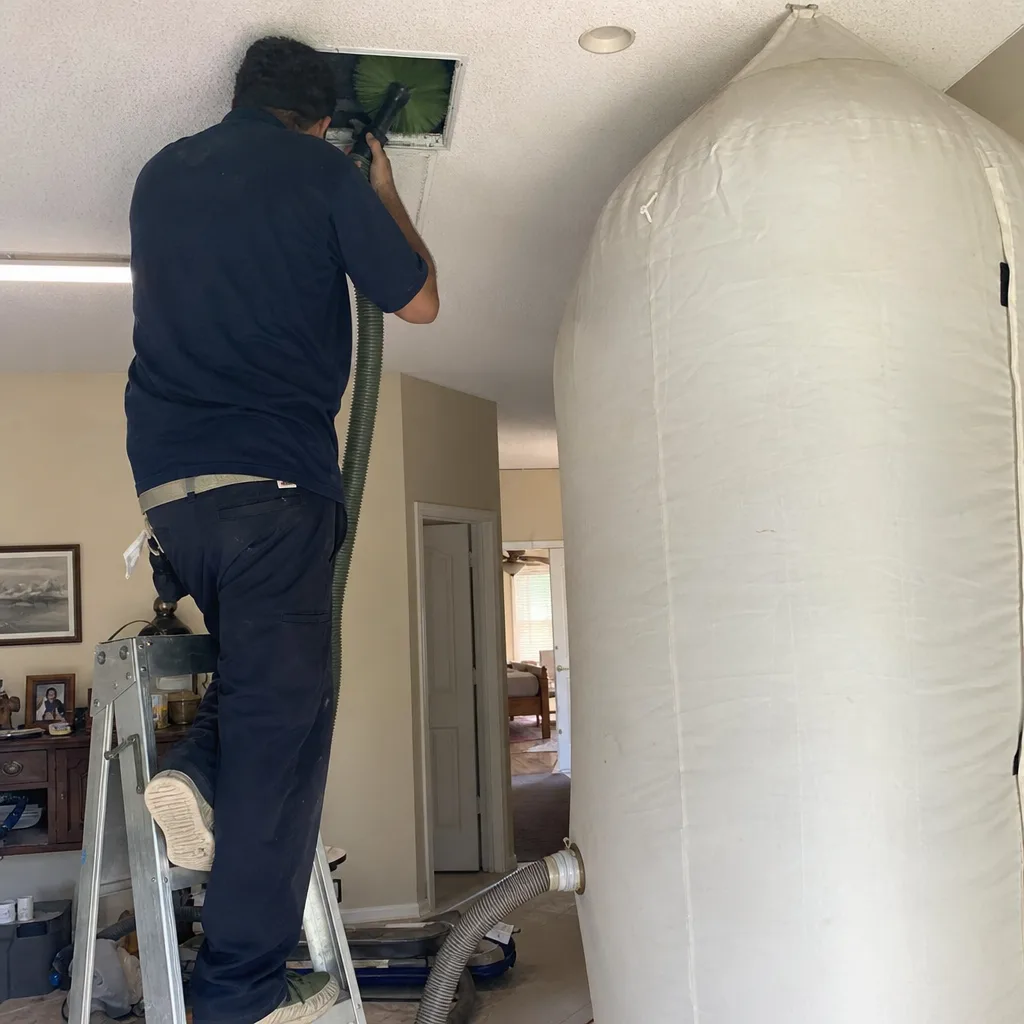
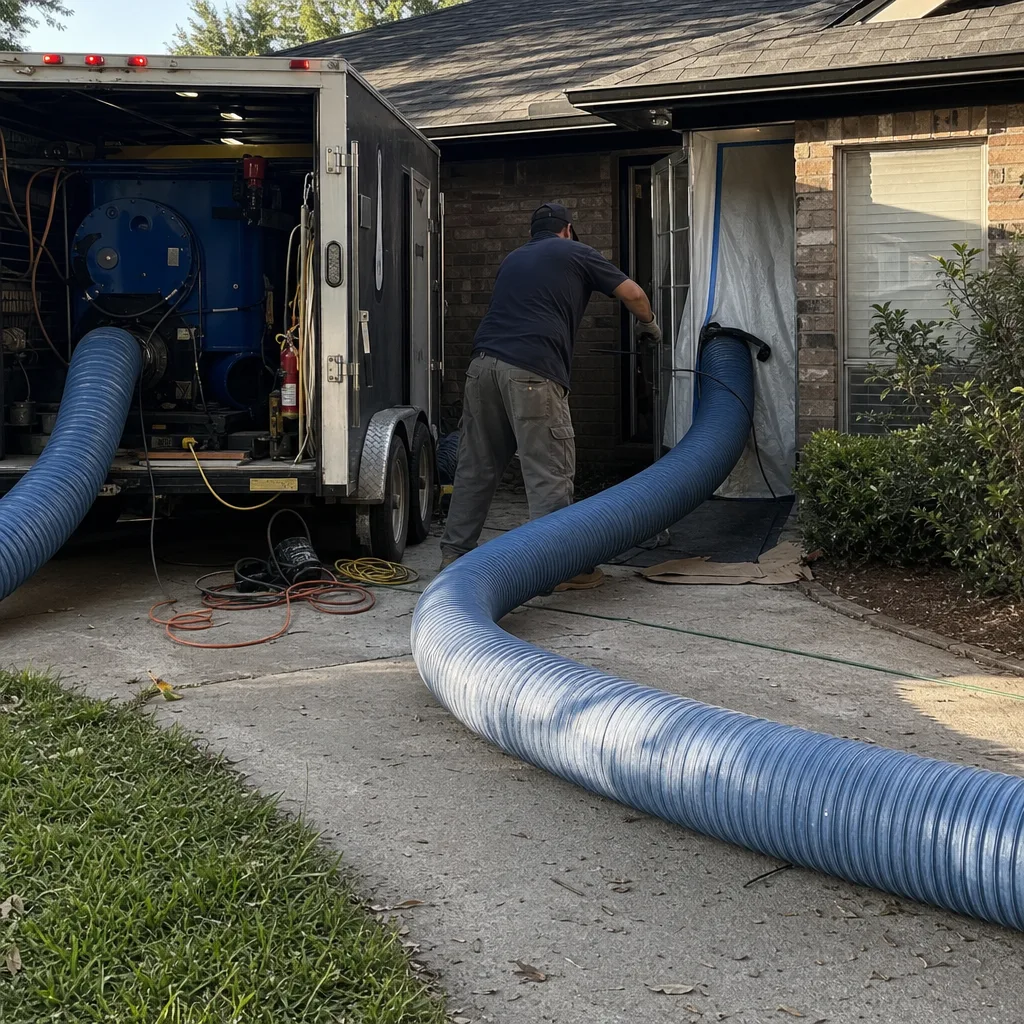
- Negative-pressure extraction setup. Negative-pressure extraction means we connect a high-capacity vacuum unit to the return system and place the ductwork under suction before any agitation begins. This matters because it contains what we’re dislodging – debris that gets broken loose goes toward the vacuum, not back into your living space. We use Nikro extraction equipment, which is purpose-built for duct cleaning, not adapted from another trade.
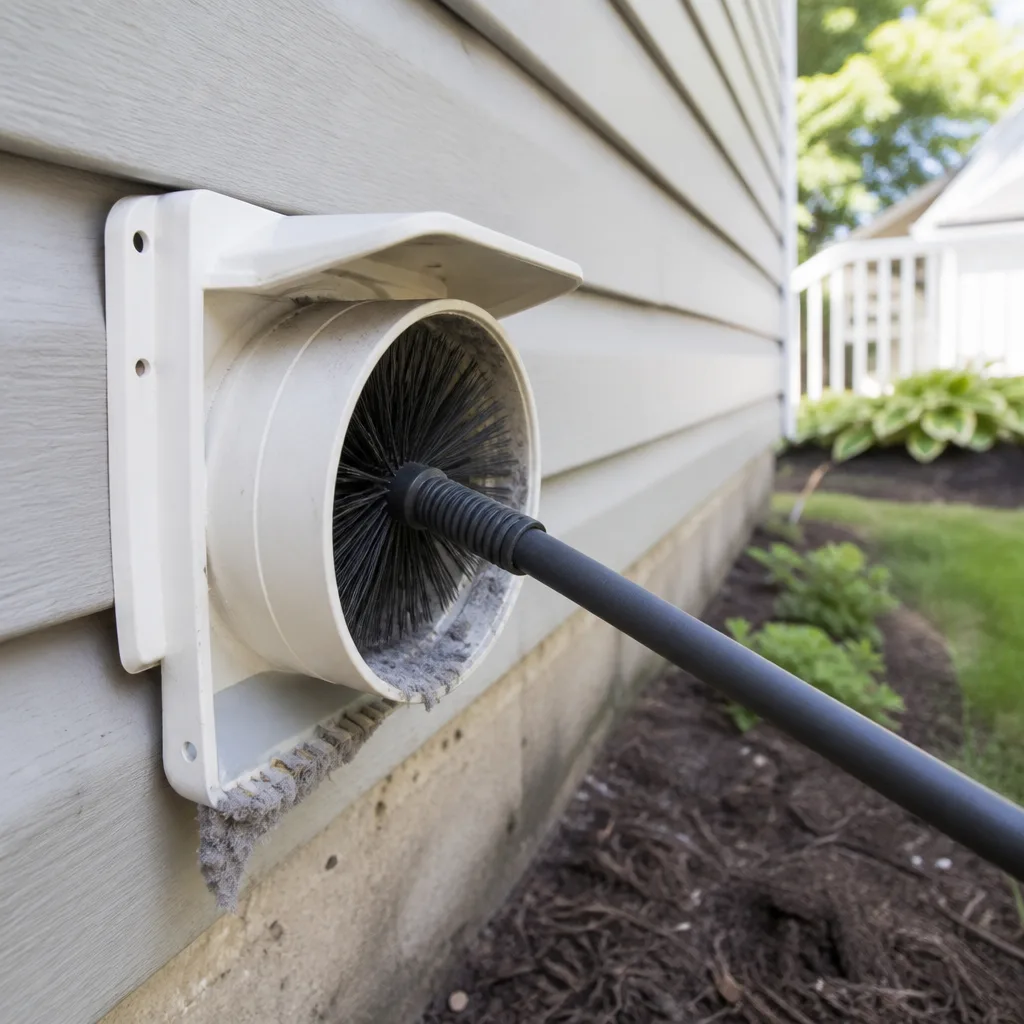
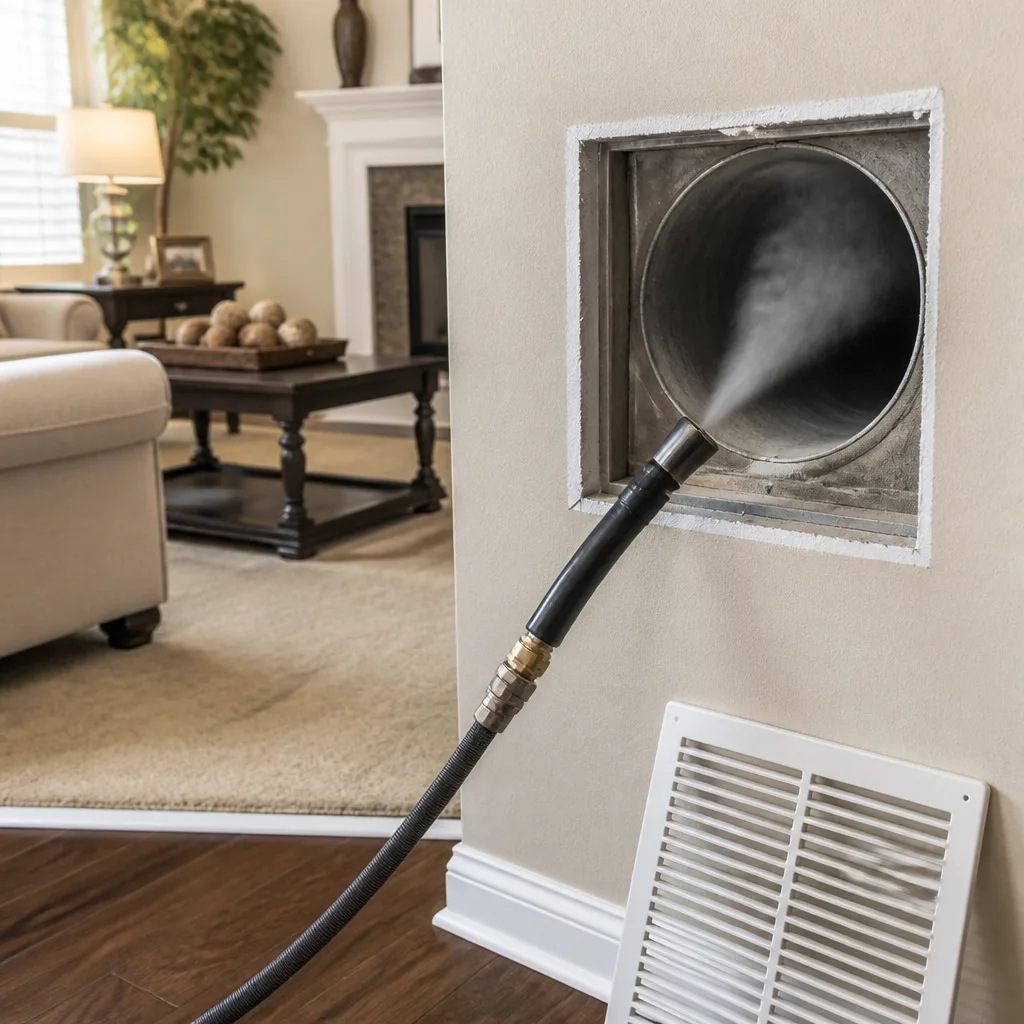
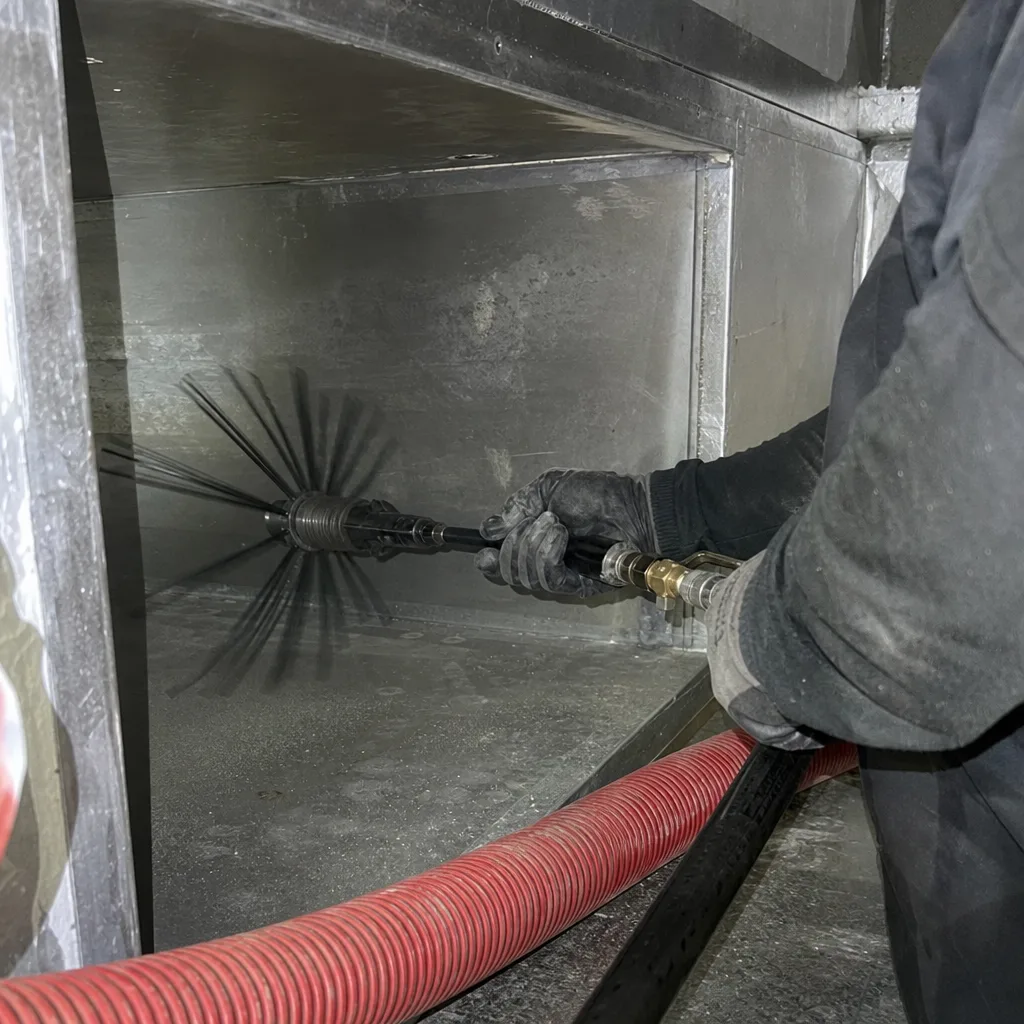
- Mechanical agitation through each return run. With negative pressure established, we work through each return duct run using rotary brush agitation. The brushes break the bond between accumulated debris and the duct wall – a bond that suction alone won’t reliably sever after years of compaction. We work from the register end toward the plenum, so debris moves in the direction of the extraction unit throughout the process.
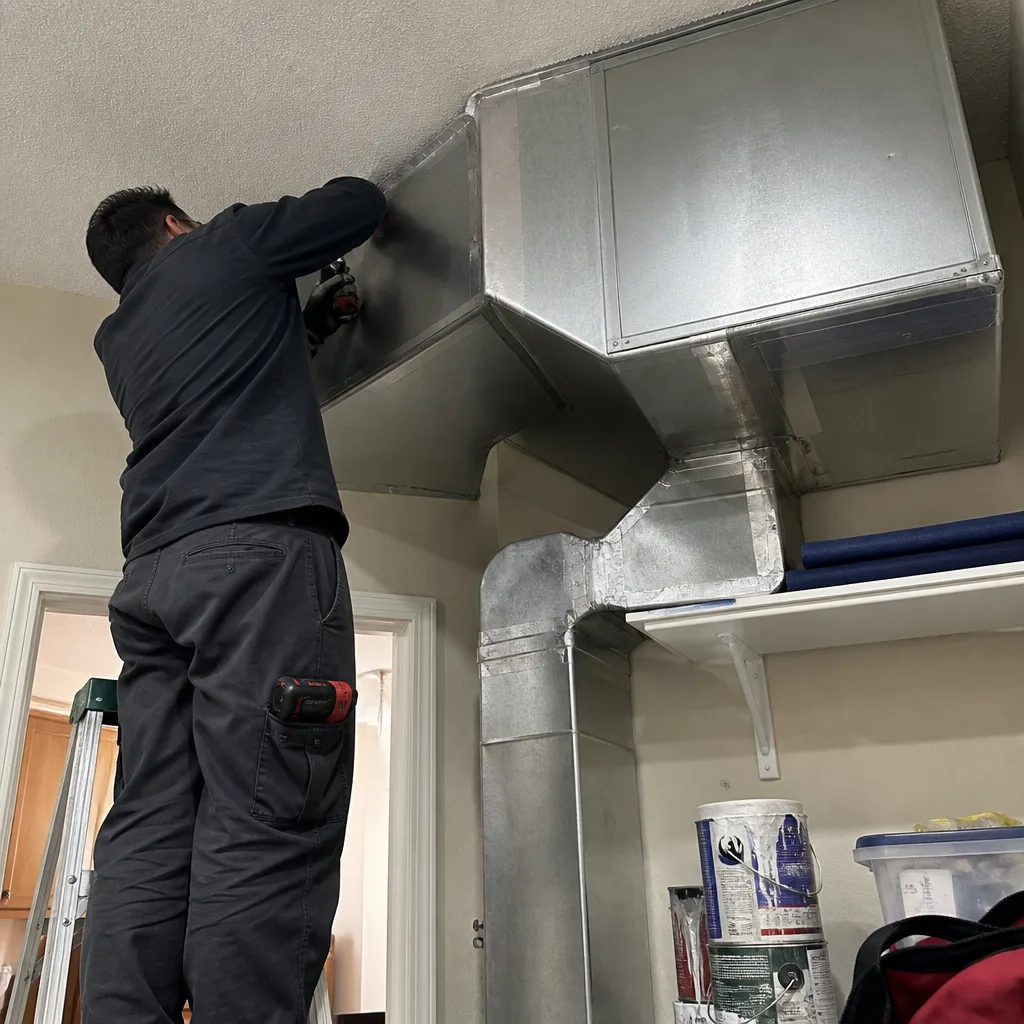
- Plenum cleaning and inspection. The return plenum – the main collection chamber that connects your return runs to the air handler – typically holds the heaviest accumulation in the system. It’s cleaned separately using access panels, inspected for liner integrity, and photographed. If we find a condition at the plenum that affects your air handler directly (a collapsed section, rodent activity, moisture), we note it in writing as part of the job record before recommending anything further.
- Post-cleaning photo record delivery. After the crew packs up, you receive the complete Documented Photo Record: before and after images of every return run and the plenum, the written scope of work completed, and your 365-Day Done Right Promise in writing. If anything we cleaned isn’t right within 365 days, we make it right – that’s a written commitment on the job record, not a policy subject to manager approval.
Return Duct Cleaning Pricing in Dallas
Return duct cleaning in Dallas typically runs between $180 and $420 for a standard residential system, depending on the factors below. See How Much Does Air Duct Cleaning Cost? (2026 Price Guide) - Dallas, TX for full pricing details. These are real market numbers for the Dallas area – not a bait price designed to get a truck in your driveway before the upsells begin. Your written price will be within this range unless your system has unusual access conditions or scope, in which case we tell you that before work starts.
| Factor | Typical Effect on Price |
|---|---|
| Number of return runs | Most Dallas homes have 2-6 return runs; each additional run adds to scope |
| Plenum size and access | Larger or obstructed plenums require more time; written upfront |
| Debris load and last cleaning date | Heavy buildup (5+ years, never cleaned) takes longer to clear |
| Combined with supply-side cleaning | Bundled full-system cleaning typically reduces per-component cost |
| System age and duct material | Older flex duct requires more careful agitation technique; may affect time |
There is no situation where you’ll be handed a different number at the end of the job than the one you agreed to in writing at the start. Haven Standard Clause 1 – written upfront pricing on every job – applies without exception. If you have a written estimate from another company, bring it. Our Free Second Opinion puts CleanRun’s number next to theirs in writing, at no cost to you.
To get your written price, call (469) 405-6133. A live person answers every call – no voicemail, no callback queue.
What the Camera Shows in Dallas Return Ducts
Dallas has specific conditions that show up predictably in return duct inspections. Homes built during the late 1980s and 1990s building boom in areas like Plano, Richardson, and Garland often have flex duct return runs that have partially collapsed at the bends over time – the inner liner sags, narrows the passage, and the restricted area collects debris at an accelerated rate. The Video Inspection shows this as a crescent-shaped accumulation at the constriction point.
In older central Dallas homes – particularly those in Lakewood and the M Streets where original construction dates to the 1940s and 1950s – we regularly find galvanized steel return ducts with decades of undisturbed buildup. The debris in these systems is often compacted enough that it doesn’t respond to suction alone. The mechanical agitation step exists specifically for cases like these.
Homes in North Dallas with multiple stories frequently have return runs that pass through unconditioned attic space before reaching the air handler. In a Dallas summer, that attic runs well above 130 degrees. The temperature cycling that duct passes through over years causes liner materials to degrade faster than in conditioned spaces, and the debris profile inside often includes fine insulation particles alongside the typical dust and dander.
Every one of these findings gets documented in writing before we discuss what to do about it. That’s how Tomas Reyes built this company from its first job in 2013, and it’s how every CleanRun technician is trained to operate.
The H.A.V.E.N. Standard and Your Return Duct Job
Every CleanRun job – including return duct cleaning – operates under the H.A.V.E.N. Standard. The clauses most relevant to a return duct cleaning job are:
- Haven Standard Clause 1 – Written Upfront Pricing: Your price is written and agreed to before any work starts. No exceptions.
- Haven Standard Clause 3 – Verified Crews: Every technician is background-checked and uniformed, and you receive the technician’s name before the truck arrives at your Dallas home.
- Documented Photo Record Standard: Inside every return run, before and after, delivered to you as part of the standard job record – not as an add-on.
- 365-Day Done Right Promise: Written on the job record. If the work isn’t right within 365 days of the service date, CleanRun makes it right.
The equipment used on return duct cleaning jobs includes Nikro extraction units and Abatement Technologies air filtration equipment – professional-grade tools that are independently verifiable by brand name, not described by adjectives we invented.
FAQs – Return Duct Cleaning
What is return duct cleaning, and how is it different from regular duct cleaning?
Return duct cleaning specifically addresses the intake side of your HVAC system – the ducts that pull air from your living spaces back to the air handler. Standard duct cleaning often focuses on supply registers (the vents that blow air out), but return ducts are where the heaviest particulate accumulation typically occurs because they’re under continuous negative pressure. For a complete approach, consider our Air Duct Cleaning services. A full-system cleaning addresses both; return-only cleaning is appropriate when supply ducts were cleaned recently but the return side wasn’t addressed separately. Call (469) 405-6133 and we’ll look at your system configuration before quoting anything.
How much does return duct cleaning cost in Dallas?
Return duct cleaning in Dallas runs between $180 and $420 for most residential systems, depending on the number of return runs, plenum access, and how long it’s been since the system was last serviced. Your written price is delivered before any work begins – Haven Standard Clause 1 means there’s no “call for a quote” here, and no price surprises at the end of the job. Call (469) 405-6133 for your written estimate.
Can I clean my own return ducts, or does it require a professional?
You can vacuum a return grille and the first few inches behind it without any special equipment. Beyond that, effective return duct cleaning requires negative-pressure extraction to contain the debris you’re dislodging – without it, agitating accumulated dust inside a return duct spreads fine particulate into your living space through the return air path. The plenum section behind the air handler also requires access panel work and camera documentation to clean properly. Most homeowners in Dallas who attempt a full return duct cleaning without professional equipment find the air quality in their home gets temporarily worse, not better, during the process.
How often should return ducts be cleaned in a Dallas home?
For most Dallas homes, every 3 to 5 years is a reasonable interval for return duct cleaning – but several local conditions shorten that window. Homes with pets, occupants with respiratory sensitivities, or recent renovation work typically need attention on the shorter end of that range. Homes in high-pollen corridors near the Trinity River greenbelt or in areas with significant construction activity nearby can accumulate return duct debris faster than average. The most reliable way to set your interval is to photograph the return runs at cleaning and compare at the next inspection – which is exactly what the Documented Photo Record allows you to do.
Dallas Neighborhoods We Regularly Serve
CleanRun provides return duct cleaning across Dallas and the surrounding metro. In the city proper, we work regularly in Preston Hollow, Lakewood, Oak Cliff, East Dallas, the M Streets, and Uptown. In the broader Dallas metro, we serve Richardson, Plano, Garland, Irving, Mesquite, and DeSoto, among others. If your home is in the Dallas area and you’re not sure whether we cover your address, call (469) 405-6133 – a live person will confirm immediately.
The CleanRun home has a full service area map if you want to check before calling.
Schedule Your Return Duct Cleaning in Dallas
If you want to know what’s inside your return duct system before deciding anything, that’s exactly how it should work. Call (469) 405-6133 and we’ll set up a time to inspect the system, show you the pre-cleaning camera images, and deliver a written price – in that order, before any work starts. Every call is answered by a live person. Every job comes with a Documented Photo Record and the 365-Day Done Right Promise in writing.
That’s what 52,000 Dallas-area homes have received since 2013. Yours gets the same.
Written by Tomas Reyes, Owner at CleanRun Air Duct Cleaning Dallas, serving Dallas since 2013.