
Last updated September 23, 2026
Whole-system duct and dryer vent check with before-and-after photos - you see exactly what came out of your vents
That "$99 whole-house special" is a bait ad - the real number appears once they are in your hallway, or the "clean" is a shop-vac at the register. We photograph the inside of your ducts before and after instead.
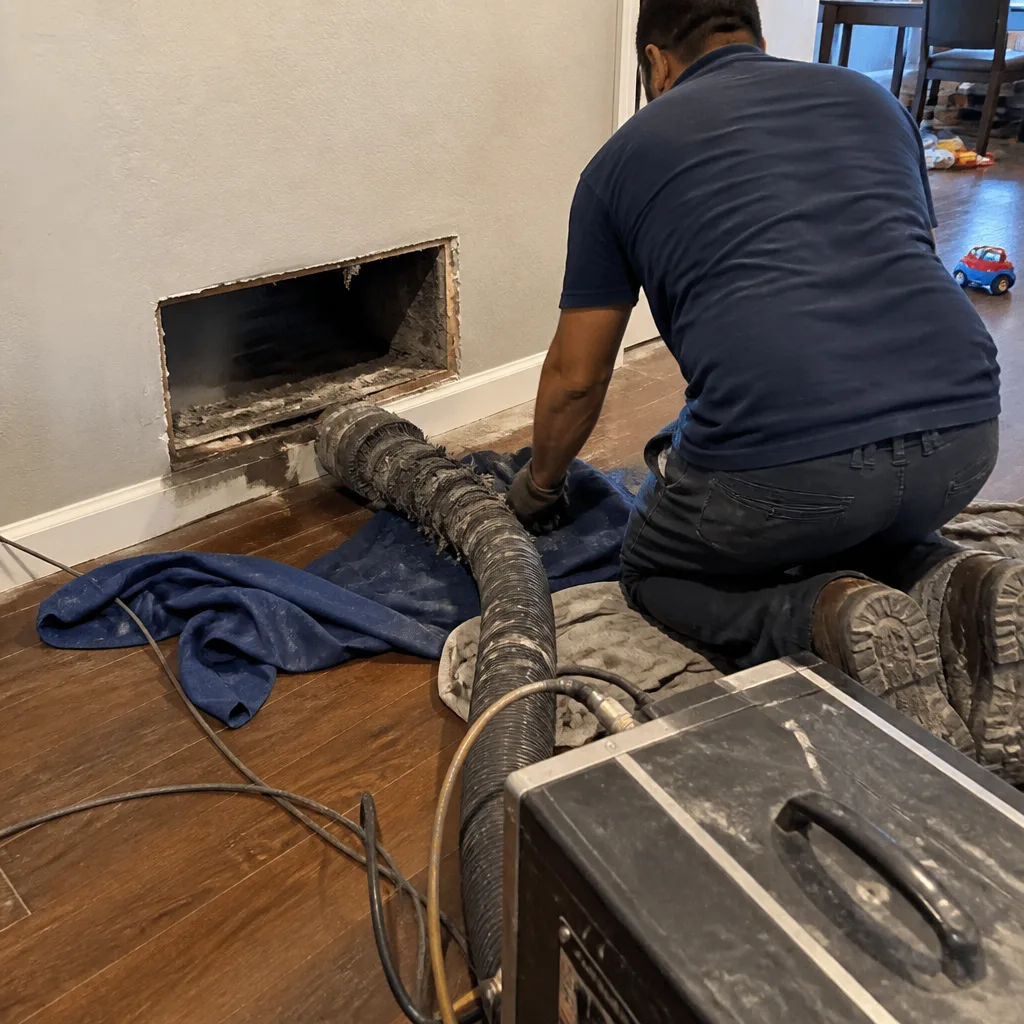 Before
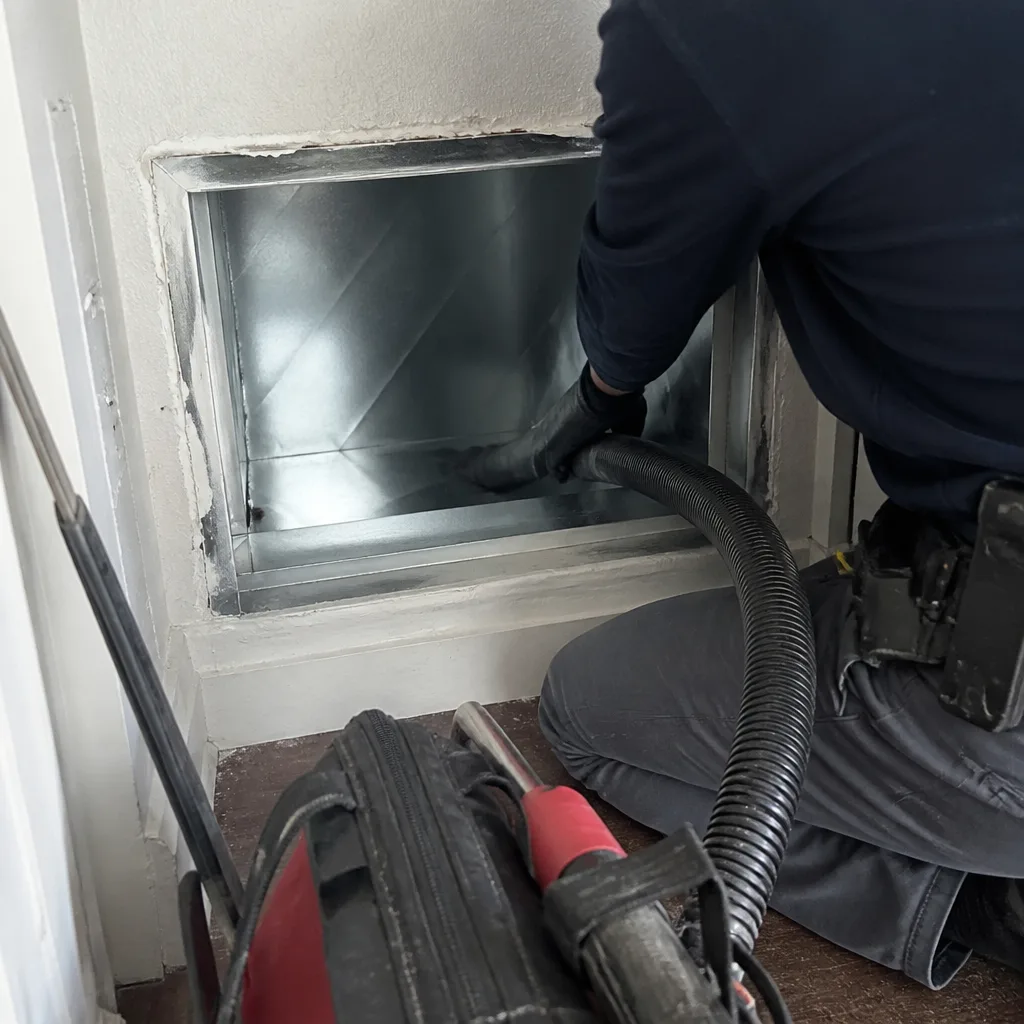 After
After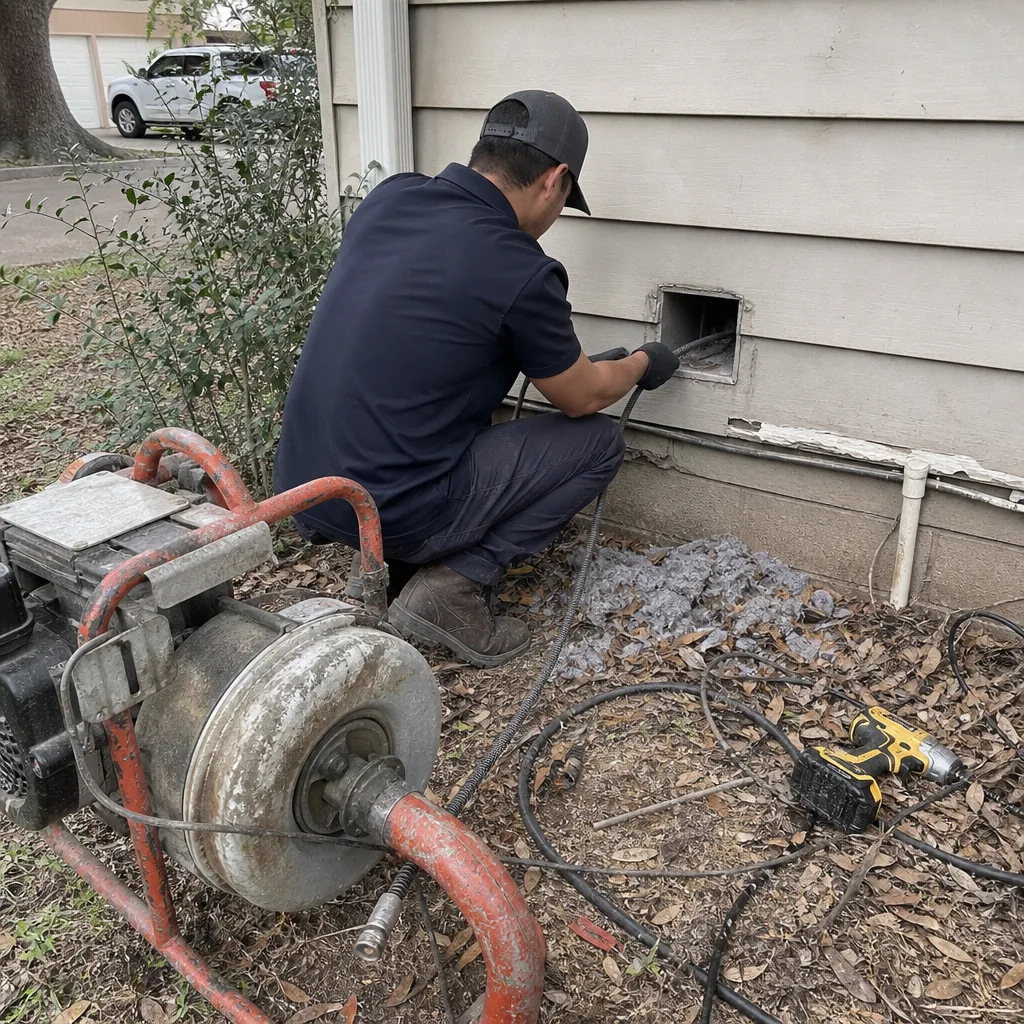 Before
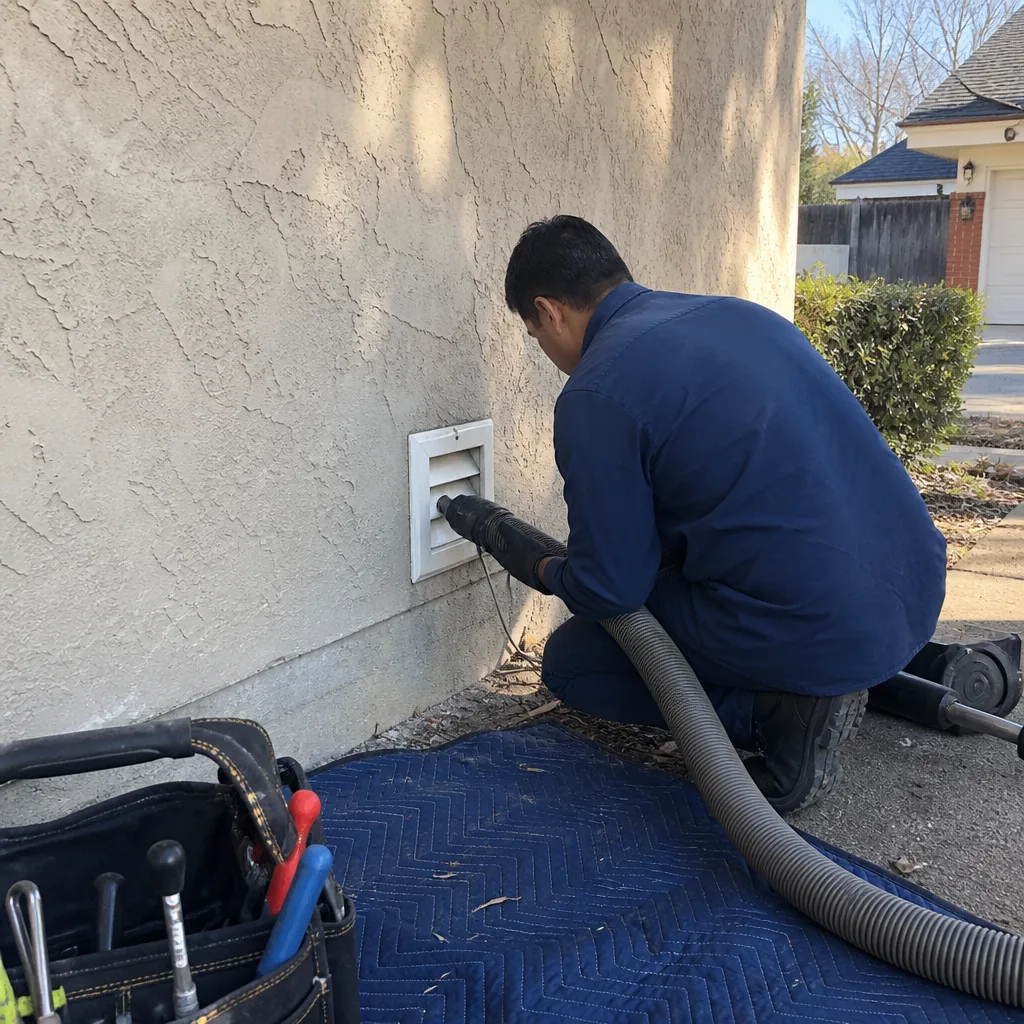 After
After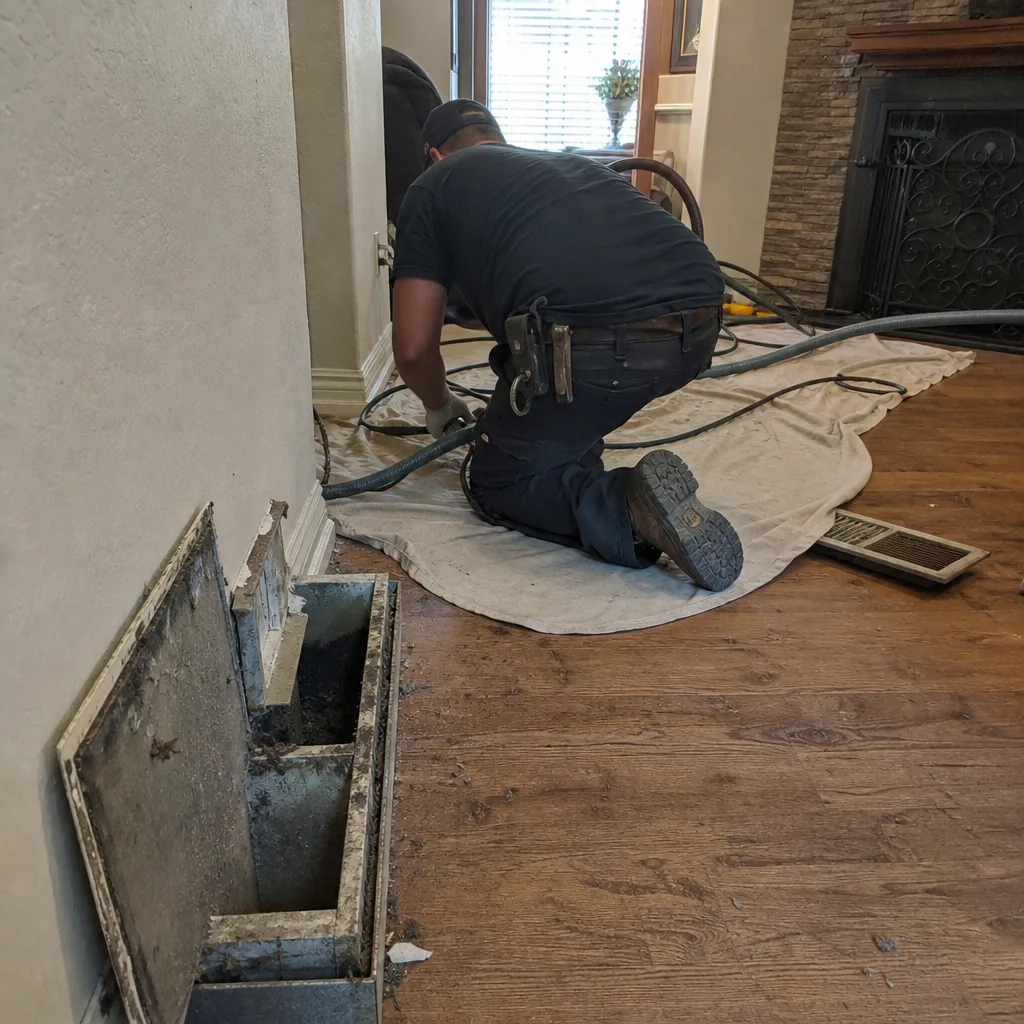 Before
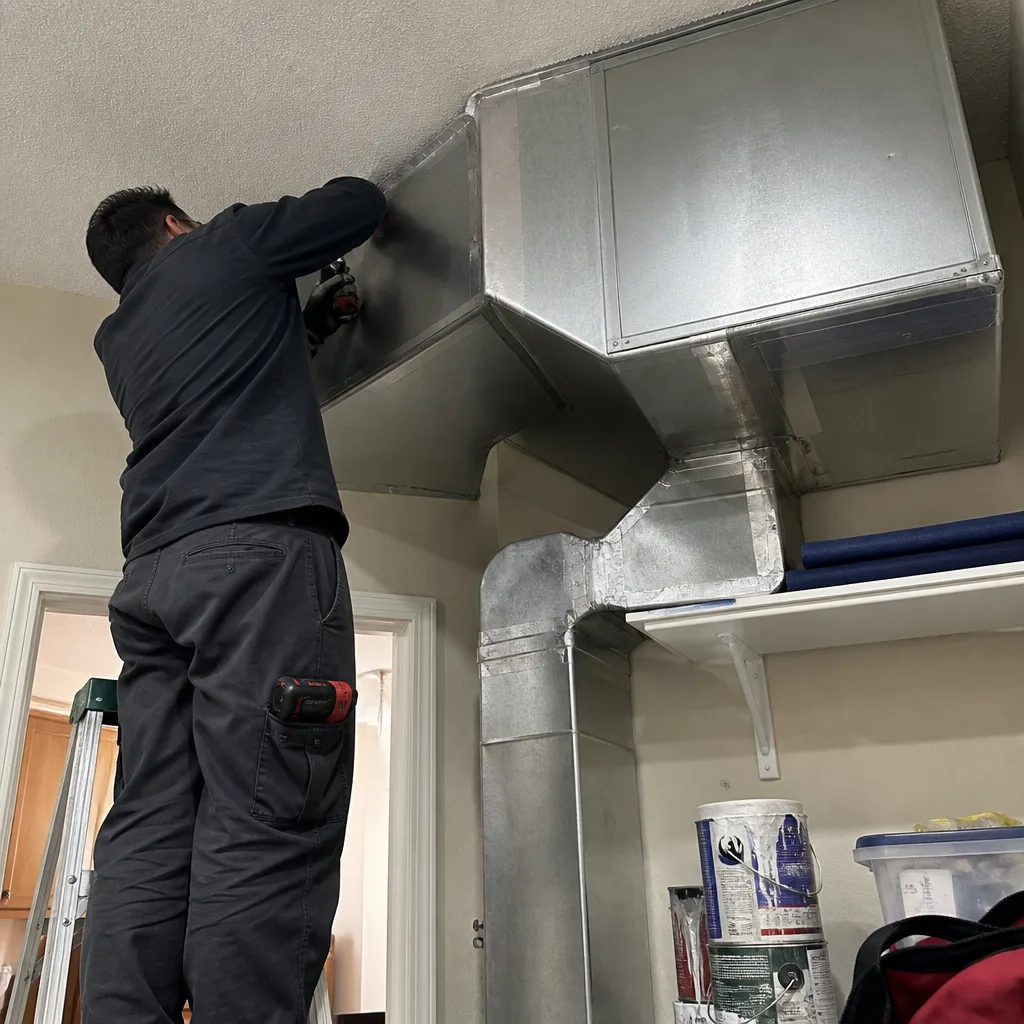 After
AfterAir Duct Cleaning Permits, Codes & Inspections in TX: What You Need to Know
Here’s the clean answer most Texas contractors won’t give you upfront: air duct cleaning itself requires no permit under Texas state law or Dallas city code. But in our experience across 52,000+ homes since 2013, the cleaning process reveals damage that does require permitted repair work, and homeowners regularly discover this distinction only after a crew has already cut into their duct board. In Dallas’s 2015-2025 housing stock, particularly in neighborhoods like Lake Highlands and Bishop Arts where rapid construction stressed HVAC systems, we’ve documented plenum separations and trunk line failures that triggered permit requirements mid-job. This guide and our Complete Guide to Air Duct Cleaning in Dallas explain exactly where the line falls between maintenance and mechanical alteration, what the Texas Mechanical Code demands, and how to protect yourself from unpermitted work that surfaces at resale.
Quick Answer
Air duct cleaning in Texas does not require a permit because it qualifies as routine maintenance under the Texas Mechanical Code. However, duct repair, sealing with code-compliant materials, plenum replacement, or any modification to the mechanical system does require permitting through your local Authority Having Jurisdiction, which in Dallas is the City of Dallas Development Services Department. The critical distinction: if a tool cuts, fastens, or replaces a component rather than extracting debris, the work likely crosses into permitted territory.
Table of Contents
- What the Texas Mechanical Code Actually Says About Duct Work
- Dallas’s Authority Having Jurisdiction: What’s Exempt vs. What’s Not
- The Cleaning-to-Repair Pipeline: Where Most Homeowners Get Surprised
- Code-Compliant Materials vs. What’s Prohibited in Texas
- How to Ask a Contractor Whether Repair Work Will Be Permitted
- The Resale Risk: Unpermitted Duct Work and Buyer Inspections
- What Documentation You Should Receive for Any Duct Work
- Common Mistakes to Avoid
- When to Call a Professional
- Frequently Asked Questions
- The Bottom Line
BeforeAfterWhat the Texas Mechanical Code Actually Says About Duct Work
The Texas Mechanical Code (TMC), adopted from the International Mechanical Code with Texas amendments, governs all mechanical systems in the state. For homeowners, the relevant sections fall in Chapter 6: Duct Systems, with critical cross-references to Chapter 3 on general requirements for materials and installation.
TMC Section 603.1 establishes that all duct systems shall be constructed and installed in accordance with the code. More specifically, Section 603.2 mandates that duct sealing materials must meet UL 181 standards for closure systems, and Section 603.9 requires that all joints, longitudinal and transverse, be securely fastened and sealed in accordance with the manufacturer’s installation instructions. This is where the permit line becomes visible: cleaning debris from inside a duct run does not alter the system’s construction or installation. Replacing a section of duct board, resealing disconnected joints, or modifying a trunk line to improve airflow does.
The TMC also incorporates Section 304.1, which requires permits for “the installation, alteration, repairs, relocation, replacement, addition to, or use of” mechanical systems. The exemption for routine maintenance appears in the administrative provisions, which exclude “minor repairs” from permitting. But “minor repairs” in the TMC context means fixing a register or replacing a filter, not reconstructing a plenum or splicing a trunk line.
In Dallas, where summer design temperatures reach 99°F and winter lows dip to 23°F, the TMC’s duct sealing requirements carry particular weight. A separated return plenum in a Lakewood home doesn’t just leak conditioned air; it pulls 140°F attic air into the system during July, straining equipment and spiking energy bills. When we document these conditions with our camera systems, the repair work required to bring the system to code-compliant operation almost always exceeds the maintenance exemption.
Key TMC sections every homeowner should recognize:
- Section 603.2: Duct sealing materials must be UL 181-listed. Standard cloth duct tape, the kind sold at hardware stores, does not qualify.
- Section 603.4: Duct insulation must be installed in accordance with the energy conservation code, with specific R-value requirements for Dallas’s climate zone.
- Section 603.10: Flexible ducts cannot exceed 14 feet in length and must be fully extended, not compressed, when installed.
- Section 304.1: Permits required for installation, alteration, repair, relocation, or replacement of mechanical systems.
The TMC is enforced locally, which means Dallas can adopt amendments. The city has done so for energy conservation requirements but has not broadened the maintenance exemption for mechanical work. What Dallas has done, which affects every homeowner in Preston Hollow, Oak Cliff, or the Design District, is require licensed mechanical contractors to pull permits for any work beyond cleaning.
Dallas’s Authority Having Jurisdiction: What’s Exempt vs. What’s Not
The Authority Having Jurisdiction (AHJ) in Dallas is the City of Dallas Development Services Department, specifically its Building Inspection division. For mechanical work, the AHJ interprets the TMC, issues permits, conducts inspections, and maintains the official record of permitted work on your property.
Understanding what Dallas considers exempt requires reading both the city ordinance and the state code together. The city’s Building Code, which incorporates the TMC by reference, does not create a separate maintenance exemption beyond what the state provides. This means Dallas follows the TMC’s framework: cleaning is maintenance, repair is construction.
Here’s where Dallas homeowners specifically encounter confusion. The city offers a Homeowner’s Permit for certain residential work, allowing property owners to act as their own general contractor. However, mechanical work still requires a licensed mechanical contractor to perform the actual labor, even when the homeowner pulls the permit. A duct cleaning company without a Texas Air Conditioning and Refrigeration Contractor license cannot legally perform duct repair work in Dallas, permit or no permit.
Dallas’s inspection process for permitted mechanical work follows this sequence:
- Permit application: Submitted by the licensed contractor, with scope of work, equipment specifications, and fee payment.
- Rough inspection: Conducted before any insulation or concealment, verifying duct construction, support, and sealing access.
- Final inspection: Conducted after completion, with airflow verification and pressure testing where required by the scope.
The permit record becomes part of your property’s permanent file at 320 E. Jefferson Blvd, accessible to title companies, appraisers, and buyer’s inspectors. This is the record that protects you at resale, or exposes you if work was done without documentation.
Climate factors specific to Dallas make the AHJ’s role consequential. The city’s location in IECC Climate Zone 3 requires R-6 insulation on ductwork in unconditioned spaces, with R-8 preferred for attic runs in the hottest months. When we photograph deteriorated insulation in a North Dallas attic, the repair to bring the system to current code standard typically requires permit and inspection. The AHJ doesn’t negotiate on this; the code specifies the R-value, and the inspector verifies it with a visual check and sometimes infrared imaging.
Neighborhood construction patterns in Dallas also influence what the AHJ sees. Homes built during the 2015-2020 boom, particularly in areas like Trinity Groves and the Medical District, often used flex duct runs near the 14-foot maximum with minimal slack. When cleaning reveals collapsed or crushed sections, replacement requires re-engineering the run length, which triggers permit review for compliance with Section 603.10.
The Cleaning-to-Repair Pipeline: Where Most Homeowners Get Surprised
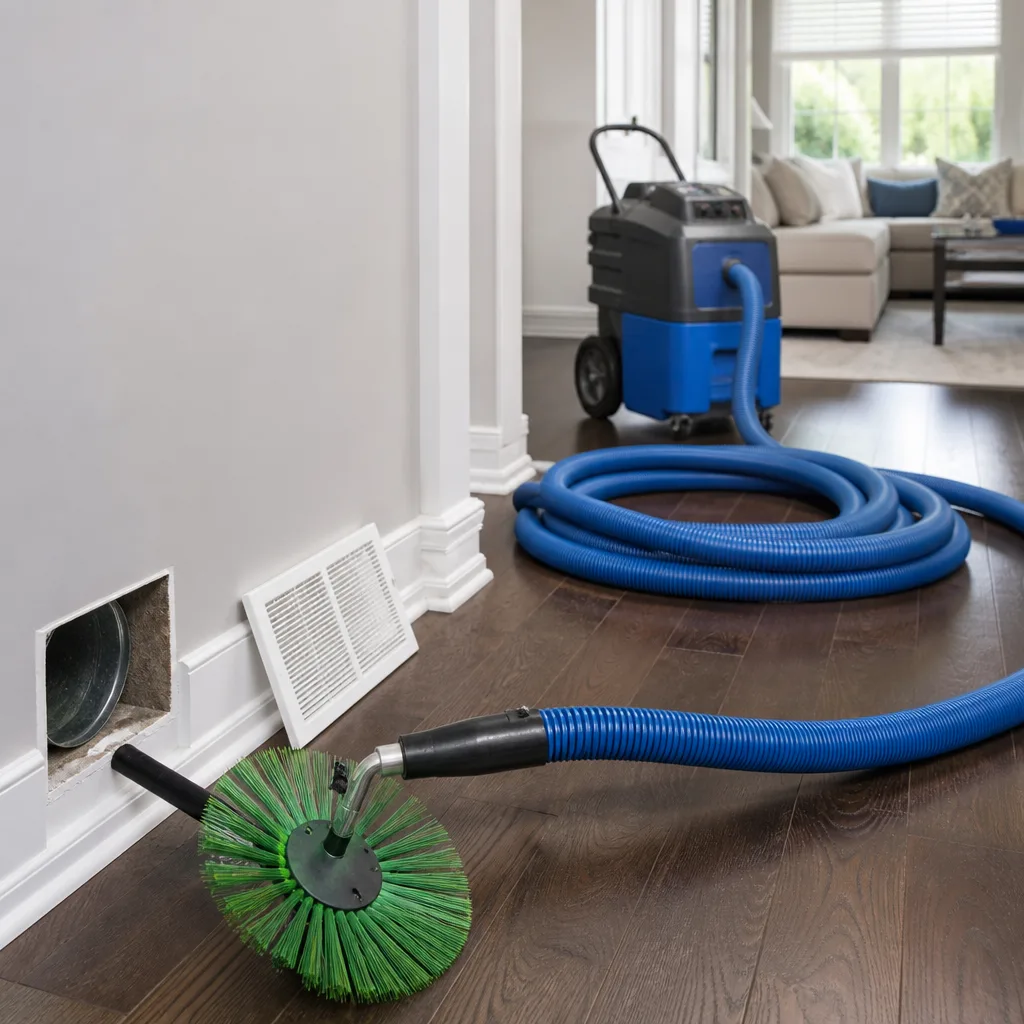
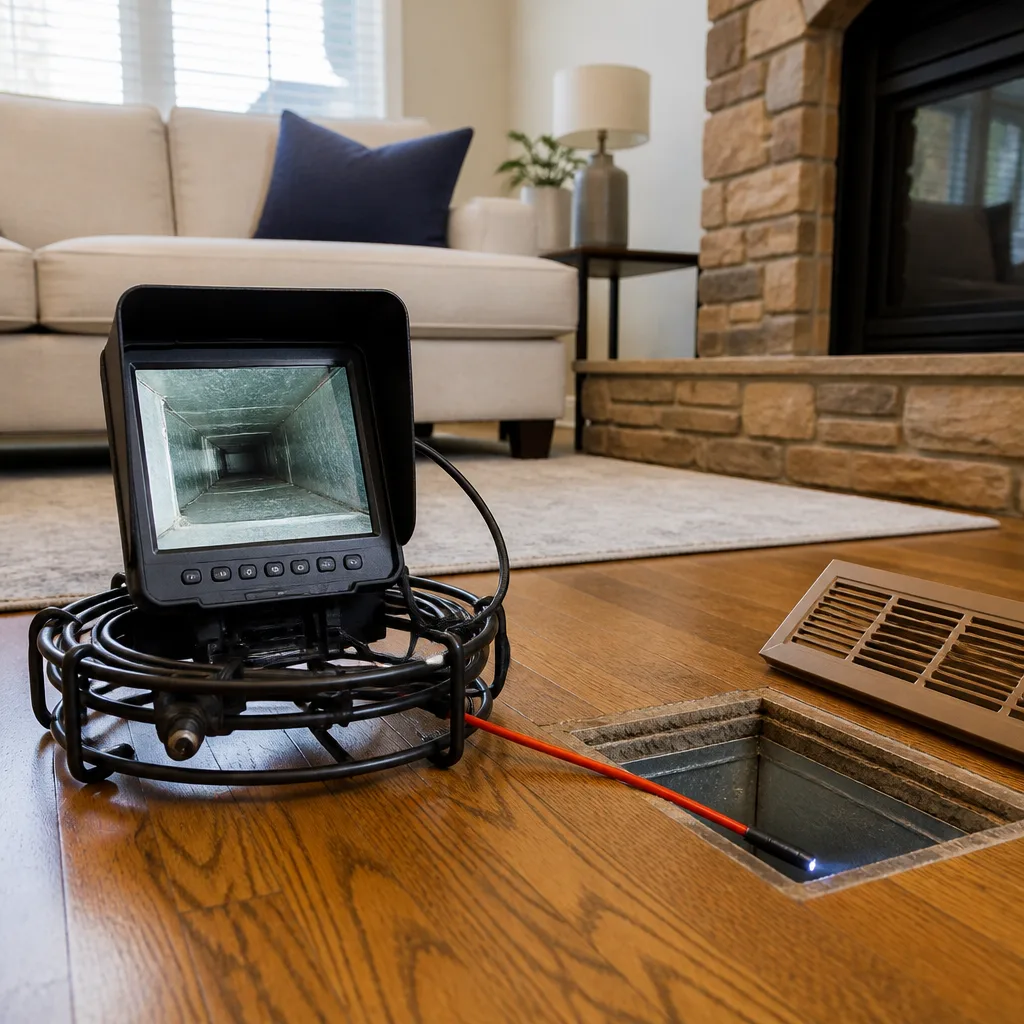
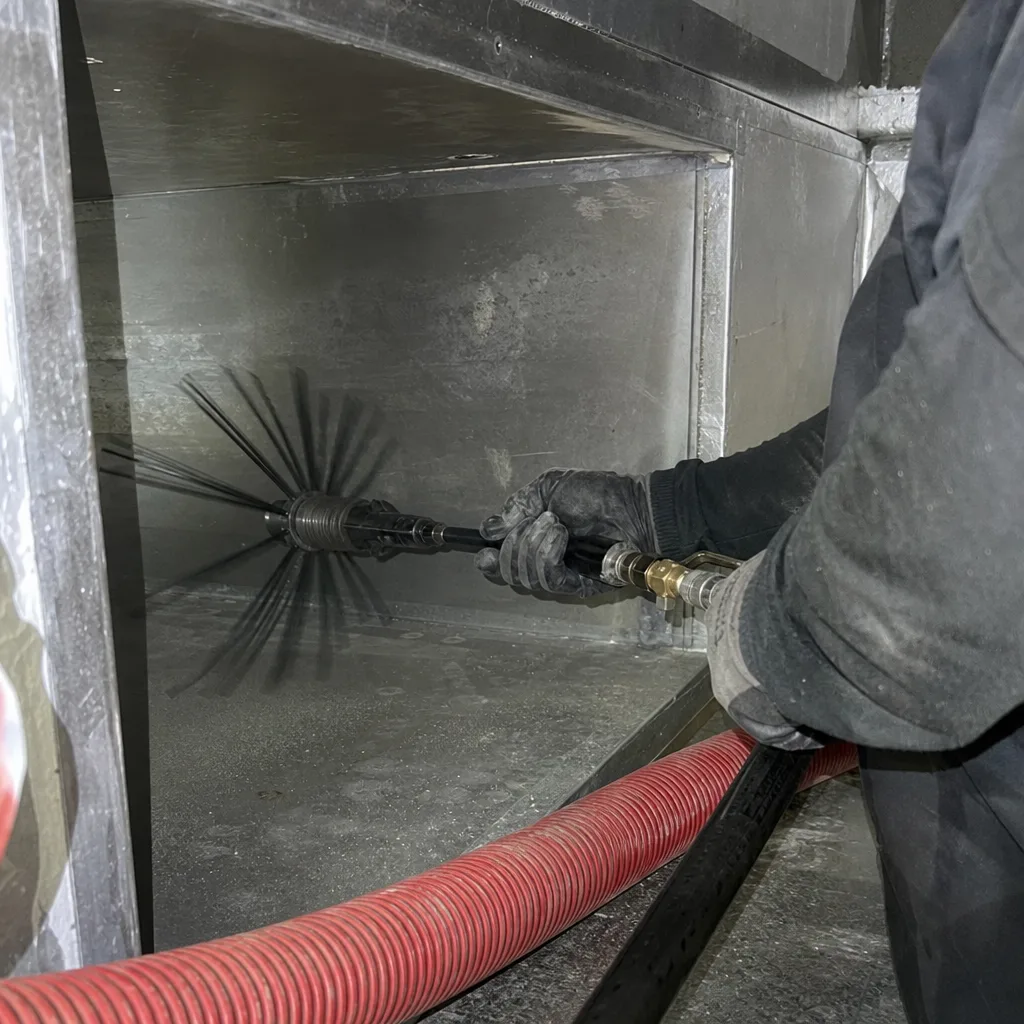
This is the scenario we document weekly. A homeowner schedules Air Duct Cleaning in Dallas expecting a straightforward maintenance visit. Our technician arrives with a Rotobrush system and a camera, begins the documented photo record, and finds something that changes the scope: a separated plenum, a rusted trunk line, or duct board degraded by years of condensation in a humid Dallas attic.
The homeowner now faces a decision they didn’t anticipate. The cleaning can proceed, but the system won’t perform correctly with the damage unaddressed. The repair work, however, requires a licensed mechanical contractor, a permit, and an inspection timeline that extends beyond the original appointment.
We’ve identified five conditions-covered in our Air Duct Cleaning Warning Signs: A Dallas Homeowner’s Reference Guide-that most frequently convert a cleaning job into a repair project in Dallas homes:
- Plenum separation at the air handler: The sheet metal or duct board box connecting the furnace to the duct system pulls away from vibration, thermal cycling, or original installation error. Visible as a gap with light leakage; repair requires disassembly and reconstruction.
- Duct board collapse at elbows: The fiberglass duct board used in many 1990s-2010s Dallas homes softens from moisture infiltration, losing structural integrity at directional changes. Replacement with new duct board or sheet metal requires cutting and fastening.
- Trunk line corrosion: Galvanized steel trunk lines in older Lakewood and East Dallas homes rust through from the inside when condensate drainage fails. Sectional replacement is the only durable repair.
- Flex duct disconnection at takeoffs: The collar connecting flex duct to a trunk line pulls loose, often from attic traffic during cable or pest control work. Reconnection with code-compliant clamps and mastic is mechanical repair, not maintenance.
- Return chase leakage: Platform returns built into framing leak at seams, pulling unconditioned air from wall cavities. Sealing requires access cutting and material replacement.
Our process, established under Haven Standard Clause 1, requires that we stop and document before proceeding. The customer receives the camera images showing the condition, a written price for the repair scope, and a clear statement of whether permitting applies. No work begins on repairs until the homeowner has this documentation and has had time to review it.
The surprise element for homeowners isn’t just the additional cost; it’s the timeline. A standard cleaning takes 3-4 hours. Permitted repair work requires scheduling the permit pull, coordinating with Dallas Development Services for inspection windows, and potentially returning for a final inspection before concealment. In peak summer months, Dallas inspection availability can extend the project by several days. We communicate this explicitly so homeowners can plan, not discover it when the crew is already in the attic.
Code-Compliant Materials vs. What’s Prohibited in Texas
The TMC’s material requirements are specific, and violations are common in amateur and cut-rate work. Understanding what’s permitted protects you from repairs that fail inspection or degrade prematurely in Dallas’s climate.
UL 181-listed closure systems are mandatory for all duct sealing under TMC Section 603.2. This category includes:
- Pressure-sensitive tapes rated UL 181A-P or 181B-FX: Foil tapes with acrylic adhesive, properly applied to clean surfaces.
- Water-based duct mastic: Applied with a brush or glove, suitable for irregular joints and gaps up to 1/4 inch.
- Heat-activated tapes: Used primarily in manufactured duct systems, requiring specialized application equipment.
Standard cloth duct tape, the gray or silver tape found in most household drawers, is explicitly prohibited for duct sealing under the TMC. The adhesive fails under temperature cycling, the fabric backing degrades in humid conditions, and it has no UL 181 listing. We’ve removed decades of failed cloth tape from Dallas attics, often finding it completely detached while the joint it was meant to seal gaped open.
For duct construction materials, the TMC recognizes:
- Galvanized steel sheet metal: Minimum 30 gauge for ductwork, 26 gauge for plenums in most residential applications.
- Duct board: Fiberglass insulation with foil facing, 1-inch or 1.5-inch thickness, with specific requirements for edge sealing to prevent fiberglass shedding into airstreams.
- Flexible duct: Insulated flex with metalized vapor barrier, maximum 14-foot length per Section 603.10, fully extended without compression or sharp bends.
Dallas’s humidity patterns affect material selection in ways the TMC doesn’t explicitly address but experienced contractors account for. Summer attic dew points in Dallas frequently reach conditions where uninsulated or poorly insulated metal ductwork sweats, creating moisture damage in ceiling assemblies. When we specify repairs, we often recommend upgrading insulation values or switching from duct board to sheet metal with external insulation in high-moisture attic locations.
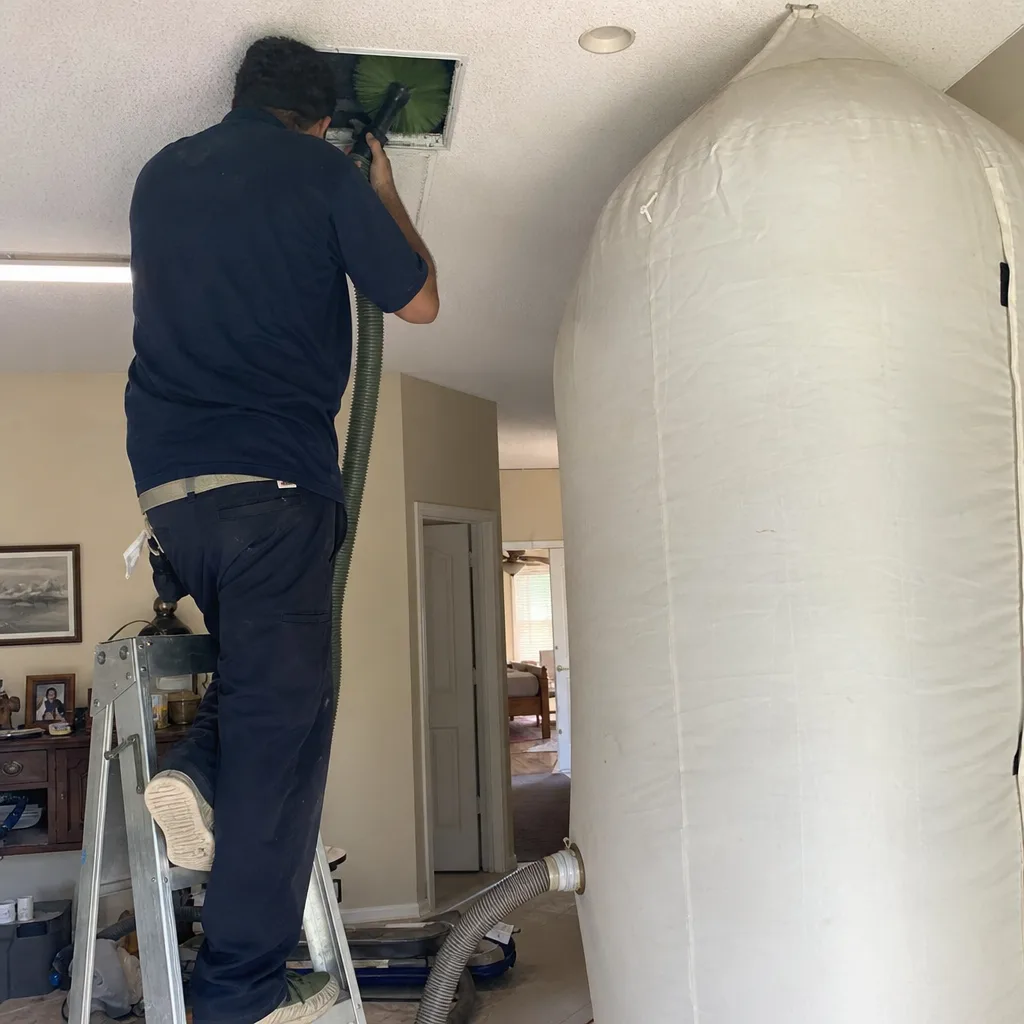
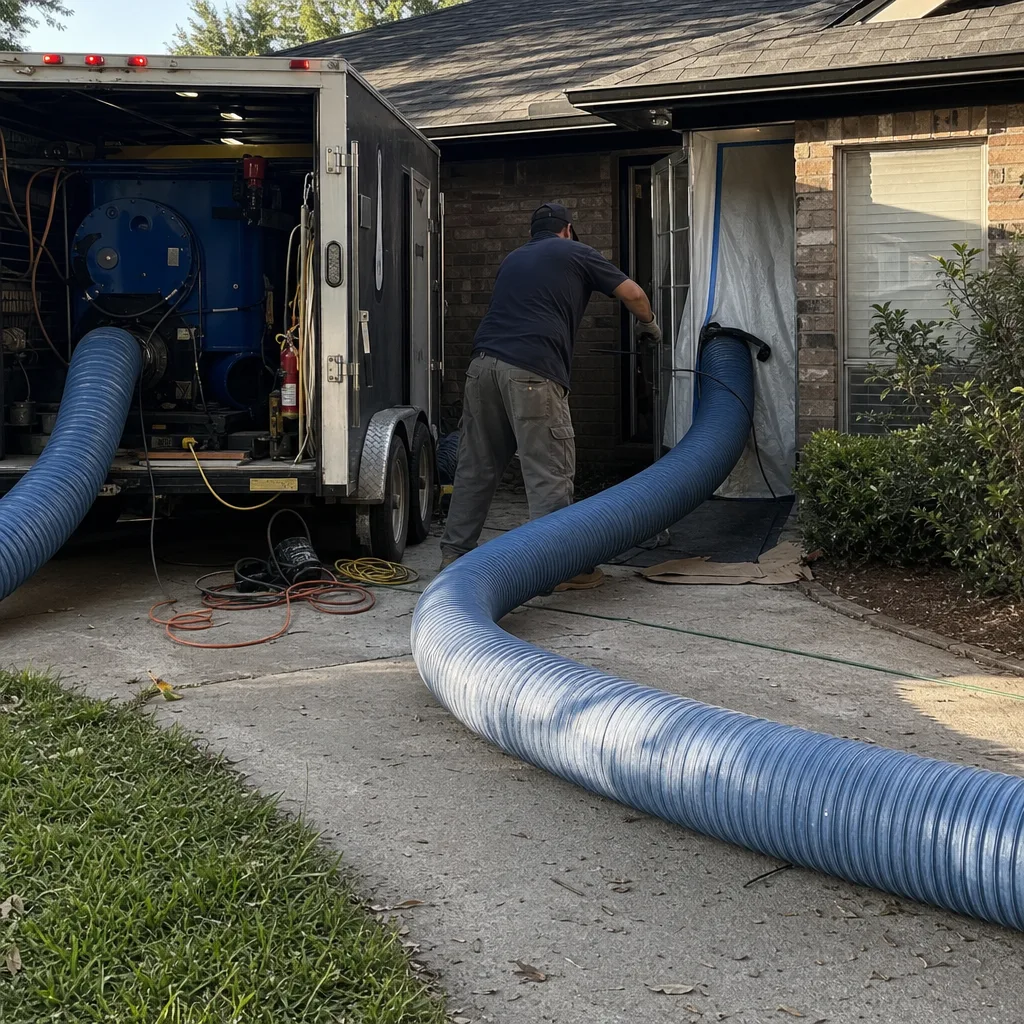
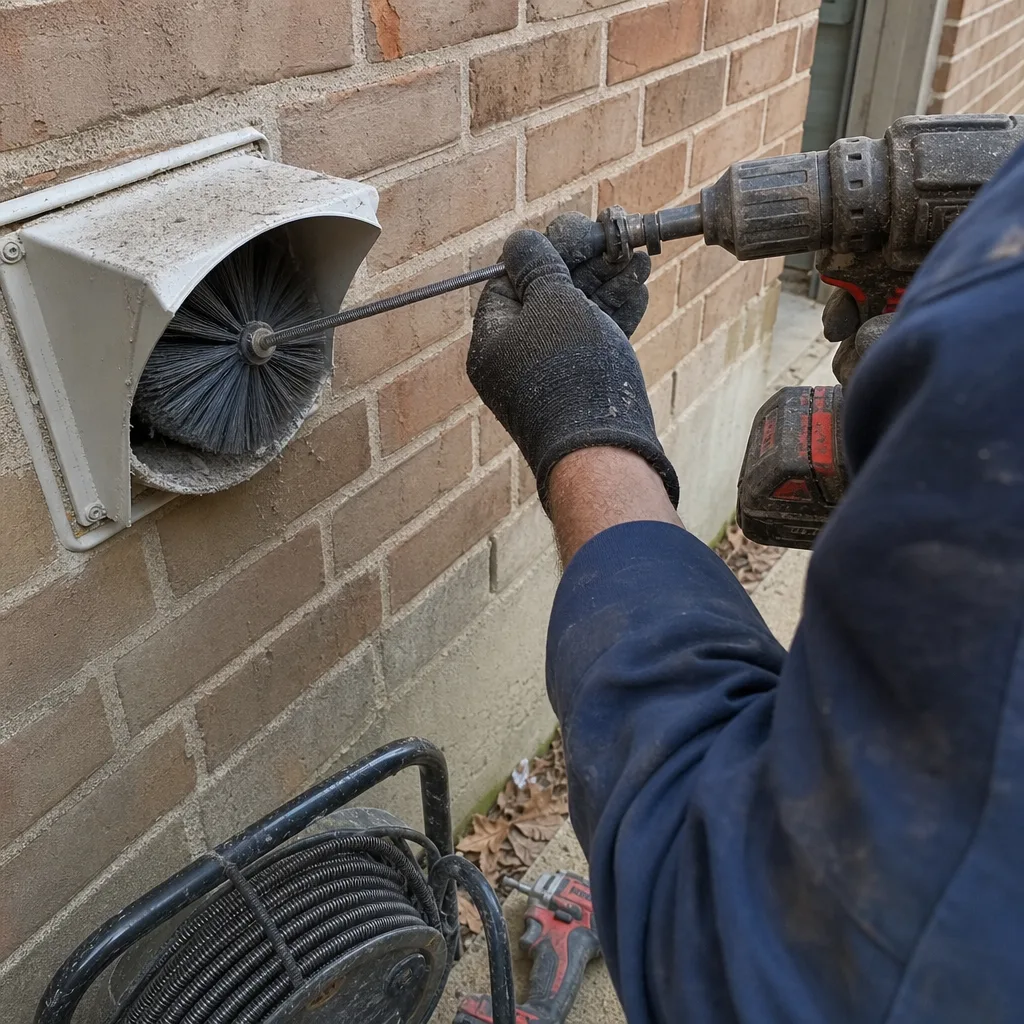
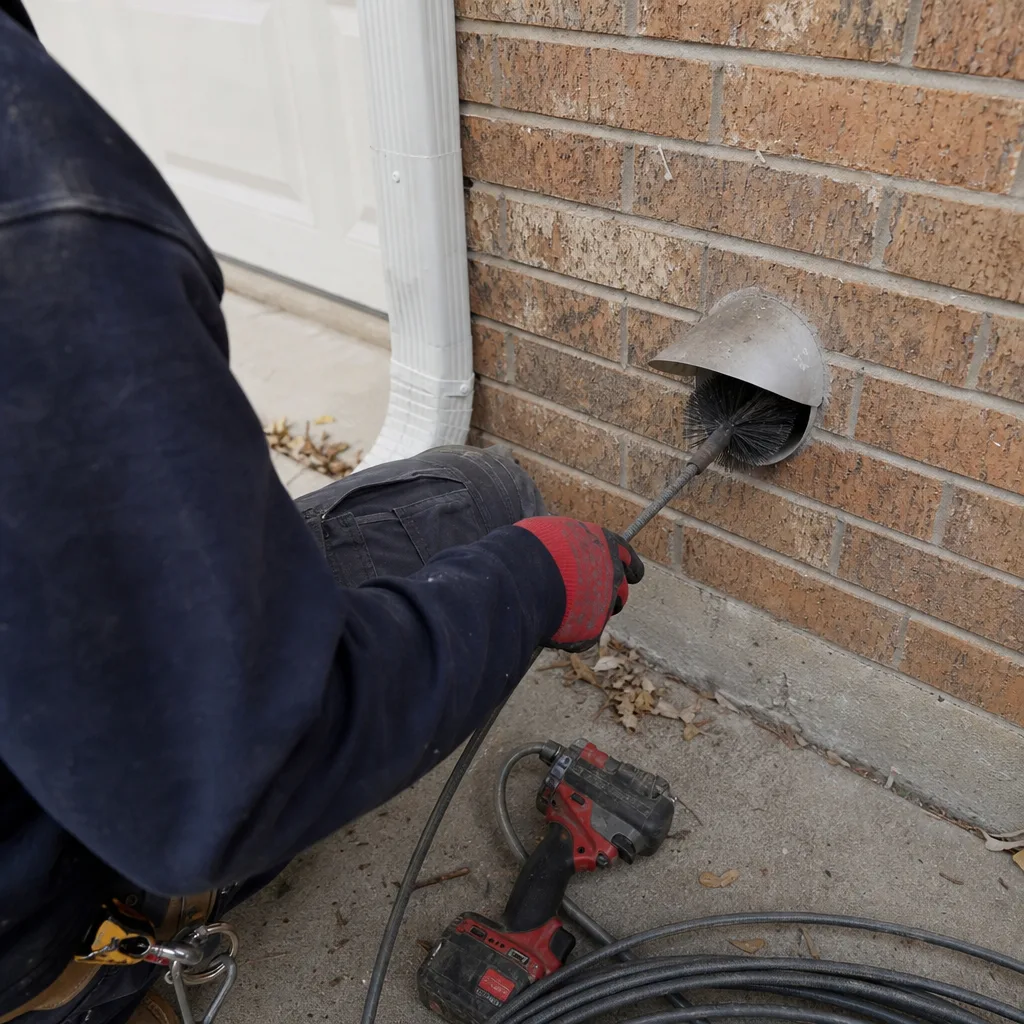
The equipment we deploy for cleaning, including Rotobrush mechanical agitation systems and Nikro negative-pressure extraction units, doesn’t affect material selection for repairs. But the documentation these tools produce, the before-and-after photo record included with every CleanRun visit, gives homeowners visual evidence of material conditions they can reference when evaluating repair quotes from licensed mechanical contractors.
How to Ask a Contractor Whether Repair Work Will Be Permitted
Most homeowners don’t know the right questions to ask, and some contractors rely on that uncertainty. Our Air Duct Cleaning services include full documentation so you can get straight answers before anyone enters your attic.
Question 1: “What is your Texas Air Conditioning and Refrigeration Contractor license number?”
This is non-negotiable for any repair work beyond cleaning. The Texas Department of Licensing and Regulation (TDLR) maintains a public license lookup. A legitimate contractor provides this number without hesitation. At CleanRun, we publish our license information on every page, including this one, because Haven Standard Clause 3 requires verified credentials.
Question 2: “Will this scope require a permit from Dallas Development Services?”
The answer should be specific to the proposed work, not a general statement about the company’s permitting practices. “We pull permits when required” is evasive. “This plenum replacement requires a mechanical permit; the cleaning itself does not” is precise.
Question 3: “Who will pull the permit, and will I receive a copy of the inspection approval?”
The licensed contractor should pull the permit. You should receive documentation of final inspection approval, typically a green tag or digital certificate, for your records.
Question 4: “What happens if the inspector finds issues?”
The contractor’s responsibility, not yours. The answer should describe their process for addressing inspector comments and scheduling re-inspection without additional charges for code-compliance corrections.
Question 5: “Will this work be documented in my property’s permit history?”
Yes is the correct answer for permitted work. This documentation protects your resale position. If a contractor suggests “keeping it off the books” or offers a discount for unpermitted work, this is a red flag that exposes you to significant liability.
We’ve encountered situations in Dallas where homeowners received repair quotes from cleaning companies that lacked mechanical licenses, with no mention of permitting. In one case in the M Streets, a homeowner paid for duct board replacement that was sealed with cloth tape and never inspected. Two years later, the failed repair contributed to a ceiling collapse from condensation damage. The original contractor was unlicensed and unresponsive. The homeowner’s recourse was limited to small claims court, with no permit record to establish the scope of work that was supposed to have been performed.
The Resale Risk: Unpermitted Duct Work and Buyer Inspections
The Dallas real estate market of 2015-2025 has been characterized by rapid appreciation, competitive bidding, and increasingly thorough buyer due diligence. A home that sold in 2019 with minimal inspection may face a very different scrutiny level in 2025, particularly as interest rates have cooled buyer urgency and extended due diligence periods.
Buyer’s inspectors in Dallas routinely check for permitted mechanical work. This is standard practice for inspectors working with informed buyers in neighborhoods like Highland Park, University Park, and the Bishop Arts District, where purchase prices justify thorough investigation. The inspector’s method varies: some review the city’s online permit records before visiting, others check physical permit tags in the attic or at the air handler location.
When unpermitted duct work is discovered, the consequences cascade:
- Disclosure obligation: Texas Property Code requires sellers to disclose known defects and code violations. Unpermitted work, once discovered, must be disclosed or the seller risks fraud claims.
- Buyer negotiation leverage: The buyer may demand permit retroactivity, which in Dallas requires opening walls or ceilings for inspector access, then closing and refinishing after approval. Cost typically falls to the seller.
- Title insurance complications: Some title underwriters flag unpermitted work as a cloud on title, particularly if code enforcement notices exist.
- Insurance coverage questions: Damage related to unpermitted work may be excluded from homeowner’s coverage, depending on policy language.
The retroactive permitting process in Dallas is more burdensome than original permitting. Development Services requires the same documentation, plus verification that the work was performed to code at the time of installation, which may require destructive inspection if the original contractor’s work is concealed. We’ve consulted with homeowners facing this process, and the cost typically exceeds the original repair quote by 200-400% when drywall repair, painting, and re-inspection are included.
For Dallas homeowners who purchased new construction during the 2015-2022 boom, there’s an additional consideration. Builder-grade HVAC installations in that period, particularly in volume developments in Far North Dallas and southern Collin County, sometimes used materials or methods that don’t meet current TMC standards. When these systems require repair, bringing them to current code triggers permitting that wasn’t required for the original installation. The permit record then documents the upgrade, which becomes a selling point rather than a liability.
What Documentation You Should Receive for Any Duct Work
Documentation is where CleanRun’s approach diverges from industry practice, and it’s the standard we believe every homeowner should demand. See more guides & resources for additional homeowner protection strategies. The H.A.V.E.N. Standard specifies deliverables that transform a service visit into a verifiable record.
For cleaning work, you should receive:
- A written scope of work, signed before work begins, with the agreed price under Haven Standard Clause 1.
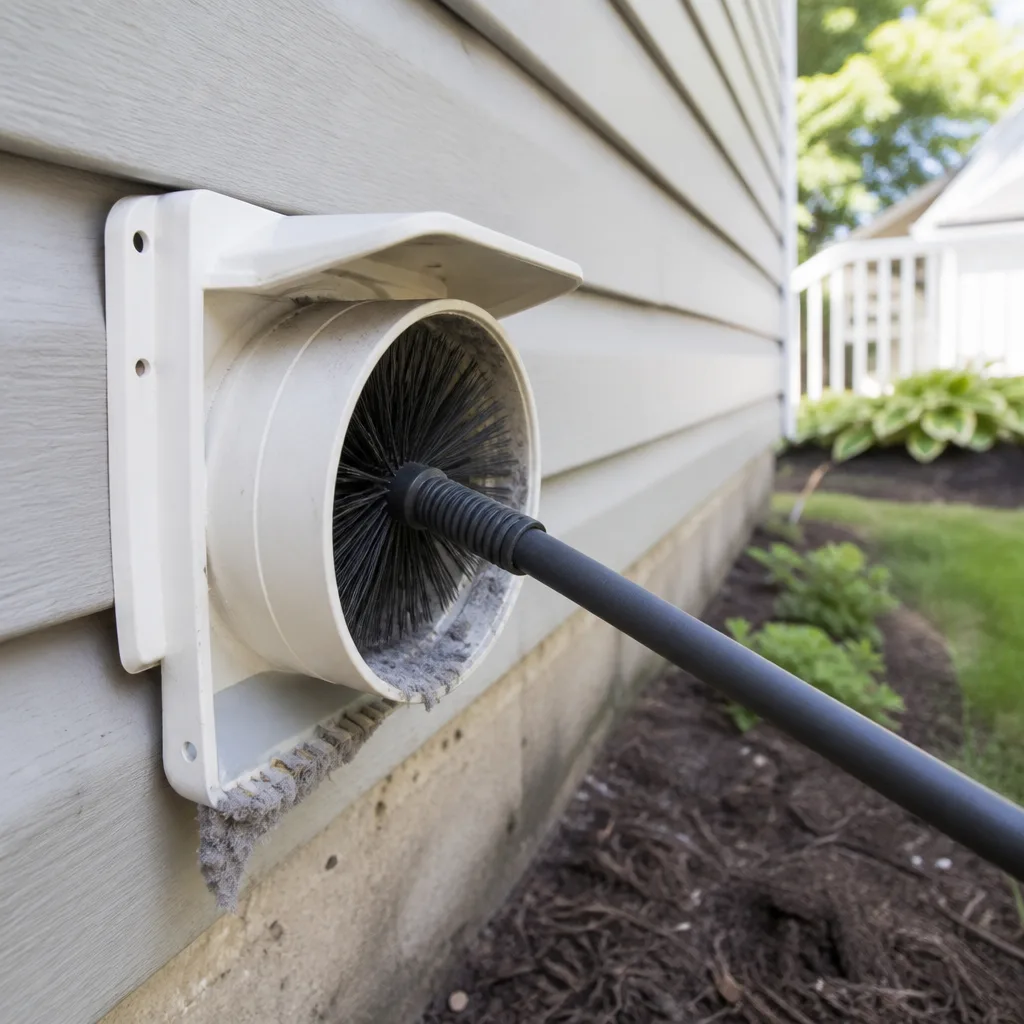
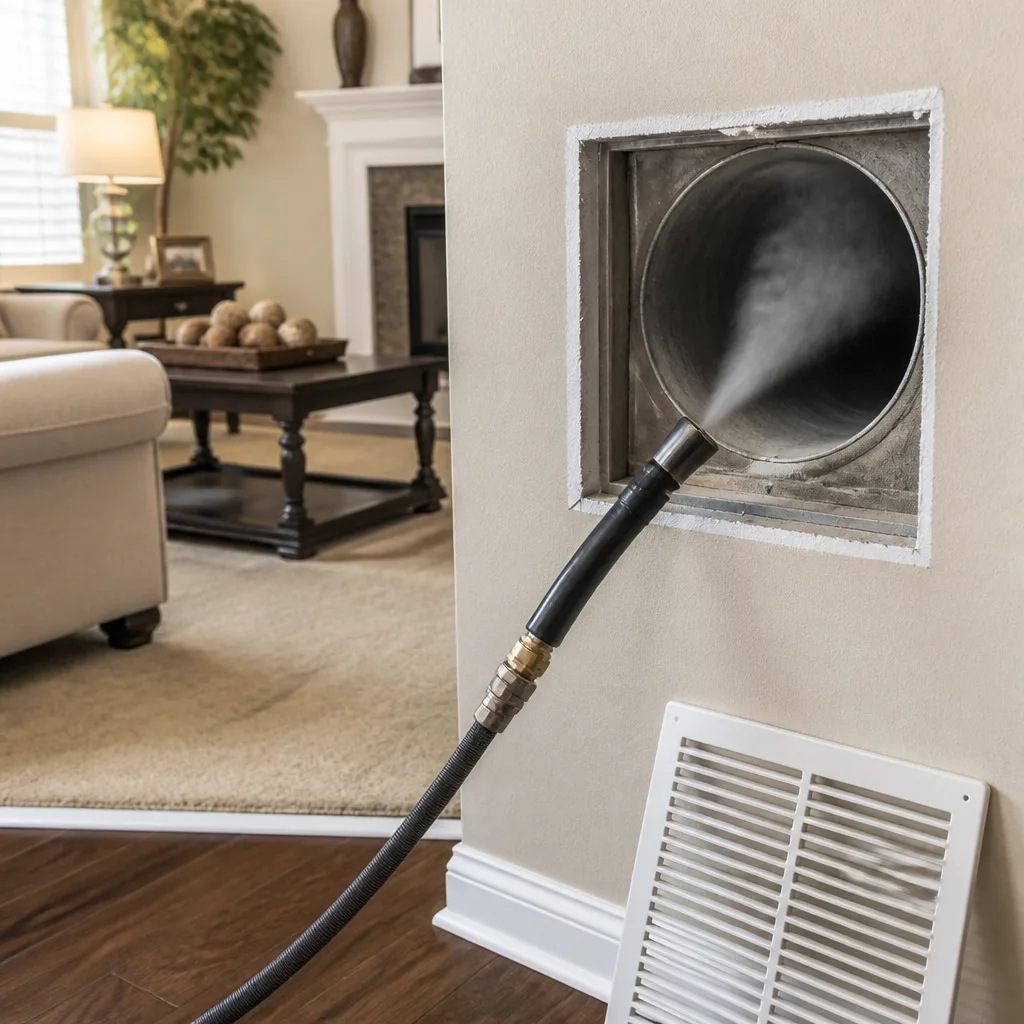
- A Documented Photo Record showing the interior of every duct run before and after cleaning, delivered as part of the standard job record.
- An invoice itemizing services performed and equipment used, including brand names like Honeywell or Guardsman where sanitizing or filtration upgrades are included.
For repair work performed by a licensed mechanical contractor, you should additionally receive:
- A copy of the permit application or permit number.
- Inspection approval documentation, physical or digital.
- Contractor’s license information and certificate of insurance.
- Written warranty for the repair work, distinct from any equipment manufacturer warranty.
The 365-Day Done Right Promise applies to all CleanRun work: if it’s not done right, we make it right, backed in writing on every job. For repair work we coordinate with licensed mechanical partners, we verify their documentation and include their warranty information in your job record so you have a single point of reference.
Our photo record practice, maintained since our first job in 2013, has proven particularly valuable for homeowners who later sell. The dated images establish the condition of the system at a specific point in time, demonstrating proactive maintenance to buyer’s inspectors. In several Dallas transactions, our customers have forwarded their CleanRun photo records to demonstrate that duct conditions were addressed professionally, with documentation, rather than concealed or ignored.
Common Mistakes to Avoid
- Assuming “cleaning and repair” is a single service category. In Texas, these are distinct activities with distinct regulatory requirements. A company advertising both may only be licensed for one. Verify separately.
- Accepting cloth duct tape for any duct sealing. It’s prohibited by the TMC, fails quickly in Dallas’s thermal and humidity cycles, and indicates either ignorance or disregard for code compliance.
- Allowing repair work to proceed without confirming permit status. If a contractor says a permit “isn’t needed” for plenum replacement or trunk line modification, ask for the specific code section supporting that claim. Vague assurances are not documentation.
- Failing to retain permit documentation. The permit record at Development Services is official, but your personal file should include copies. Digital storage is fine; absence is not.
- Choosing the lowest repair quote without verifying license and permitting inclusion. Unpermitted work from an unlicensed contractor typically costs less upfront and substantially more at resale or failure.
- Neglecting to disclose prior unpermitted work when selling. Texas disclosure requirements are strict, and discovered concealment exposes sellers to post-closing liability that far exceeds any original savings.
When to Call a Professional
Contact a licensed professional when your duct cleaning reveals damage, when you observe temperature inconsistency between rooms that suggests leakage, or when your energy bills spike without explanation. In Dallas’s climate, a compromised duct system in a 2,500-square-foot home can add $80-$150 monthly to cooling costs during peak summer.
CleanRun Air Duct Cleaning Dallas offers free estimates in Dallas, with written pricing delivered before any work begins and a Documented Photo Record included on every visit. If our inspection reveals conditions requiring permitted repair, we explain the scope, coordinate with licensed mechanical contractors, and ensure you understand the permitting timeline before any commitment. Call (469) 405-6133 to schedule.
Frequently Asked Questions
No. Air duct cleaning qualifies as routine maintenance under the Texas Mechanical Code and does not require a permit in Dallas or any Texas jurisdiction. The work involves debris extraction and surface cleaning without altering the duct system’s construction or materials.
Whole-system air duct cleaning in Dallas typically ranges from $400-$800 for a standard residential system, with written pricing agreed before work starts under Haven Standard Clause 1. Permitted duct repair varies widely by scope, from $350-$600 for localized sealing to $1,500-$4,000 for plenum or trunk line replacement, with permit and inspection fees adding $150-$300. Call (469) 405-6133 for an exact quote on your specific system, estimates are free.
Low quotes often exclude the actual work needed, use substandard equipment that doesn’t achieve negative-pressure extraction, or bait customers with a cleaning price to sell unpermitted repairs at inflated rates. A legitimate quote specifies the number of duct runs, the cleaning method, and whether photo documentation is included. At CleanRun, every quote is written, itemized, and binding.
Demand the permit number and verify it with Dallas Development Services. Request inspection approval documentation. For cleaning work, review the before-and-after photo record of every duct run. If a contractor cannot or will not provide these, the work’s quality and existence are unverified.
For most Dallas homes, every 3-5 years is sufficient, with shorter intervals for homes with pets, recent renovation, or occupants with respiratory sensitivities. The 2015-2025 construction boom left significant drywall dust and construction debris in new home duct systems, which we document frequently in areas like the Design District and Trinity Groves. Call (469) 405-6133 to assess your specific system’s condition.
You must disclose known unpermitted work on the Texas Seller’s Disclosure Notice. If discovered by a buyer’s inspector, you face demands for retroactive permitting with destructive inspection, repair costs, potential closing delays, and possible post-closing liability for nondisclosure. The cost of retroactive compliance typically far exceeds original permitting.
The Bottom Line
Air duct cleaning in Texas requires no permit, but the repairs that cleaning frequently reveals do, and the distinction matters for your system’s performance, your legal compliance, and your financial protection at resale. The Texas Mechanical Code’s material requirements, Dallas Development Services’ inspection process, and the documentation standards that separate professional work from cut-rate noise are all knowable before you hire. Demand written pricing, verified licensing, permit confirmation for repairs, and a complete photo record. The contractors who operate transparently will welcome these questions. Those who don’t are telling you something worth hearing before they enter your home.
Written by Tomas Reyes, Owner at CleanRun Air Duct Cleaning Dallas, serving Dallas since 2013.