
Last updated September 23, 2026
Whole-system duct and dryer vent check with before-and-after photos - you see exactly what came out of your vents
That "$99 whole-house special" is a bait ad - the real number appears once they are in your hallway, or the "clean" is a shop-vac at the register. We photograph the inside of your ducts before and after instead.
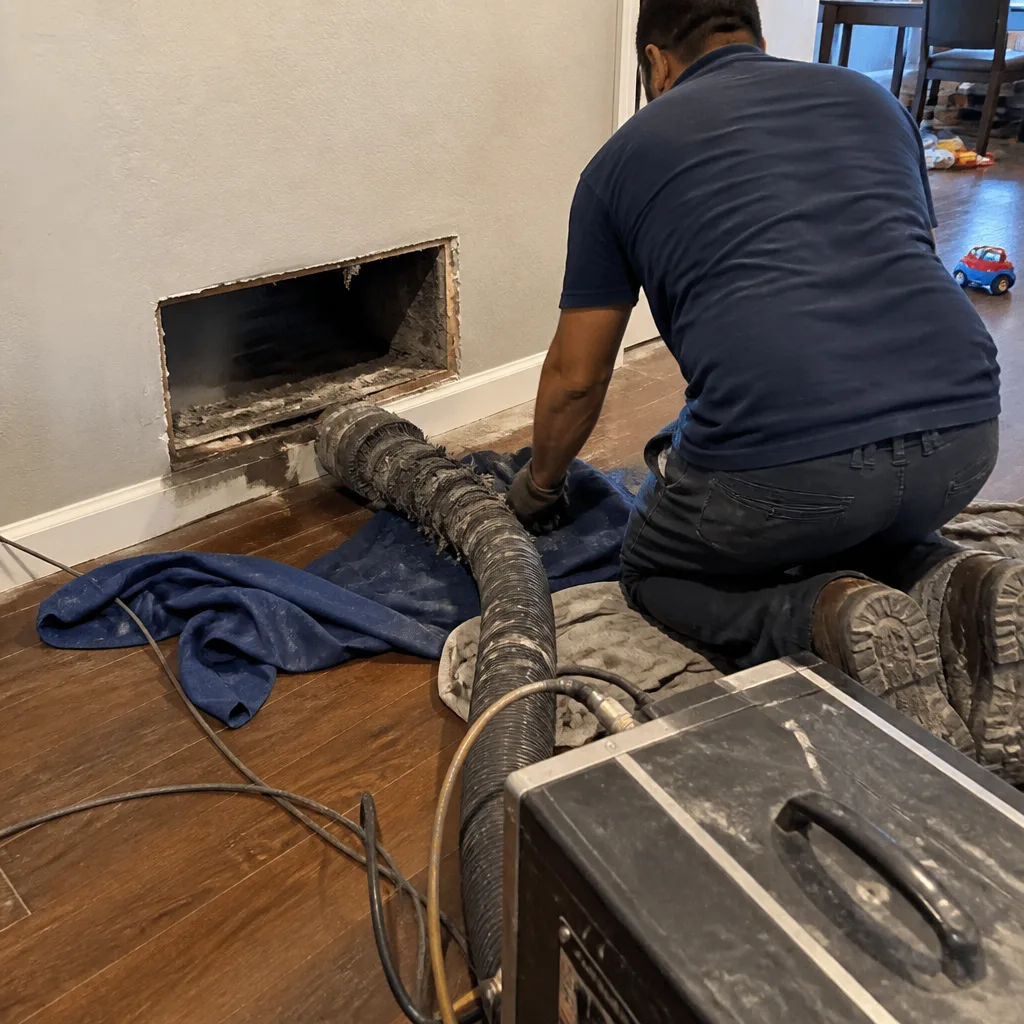 Before
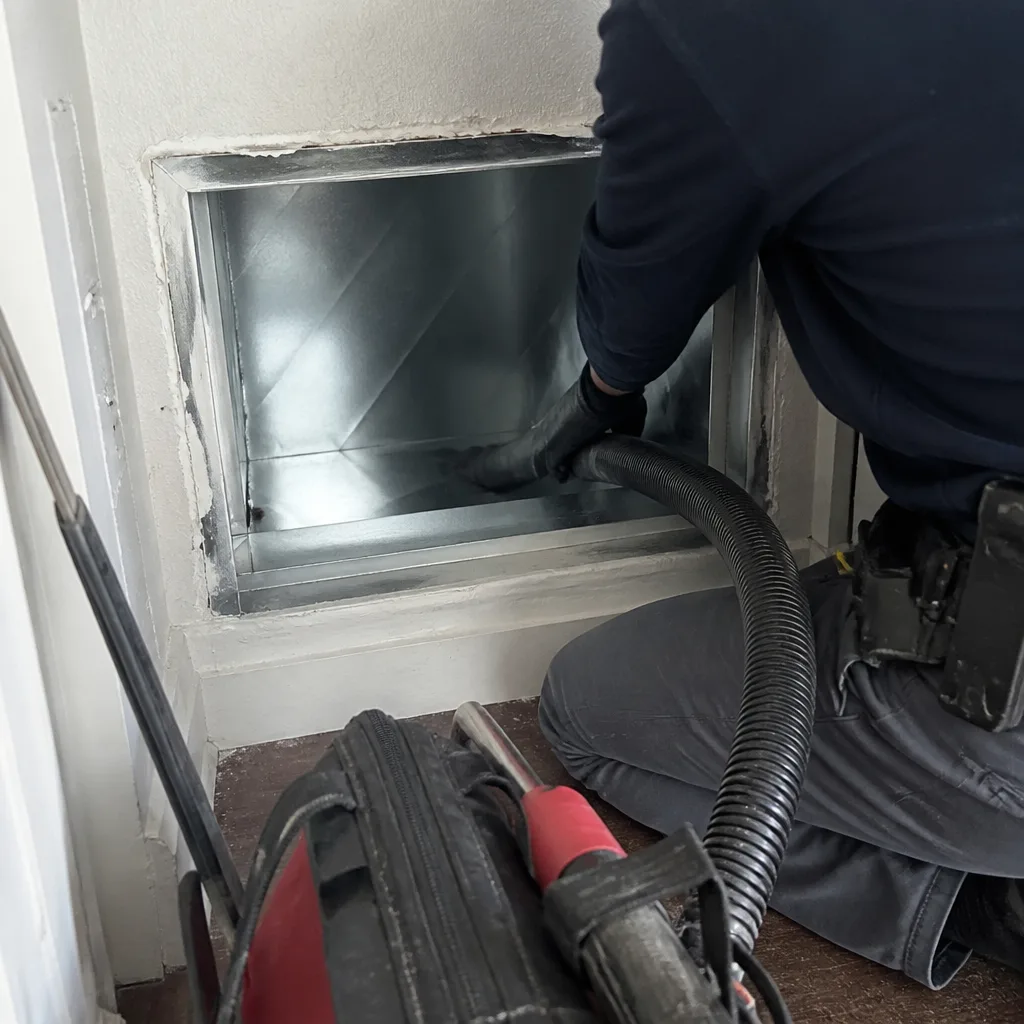 After
After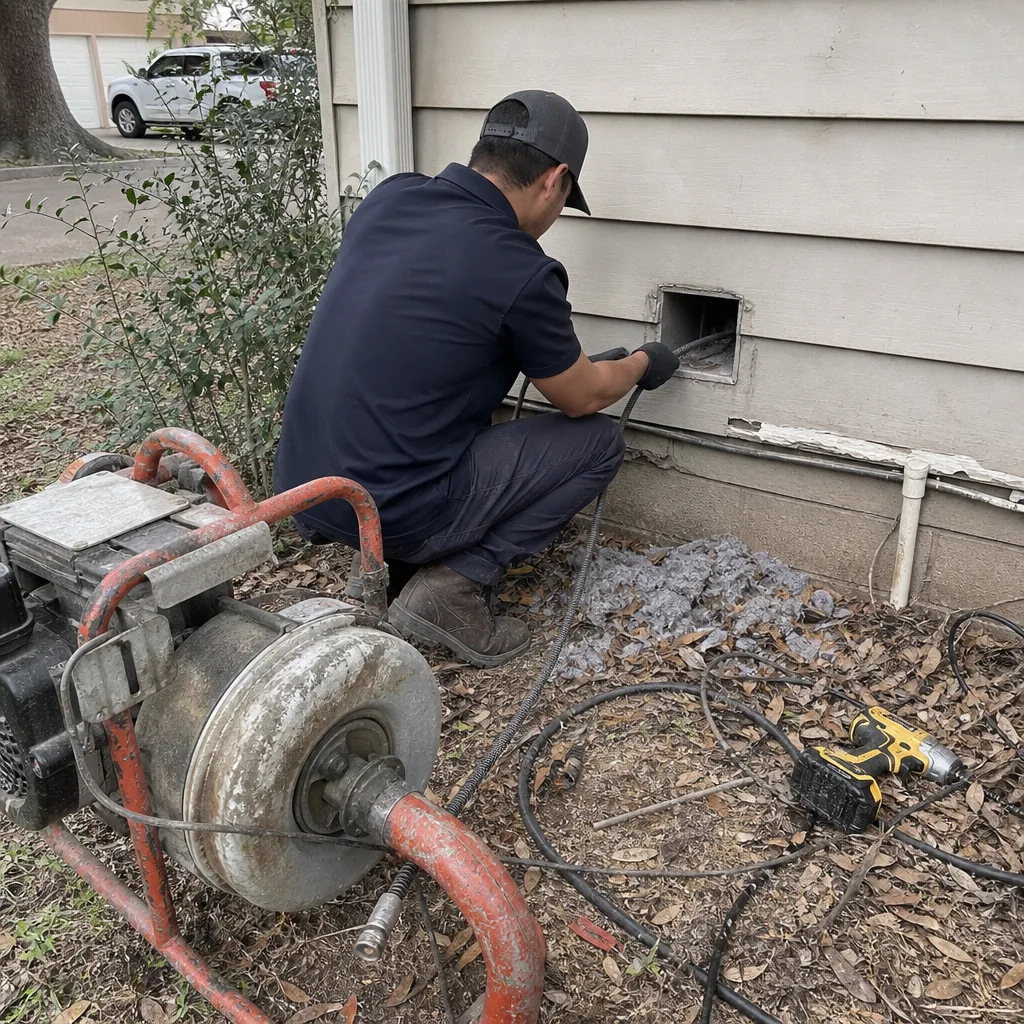 Before
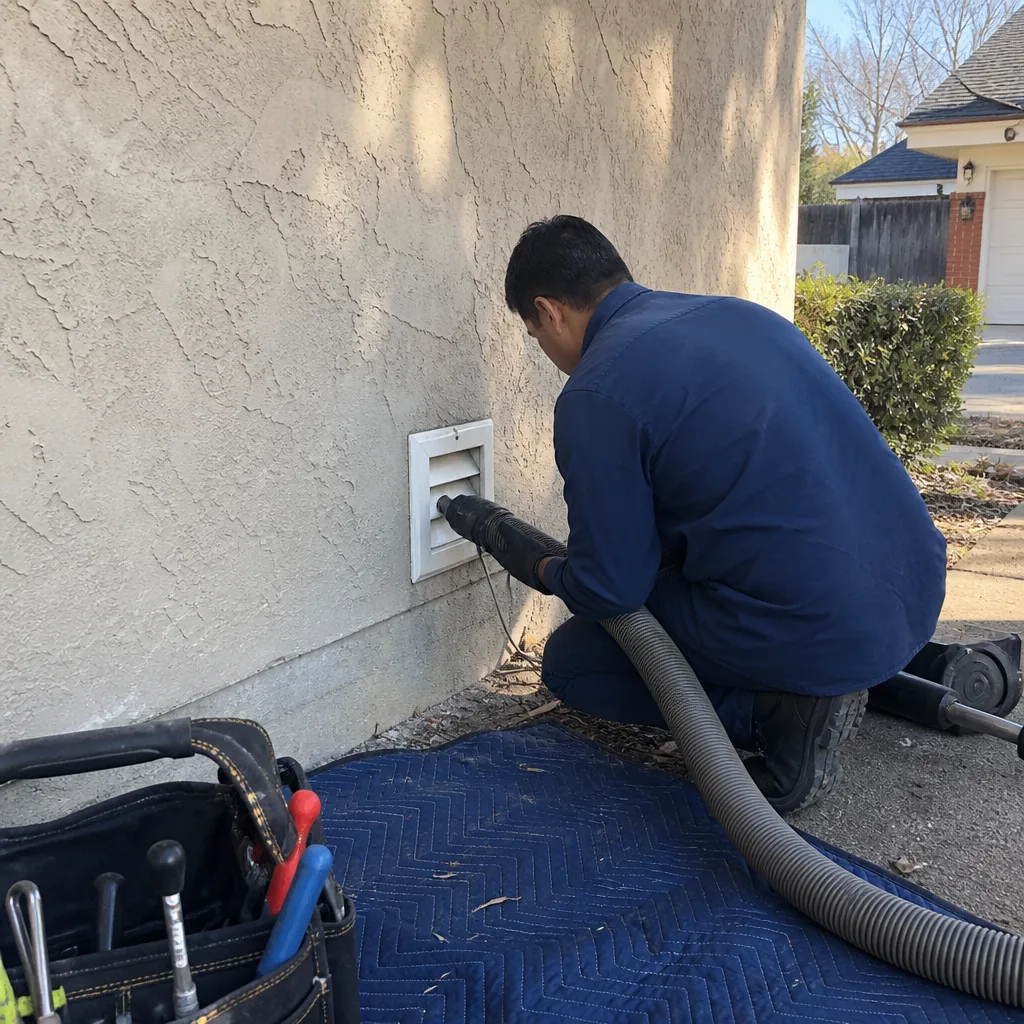 After
After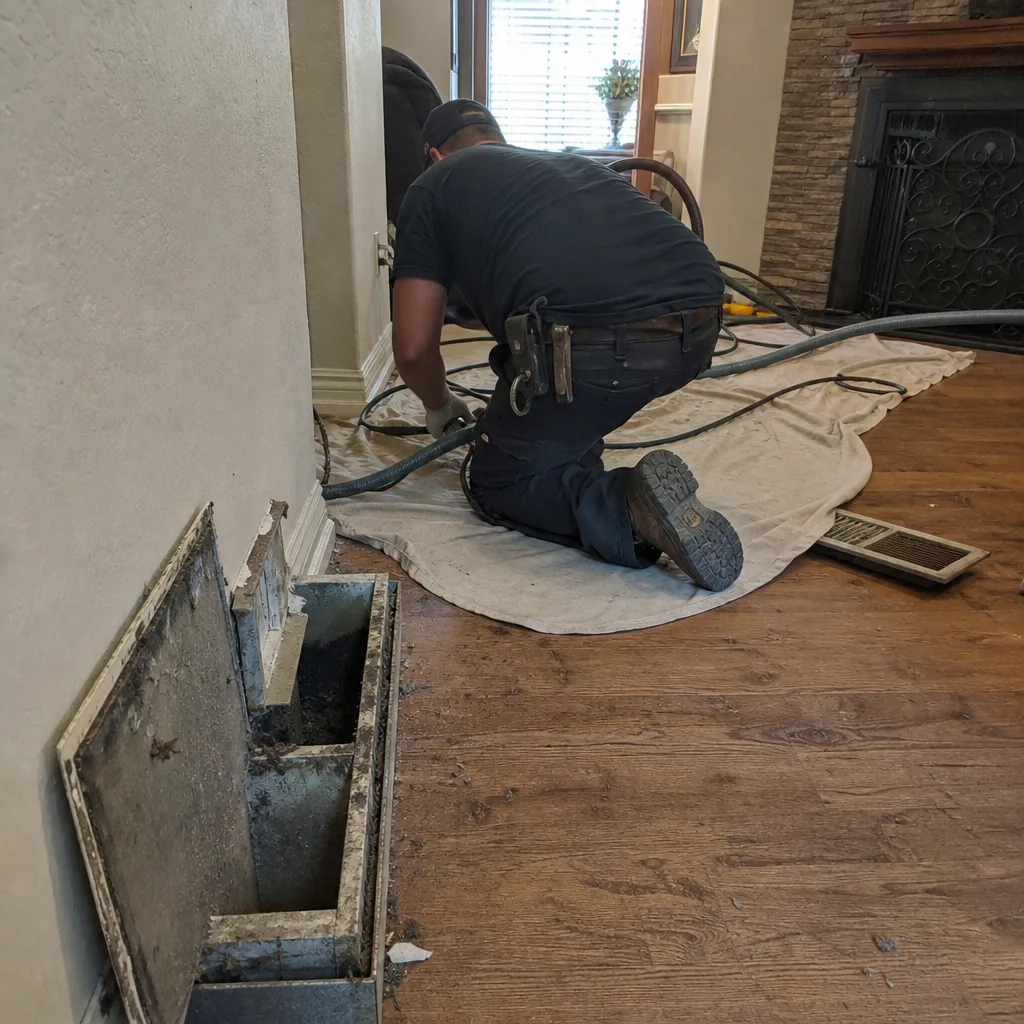 Before
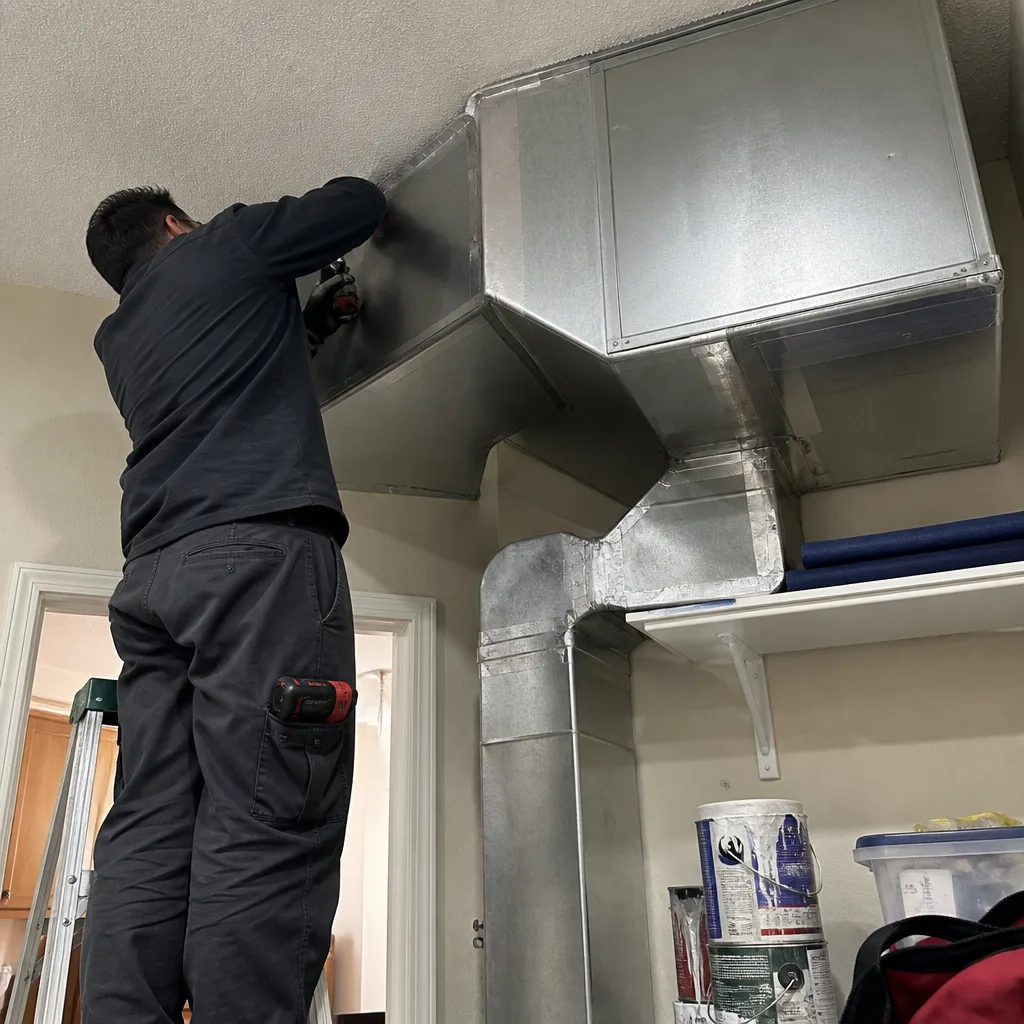 After
AfterDIY vs Professional Air Duct Cleaning: The Dallas Homeowner’s Decision Guide
A 6-inch flex duct run averages 15-25 feet in a Dallas attic. A standard shop vac hose reaches 8 feet. The math on DIY duct cleaning ends there. Yet every spring, hardware stores in Lakewood and Preston Hollow rent out duct-cleaning attachments to homeowners who reasonably wonder whether professional service is worth the cost. This guide answers that question with actual equipment specifications, honest cost comparisons, and the three maintenance tasks a homeowner can actually perform. For How to Hire a Air Duct Cleaning Contractor in Dallas: A Step-by-Step Guide, see our companion resource. We’ll also cover when DIY is physically hazardous, when it is legally insufficient, and how to evaluate a professional quote against the true cost of doing it yourself.
Quick Answer
A homeowner with a household vacuum can clean register covers, accessible boot openings, and replace filters. The portion of the system that affects air quality and HVAC efficiency - trunk lines, plenums, and the air handler compartment - requires negative-pressure extraction equipment that costs more to rent for a weekend than to hire a professional crew in Dallas. For whole-system cleaning, professional service is the economically rational choice.
Table of Contents
- What DIY Air Duct Cleaning Can Actually Accomplish
- The Equipment Reality: Shop Vac vs. Professional Systems
- Three Legitimate DIY Tasks Worth Doing
- Dallas Attic Conditions That Make DIY Hazardous
- When Professional Cleaning Is Not Optional
- Honest Cost Comparison: DIY vs. Professional in Dallas
- How to Evaluate a Professional Quote
- Common Mistakes to Avoid
- When to Call a Professional
- Frequently Asked Questions
BeforeAfterWhat DIY Air Duct Cleaning Can Actually Accomplish
The honest scope of homeowner duct maintenance is narrow. A residential vacuum system, even a high-end shop vac rated at 80 CFM (cubic feet per minute), generates suction at the hose opening but cannot create negative pressure throughout a duct network. Negative pressure is what dislodges debris that has settled on duct walls and carries it to a collection point rather than redistributing it into the home.
Here’s what happens when a homeowner attempts whole-system cleaning with household equipment:
- Debris within arm’s reach of the register gets removed
- Debris deeper in the duct run is often pushed further inward by the airflow disruption
- Biological material, if present, is disturbed without proper containment, potentially increasing airborne spore counts
- The return side of the system, which typically contains the heaviest buildup, remains untouched because return plenums are located at the air handler - often in the attic or a closet with restricted access
In our work across Dallas neighborhoods from Oak Cliff to Lake Highlands, we’ve photographed duct runs where homeowners attempted DIY cleaning before calling us. The pattern is consistent: clean registers, a 2-3 foot zone of partially disturbed debris, and untouched accumulation beyond that point. The camera doesn’t flatter the effort.
The fundamental limitation is physics. A duct system is a closed network designed to maintain pressure balance. Opening one register and inserting a vacuum hose breaks that balance at a single point. Without sealed access ports at multiple points and a power source capable of maintaining negative pressure across the entire network, debris removal is superficial at best.
The Equipment Reality: Shop Vac vs. Professional Systems
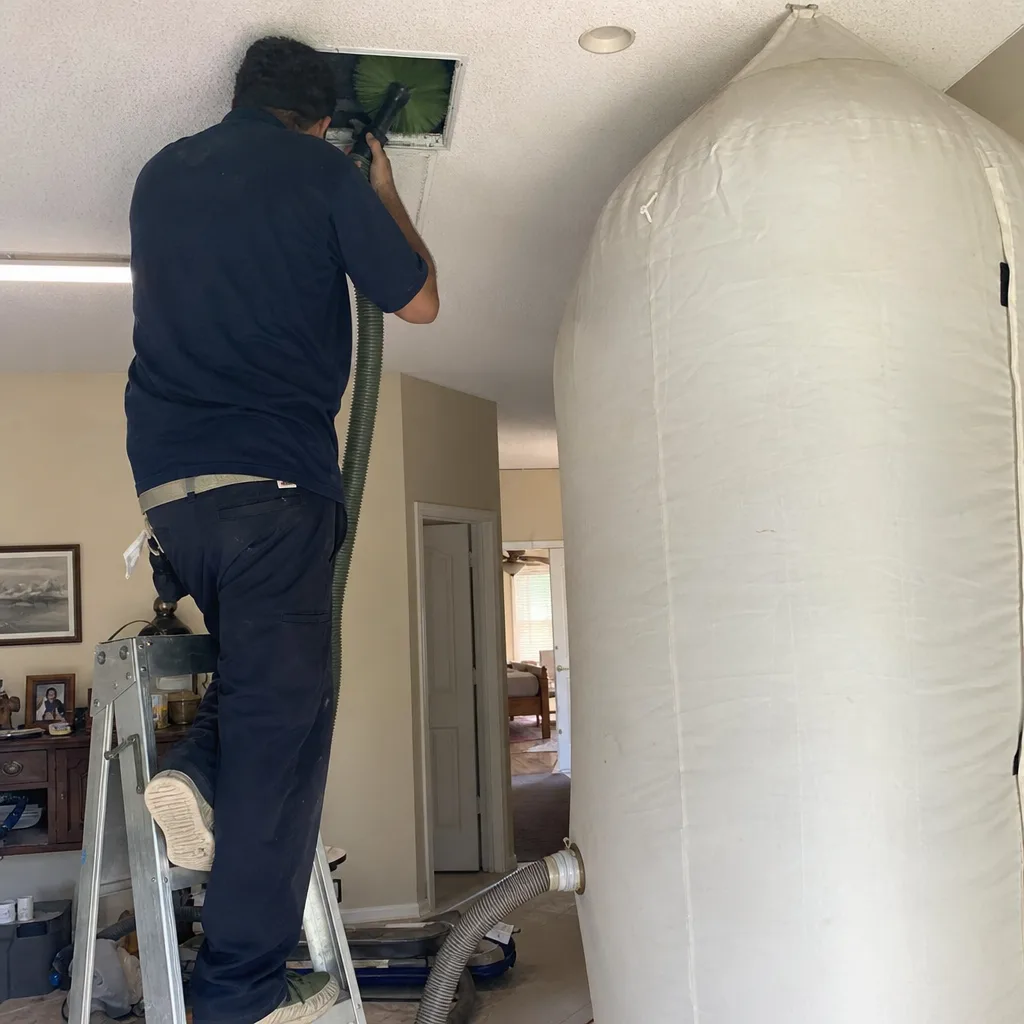
Understanding the equipment gap requires looking at specifications that most guides omit. We’ve used both categories of equipment in our work and can speak to the operational difference directly.
Homeowner-grade equipment:
- Standard shop vac: 65-80 CFM airflow, 2.5-inch hose diameter
- Extension wands: typically 3-4 feet each, requiring multiple connections to reach past 8 feet
- Available attachments: brush heads, flexible rods up to 12 feet (prone to binding in flex duct)
- Filtration: standard cartridge filters capturing particles down to 5 microns; HEPA upgrade available but rarely purchased
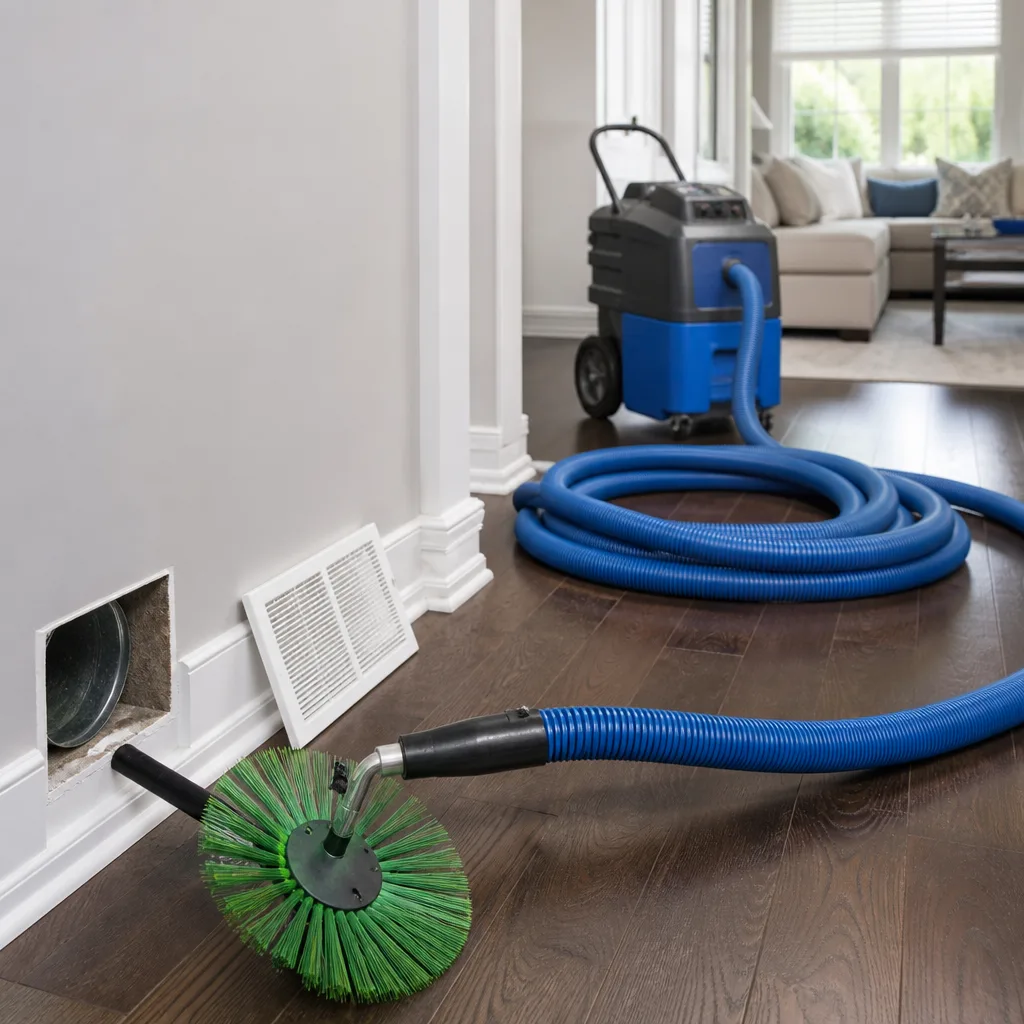
Professional-grade equipment (CleanRun’s fleet includes Rotobrush and Nikro systems):
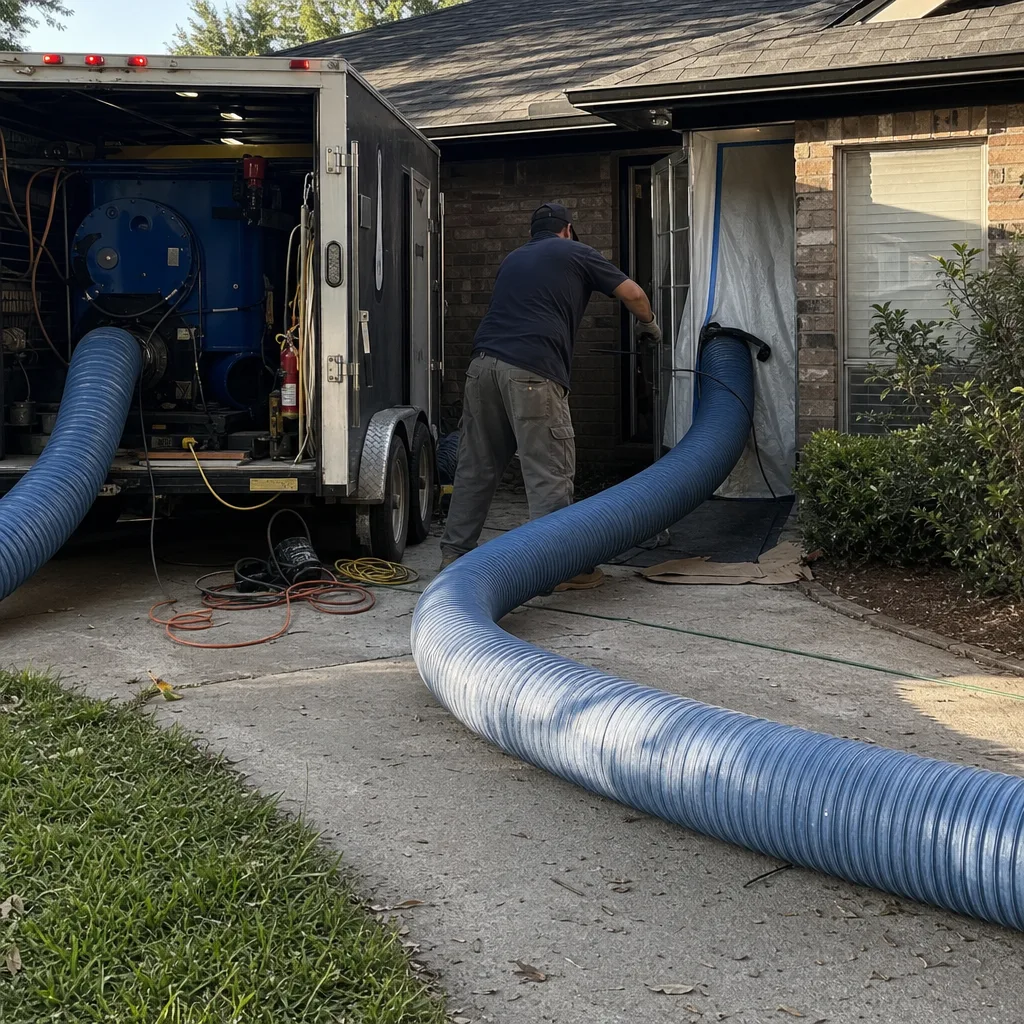
- Truck-mounted negative-pressure units: 2,000-4,000 CFM, creating sustained vacuum across the entire duct network
- Portable HEPA collectors (Abatement Technologies): 1,000-1,500 CFM with 99.97% efficiency at 0.3 microns
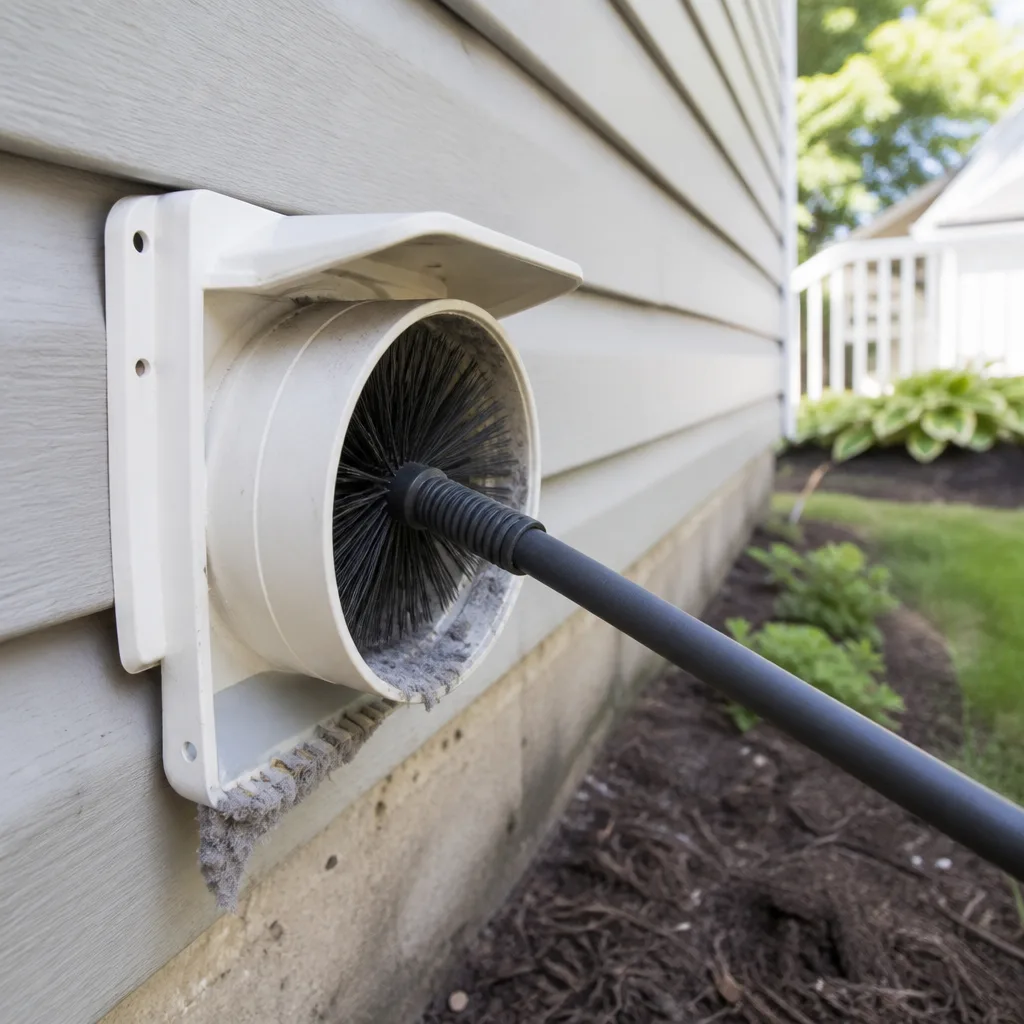
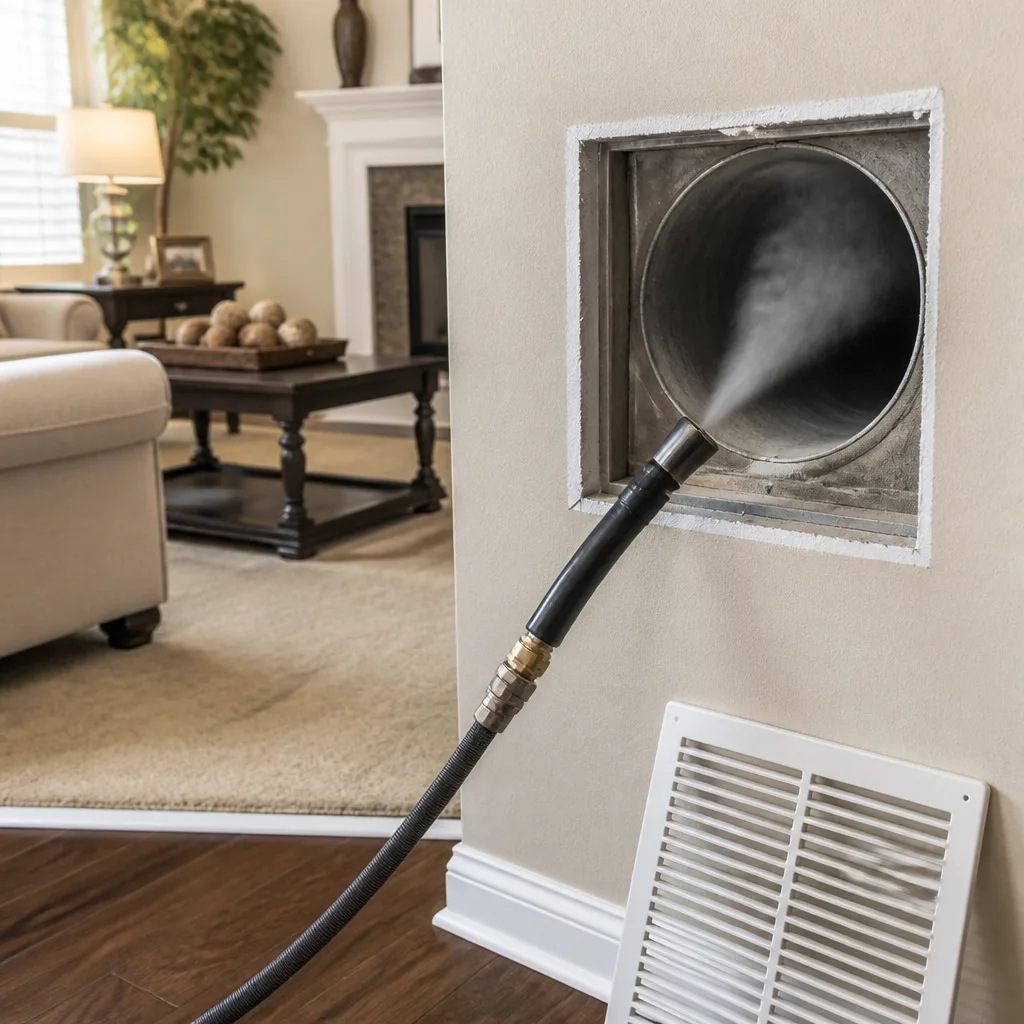
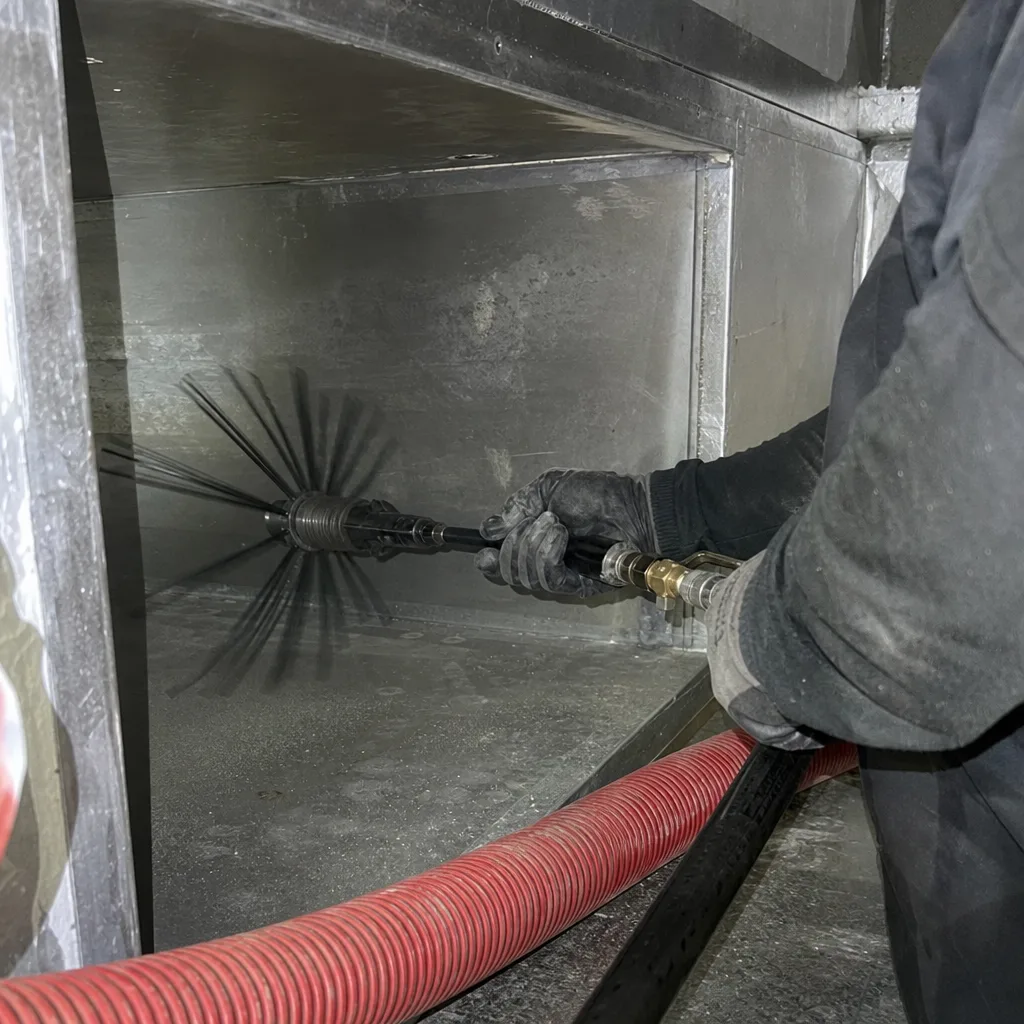
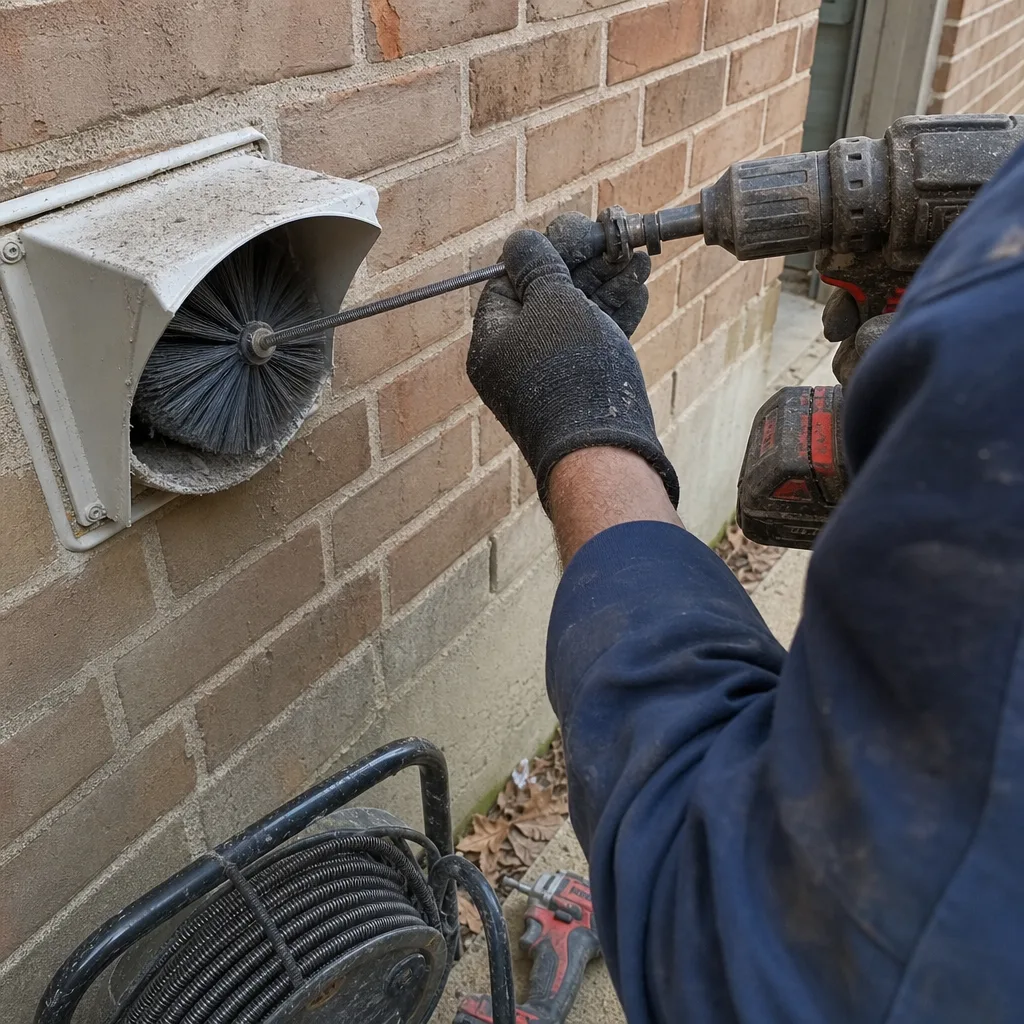
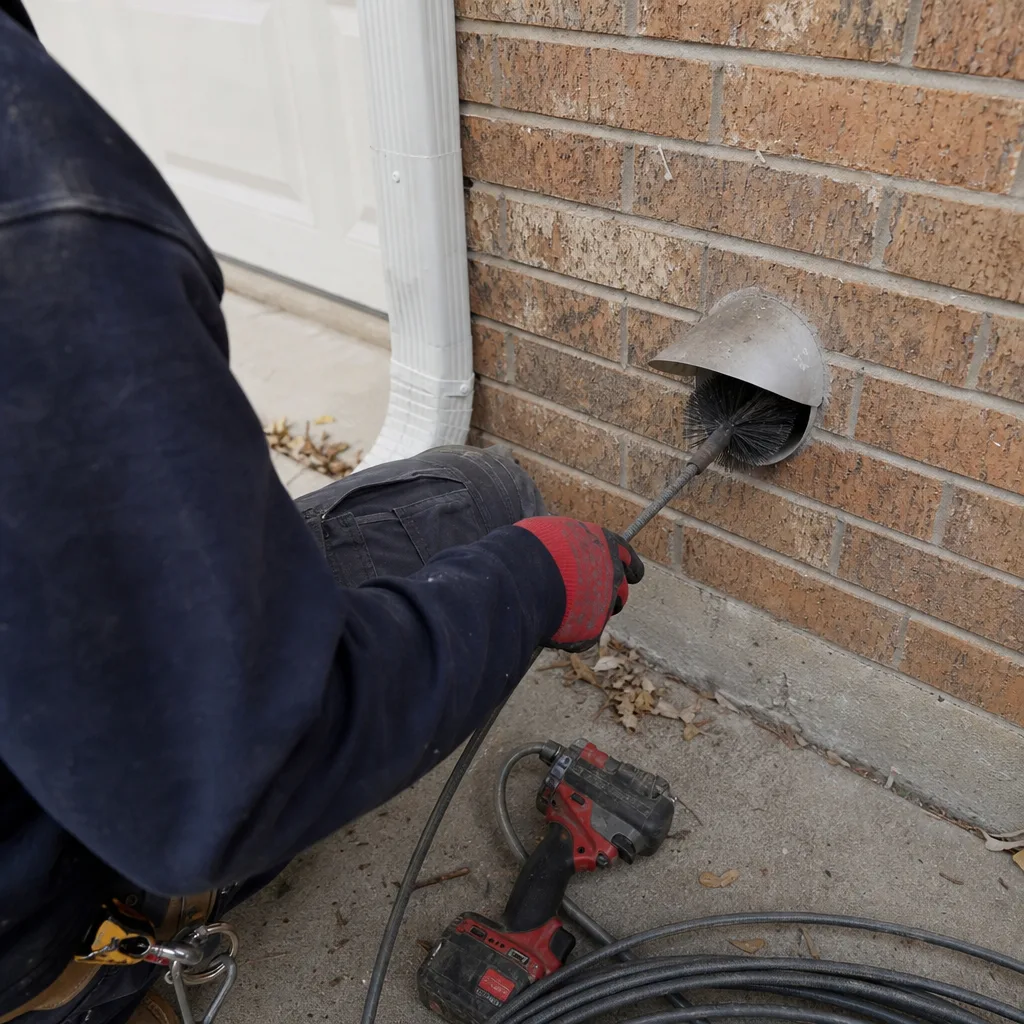
- Agitation tools: pneumatic whips, skipper balls, and rotary brushes sized to duct diameter
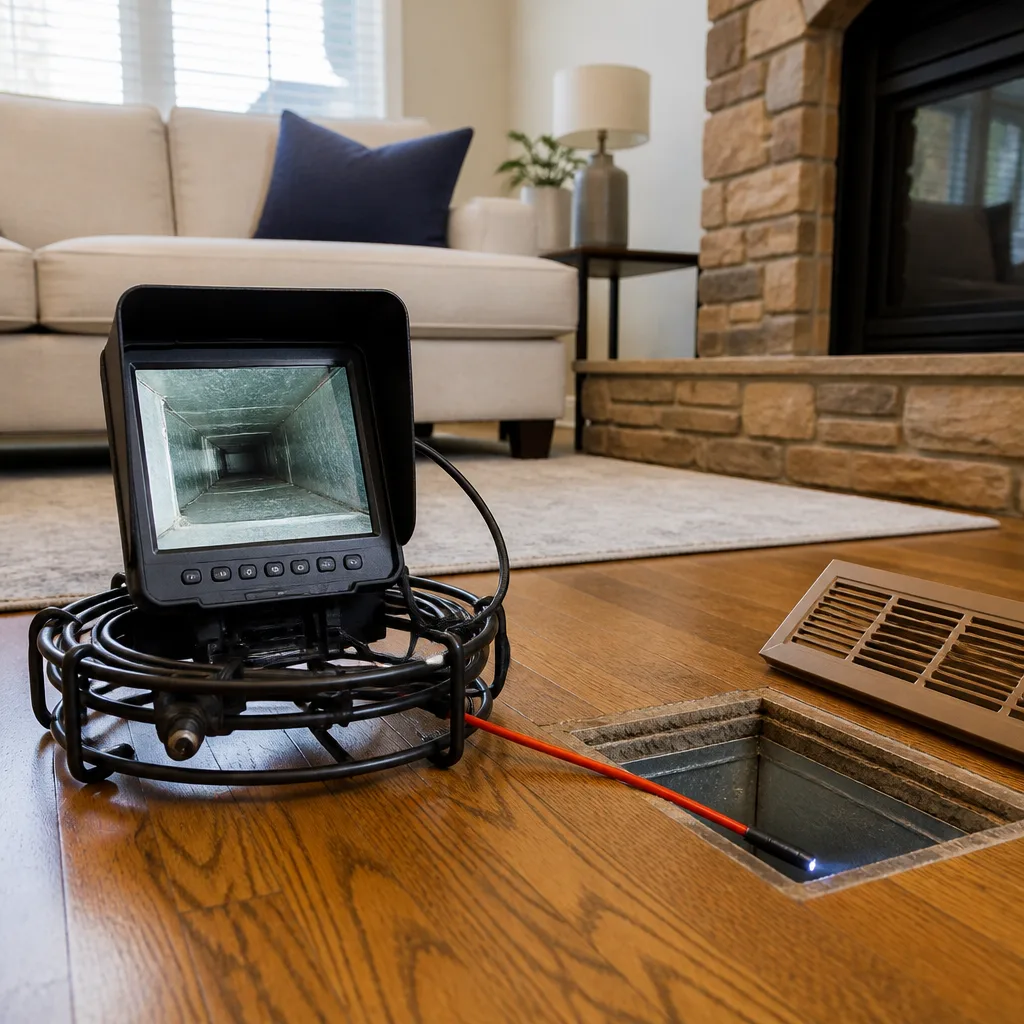
- Access equipment: sealed port installation tools, remote camera systems for pre- and post-cleaning documentation
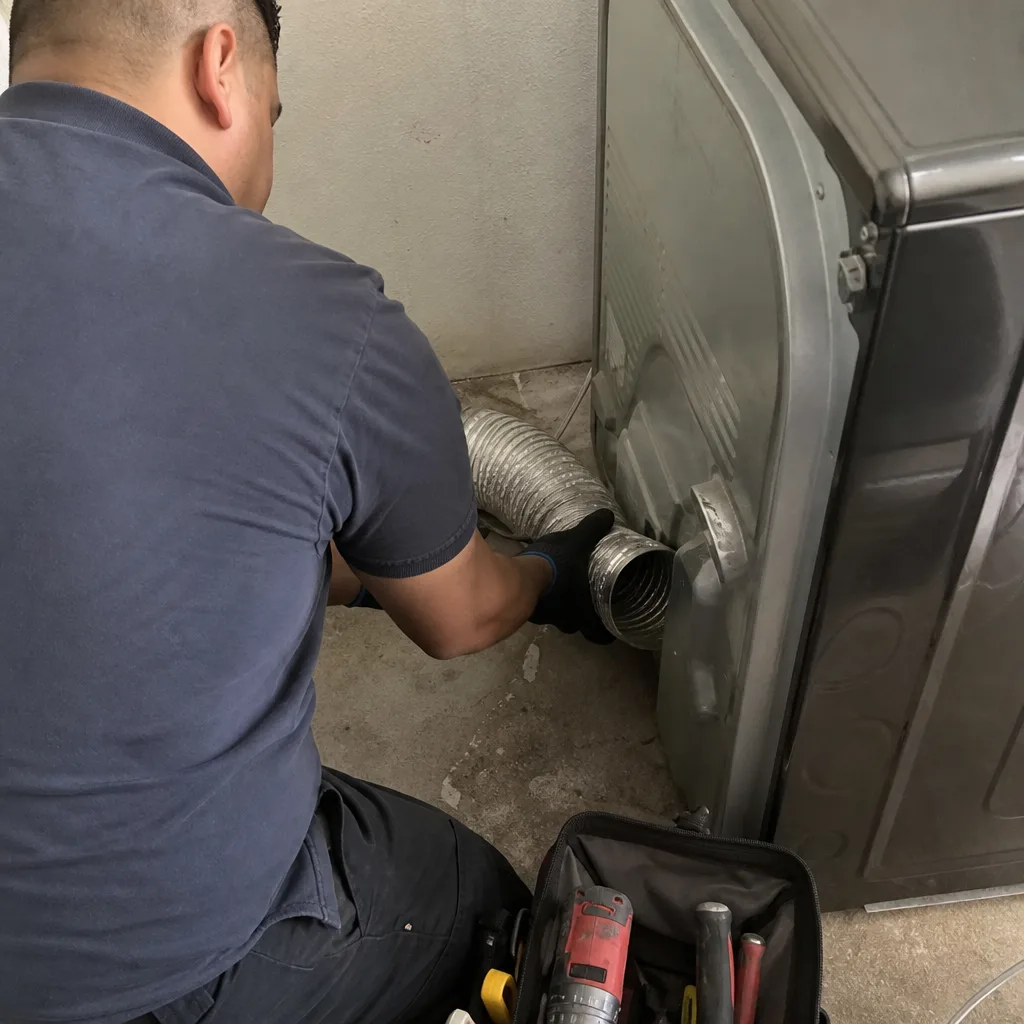
The CFM differential is decisive. A professional system moves 25-50 times more air volume than a shop vac. This matters because debris in Dallas ductwork is often compacted by years of airflow, particularly in return lines where the system draws air continuously. Dislodging that material requires airflow velocity that overcomes the adhesion between debris and duct wall. A shop vac simply cannot generate that velocity at distance from the hose opening.
There’s also the matter of containment. Professional equipment creates negative pressure at the collection unit, drawing air through the entire duct network toward a filtered exhaust. A shop vac blows filtered air back into the room, and if the filter is overloaded - common during duct work - fine particles bypass it entirely. We’ve tested this: particle counters show elevated PM2.5 levels in rooms where shop vac duct cleaning was attempted.
For homeowners considering equipment rental as a middle path: a single-day rental of a portable duct cleaning machine (Nikro or comparable) runs $300-$450 in the Dallas market, plus HEPA vacuum rental at $75-$125 per day. The learning curve is substantial. Most renters we’ve spoken with report 6-10 hours for a first attempt on a 2,000 square foot home, with uncertain results.
Three Legitimate DIY Tasks Worth Doing
While whole-system cleaning is not a DIY project, three maintenance tasks genuinely improve duct hygiene and are within homeowner capability. We recommend these to Dallas customers who want to maintain system cleanliness between our Air Duct Cleaning services.
1. Register Cover Cleaning and Boot Vacuuming
The register boot - the sheet metal or plastic fitting that connects the duct to your floor, wall, or ceiling register - is where visible debris accumulates first. This is also where a household vacuum can actually be effective.
- Remove the register cover. Most lift off; some require a screwdriver.
- Vacuum the cover itself, both sides, using a brush attachment.
- Insert the vacuum hose into the boot as far as it will reach without forcing. Typically 6-12 inches in a standard residential installation.
- Use a flashlight to inspect the visible duct interior. Note any buildup, discoloration, or obstruction for your professional.
- Replace the cover. If screws were removed, hand-tighten only - overtightening strips the drywall anchors common in Dallas construction.
Frequency: quarterly, or monthly if you have shedding pets or live near construction activity in developing areas like Trinity Groves or the Design District. See Seasonal Air Duct Cleaning Care for Dallas: Year-Round Homeowner’s Guide for a full maintenance calendar.
2. Filter Replacement
This is the single most impactful homeowner maintenance task, and the most frequently performed incorrectly.
- Locate your filter slot - typically at the return air grille or at the air handler.
- Note the arrow direction on the filter frame; it indicates airflow direction, which must match the system’s pull.
- Check the MERV rating. For most Dallas homes, MERV 8-11 balances filtration with airflow. Higher MERV ratings restrict airflow and can strain older systems common in pre-2015 construction.
- Replace every 60-90 days during peak cooling season (May-September in Dallas), or monthly if you have allergies, pets, or live near major roadways with diesel particulate exposure.
We use Honeywell and Aprilaire media filters on installation jobs and can specify compatible replacements for your system.
3. Return Grille Surface Cleaning
The return grille is the system’s intake point and accumulates dust that would otherwise enter the duct network. A damp microfiber cloth wiped across the grille face monthly reduces the debris load entering your system. This takes two minutes and requires no tools.
These three tasks, performed consistently, maintain the accessible portions of your system. They do not clean duct runs, plenums, or the air handler. That distinction matters when a Dallas homeowner is deciding whether to attempt more.
Dallas Attic Conditions That Make DIY Hazardous
A significant portion of Dallas residential HVAC equipment is located in attics. This placement, common in ranch-style and split-level homes built from the 1960s through the 2000s, creates physical hazards that make DIY duct inspection and cleaning dangerous.
Thermal conditions: From June through August, Dallas attic temperatures routinely exceed 140°F. Heat illness onset can occur in 15-20 minutes for an unacclimated person. The National Weather Service heat index calculations don’t account for attic environments where ventilation is minimal and radiant heat from roofing materials compounds ambient temperature.
Structural hazards: Blown cellulose or fiberglass insulation obscures floor joists in most Dallas attics renovated since 1990. Stepping between joists means falling through drywall ceiling below. We’ve responded to service calls where the homeowner’s DIY attempt caused ceiling damage before any duct work began.
Equipment clearances and electrical exposure: Air handlers in Dallas attics are typically installed on platforms with restricted working space. Electrical disconnects, sometimes live even when the thermostat is off, are within arm’s reach of duct connections. The sheet metal edges of ductwork, particularly older galvanized trunk lines in homes near White Rock Lake and older East Dallas neighborhoods, are sharp and can cause lacerations requiring stitches.
Asbestos and vermiculite: Homes built before 1985 in Dallas neighborhoods like Lakewood, Swiss Avenue, and parts of Oak Cliff may have asbestos-containing duct insulation or vermiculite attic insulation. Disturbing these materials without proper containment and respirator protection creates legal liability and health risk.
We do not recommend attic duct work for any homeowner. The risk-reward calculation is unfavorable, and professional crews working under Haven Standard Clause 3: Verified Crews carry the training and protective equipment to work safely in these conditions.
When Professional Cleaning Is Not Optional
Certain conditions make professional duct cleaning mandatory rather than optional. These are not marketing claims; they are situations where DIY attempts are ineffective, hazardous, or legally insufficient.
Post-renovation debris: Construction dust in Dallas remodels contains drywall compound, silica from tile cutting, and volatile organic compounds from new materials. This debris is fine enough to penetrate standard filters and accumulates in duct runs. More critically, it can damage HVAC components: we’ve replaced blower motors in Dallas homes where construction dust caused imbalance and premature bearing failure. Post-renovation cleaning requires HEPA containment and agitation tools that remove adhered particles rather than redistributing them.
Verified biological growth: If you observe discoloration on registers or detect musty odors when the system runs, laboratory confirmation of mold or bacterial growth changes the scope of work. DIY cleaning of biologically contaminated ducts disturbs spore reservoirs without proper containment, potentially elevating airborne counts. Professional remediation follows EPA guidelines and NADCA standards for HVAC system cleaning, with post-treatment verification.
Rodent intrusion evidence: Droppings, nesting material, or gnawed duct insulation indicate active or recent pest presence. Rodent waste carries hantavirus and other pathogens; disturbance without respiratory protection and HEPA containment is hazardous. Additionally, the entry point must be identified and sealed, or contamination recurs. We coordinate with pest control professionals in Dallas when rodent evidence is found during our pre-cleaning inspection.
New construction: Ductwork installed during home construction is often open for weeks or months, accumulating drywall dust, insulation fragments, and construction debris. The NADCA recommends post-construction cleaning before occupancy. In Dallas’s active build markets - Frisco, McKinney, and new infill in the Design District - we perform this service for homeowners who want documentation that their system started clean.
Real estate transactions: Some Dallas-area lenders and insurers now require duct inspection documentation for homes with certain HVAC configurations. A DIY cleaning provides no transferable record; a professional service with photo documentation satisfies this requirement.
Honest Cost Comparison: DIY vs. Professional in Dallas
The bait-and-switch pricing common in this industry makes honest comparison difficult. We’ll present actual numbers based on 2024-2025 Dallas market conditions.
DIY route, full attempt:
- Shop vac with HEPA filter (if not owned): $180-$320
- Duct cleaning attachment kit: $45-$85
- Extension rods and brush heads: $35-$60
- Personal protective equipment (respirator, goggles, gloves): $40-$75
- Equipment rental (professional portable unit): $300-$450 for 24 hours
- HEPA vacuum rental: $75-$125 per day
- Time investment: 6-12 hours for first attempt on typical 2,000 sq ft home
Total DIY investment for equipment purchase: $300-$540. For rental attempt: $375-$575 plus time.
Professional service in Dallas:
- Whole-system air duct cleaning for typical single-family home: $450-$850
- Includes: full negative-pressure extraction, agitation of all duct runs, register and boot cleaning, return system cleaning, air handler compartment inspection
- Includes: Documented Photo Record of every duct run, before and after, delivered as standard
- Includes: written price agreed before work starts, per Haven Standard Clause 1
- Includes: 365-Day Done Right Promise in writing
The economic analysis is straightforward. Equipment rental approaches professional pricing without delivering professional capability. Equipment purchase amortizes only if you clean ducts repeatedly, which the NADCA does not recommend more than every 3-5 years for typical homes. The time investment, at even modest valuation, tips the calculation toward professional service.
But the comparison that matters most is undocumented versus documented. A DIY attempt produces no record of what was or wasn’t cleaned. A professional service from CleanRun Air Duct Cleaning in Dallas produces a photo record of every duct run, a written scope of work, and a written warranty. For Dallas homeowners who purchased between 2015 and 2025 at elevated price points, this documentation has value for resale, insurance claims, and warranty disputes with HVAC manufacturers.
How to Evaluate a Professional Quote
Not all professional services deliver equivalent value. The Dallas market includes operators using shop-vac-level equipment in branded vans, and others performing partial cleaning while charging for whole-system service. Here’s how to evaluate what you’re actually buying.
Demand written scope specificity: A proper quote lists the number of supply registers, return registers, trunk lines, and whether the air handler compartment is included. Vague language like “complete cleaning” without itemization is a red flag. At CleanRun, every quote under Haven Standard Clause 1 specifies the exact components to be cleaned and the equipment to be used.
Verify equipment brands: Professional-grade equipment from Rotobrush, Nikro, Abatement Technologies, and comparable manufacturers is verifiable online. Ask what equipment will be used. If the operator cannot name the manufacturer or describes only “commercial vacuum,” the capability is likely inadequate.
Request photo documentation protocol: Before-and-after photography of duct interiors requires access ports and camera equipment. If a company cannot describe their photo process, they likely don’t perform it. Our Documented Photo Record is standard on every job, not an upgrade, because visual evidence is the only proof that distinguishes actual cleaning from vacuum noise.
Understand pricing structure: Per-vent pricing creates incentives to find additional vents or charge for returns separately. Flat pricing per system, agreed in writing before work starts, aligns the operator’s incentive with thorough completion. We do not quote per vent for this reason.
Check for bait-and-switch indicators: Coupon prices below $200 for whole-system cleaning in Dallas are not economically sustainable with proper equipment and labor. The industry standard is that these prices convert to $600-$1,200 invoices through “discovered” conditions. Our Free Second Opinion service exists specifically for Dallas homeowners who received a low quote and want a written alternative for comparison.
Verify credentials directly: Texas HVAC contractor requirements, liability insurance, and technician background checks are verifiable. We publish our license number and operate under Haven Standard Clause 3: Verified Crews, with technician identification provided before arrival. Explore more guides & resources on HVAC maintenance and home care.
Common Mistakes to Avoid
- Attempting attic duct work in summer: We’ve treated heat exhaustion in homeowners who underestimated Dallas attic temperatures. The work can wait for October, or it can be done by crews equipped for the environment.
- Using chemical sprays without identification: Foaming cleaners and antimicrobial sprays sold for duct use can leave residues that corrode aluminum heat exchangers or trigger respiratory sensitivity. Know exactly what you’re introducing into the airstream.
- Cleaning only visible registers: This is the most common DIY error - impressive register cleanliness with untouched trunk lines. The camera shows the truth, and the air quality doesn’t improve.
- Ignoring the return side: Return ducts pull air continuously and typically contain heavier buildup than supply lines. They’re also harder to access, which is why they’re often skipped in inadequate professional jobs too.
- Disturbing suspected mold without containment: In Dallas’s humid months, particularly in homes near Bachman Lake or the Trinity River corridor with higher water tables, biological growth in ducts is possible. Disturbing it without negative-pressure containment spreads spores through the home.
- Buying into “maintenance” packages with excessive frequency: Annual duct cleaning is unnecessary for most homes and indicates a revenue model rather than a service model. Every 3-5 years is standard; post-event cleaning (renovation, water damage, confirmed contamination) is the exception.
When to Call a Professional
Call a professional when the work requires equipment you don’t own, conditions you cannot safely access, or documentation you need for legal or transactional purposes. In Dallas, this encompasses most whole-system cleaning scenarios.
Specific triggers: visible debris beyond register boots, musty odors when the system runs, post-renovation occupancy, real estate sale preparation, warranty or insurance documentation requirements, or any suspicion of biological contamination or pest intrusion.
CleanRun Air Duct Cleaning Dallas offers free estimates throughout Dallas and surrounding communities. Every estimate includes a written price before work starts, per Haven Standard Clause 1, with no obligation. Call (469) 405-6133 to schedule. We also provide a Free Second Opinion on any written estimate from another provider - bring their quote, and we’ll put our number next to it in writing.
Frequently Asked Questions
Whole-system air duct cleaning for a typical Dallas single-family home ranges from $450 to $850, depending on system size, accessibility, and contamination level. This includes all supply and return duct runs, registers, boots, and air handler compartment inspection, plus a Documented Photo Record of every run. CleanRun provides a written price before any work starts, with no per-vent add-ons. Call (469) 405-6133 for a specific quote - estimates are free.
Low quotes typically rely on one of three models: shop-vac equipment masquerading as professional service, per-vent pricing that balloons during the visit, or partial cleaning (registers only) sold as whole-system work. The $79-$199 coupon price is a well-documented industry pattern that converts to $600-$1,200 through “discovered” conditions once the technician is in the home. A legitimate whole-system cleaning in Dallas cannot be performed at those prices with proper equipment, labor, and insurance. CleanRun’s Free Second Opinion service exists to give homeowners a written alternative for comparison.
Require photo documentation of every duct run, before and after. Without it, you have only the operator’s word. CleanRun’s Documented Photo Record is standard on every job, delivered to the customer as part of the job record. The photos show the interior of each run, the debris condition before work, and the post-cleaning result. This practice has been in place since our first job in 2013.
Every 3-5 years for typical residential systems, with exceptions for post-renovation, confirmed contamination, water damage, or pest intrusion. Dallas’s climate - hot, humid summers with extended air conditioning runs - can accelerate accumulation in return ducts, but annual cleaning is unnecessary and suggests a revenue-driven rather than service-driven provider. Homes near major construction, in developing areas like the Trinity Groves corridor, or with shedding pets may benefit from more frequent filter changes without needing more frequent duct cleaning.
A shop vac can clean register covers, accessible boot openings to a depth of 6-12 inches, and the surrounding floor area. It cannot clean duct runs, trunk lines, plenums, or the air handler compartment. The airflow (65-80 CFM) is insufficient to dislodge adhered debris or maintain negative pressure across the network. Attempting more risks pushing debris deeper, disturbing biological material without containment, or personal injury in attic environments. The three legitimate DIY tasks are detailed in this guide; whole-system cleaning requires professional equipment.
It can be. Dallas attic temperatures exceed 140°F in summer months, creating heat illness risk within minutes. Blown insulation obscures floor joists, creating fall-through hazards. Electrical components near air handlers remain live in some configurations. Suspected asbestos in pre-1985 homes, biological contamination, or rodent waste require respiratory protection and containment protocols most homeowners don’t have. Register-level maintenance is safe; attic and whole-system work is not recommended for homeowners.
The Bottom Line
The DIY versus professional question has a technically precise answer that most guides obscure. Homeowner maintenance - register cleaning, boot vacuuming, filter replacement - is worthwhile and should be performed regularly. Whole-system duct cleaning requires negative-pressure extraction equipment, proper containment, and physical access to components that are often hazardous to reach. In the Dallas market, equipment rental costs approach professional pricing while delivering inferior results and no documentation. For conditions that matter - post-renovation debris, biological contamination, real estate transactions, or simply the assurance of verified work - professional service is the rational choice. The key is selecting a provider who documents what was done, names the equipment used, and puts the price in writing before the truck arrives.
Written by Tomas Reyes, Owner at CleanRun Air Duct Cleaning Dallas, serving Dallas since 2013.