
Last updated September 23, 2026
Whole-system duct and dryer vent check with before-and-after photos - you see exactly what came out of your vents
That "$99 whole-house special" is a bait ad - the real number appears once they are in your hallway, or the "clean" is a shop-vac at the register. We photograph the inside of your ducts before and after instead.
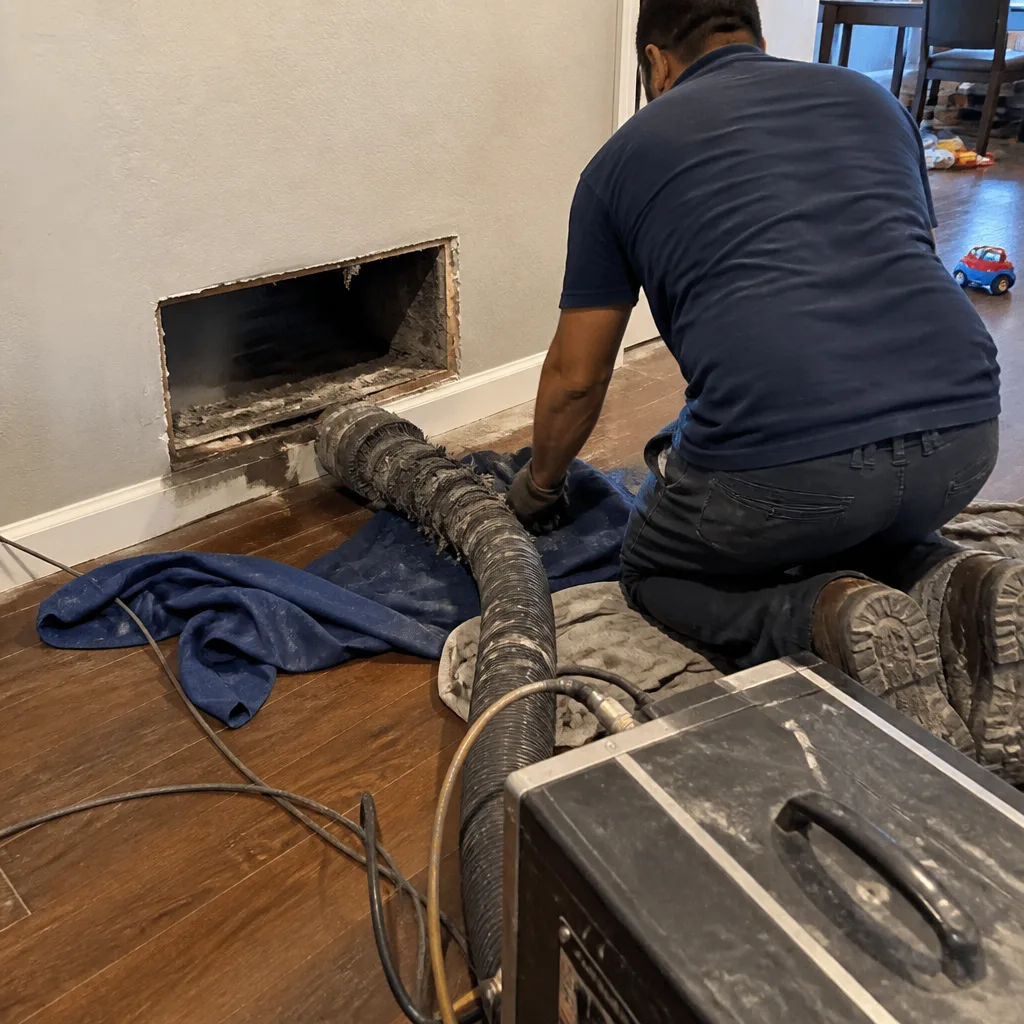 Before
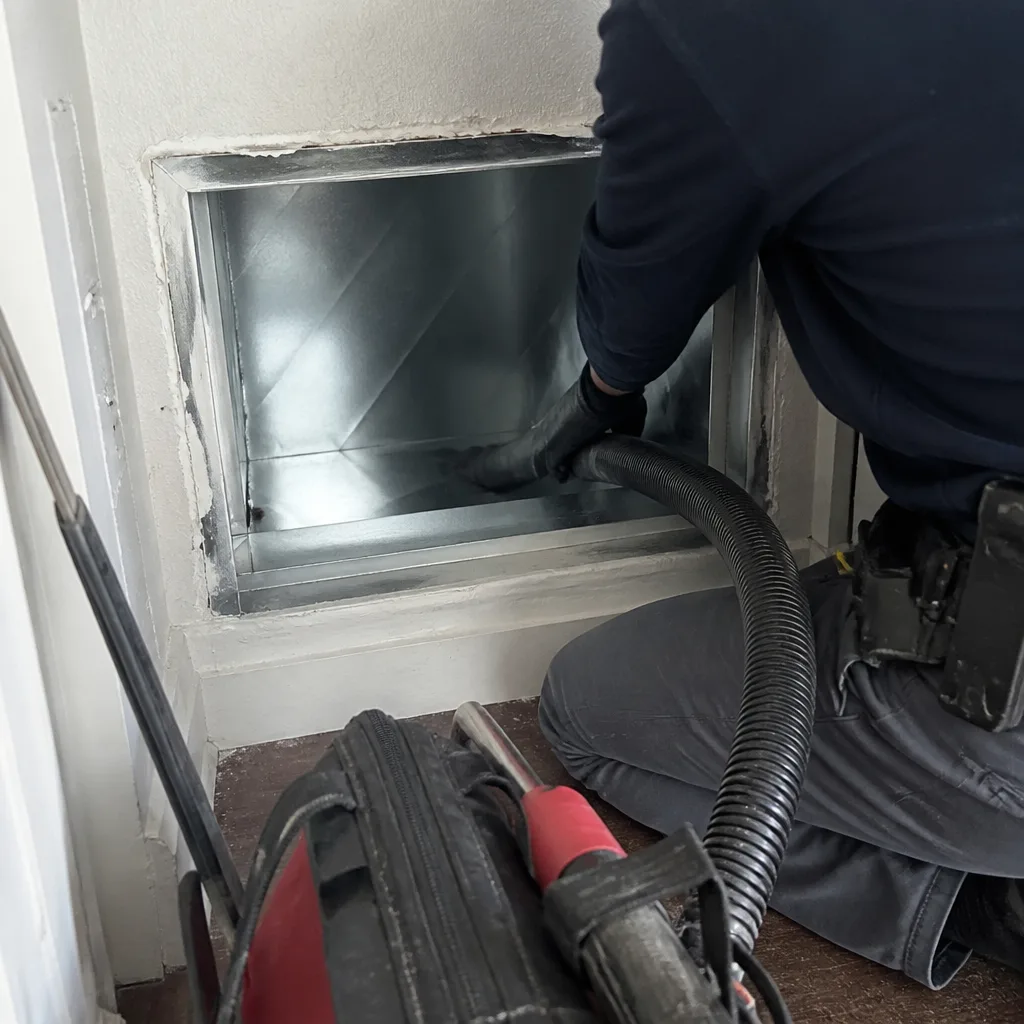 After
After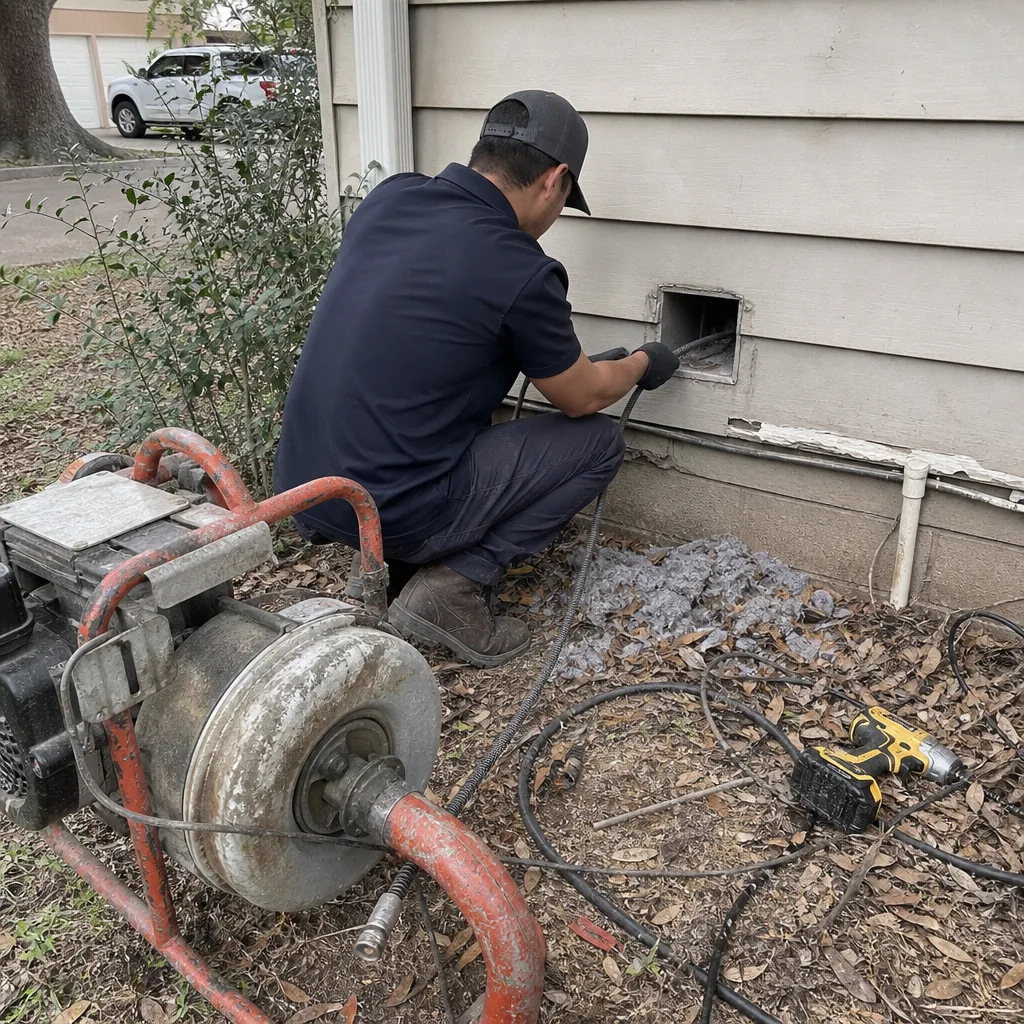 Before
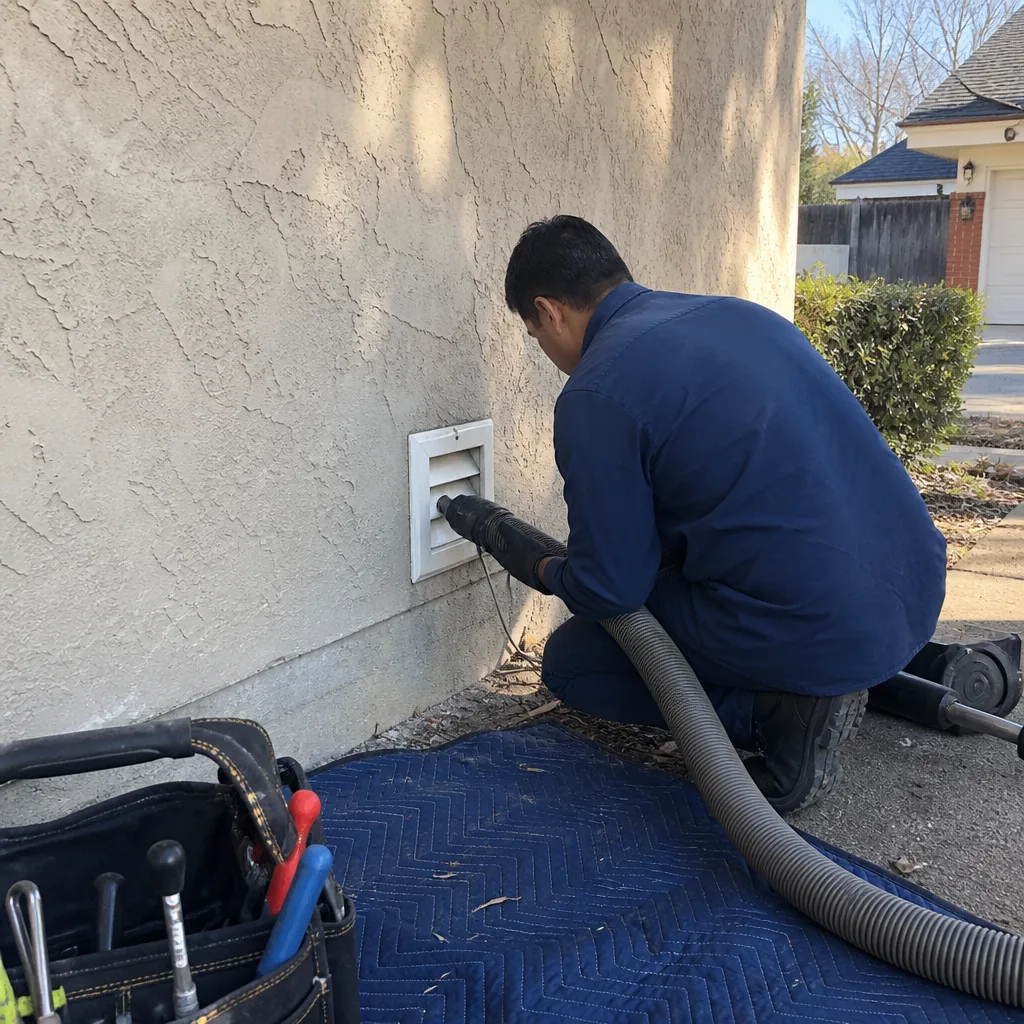 After
After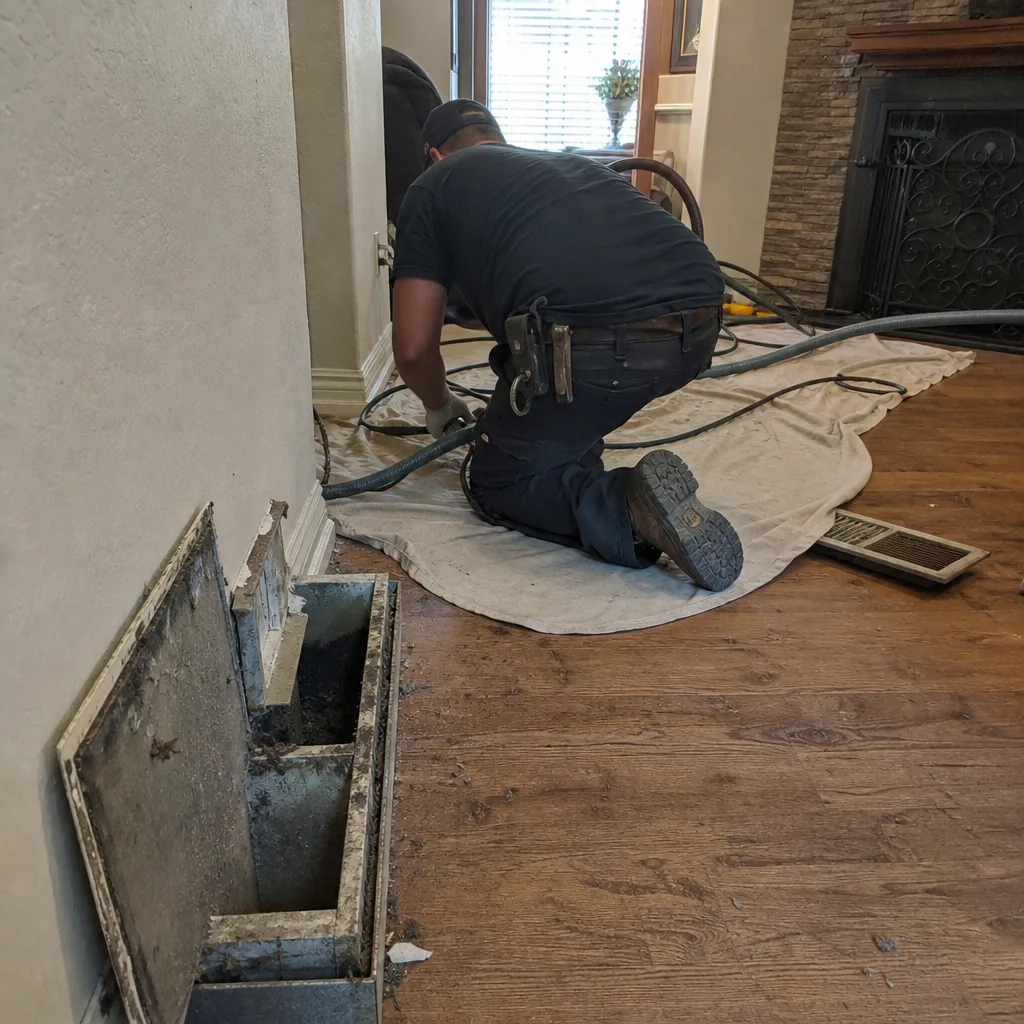 Before
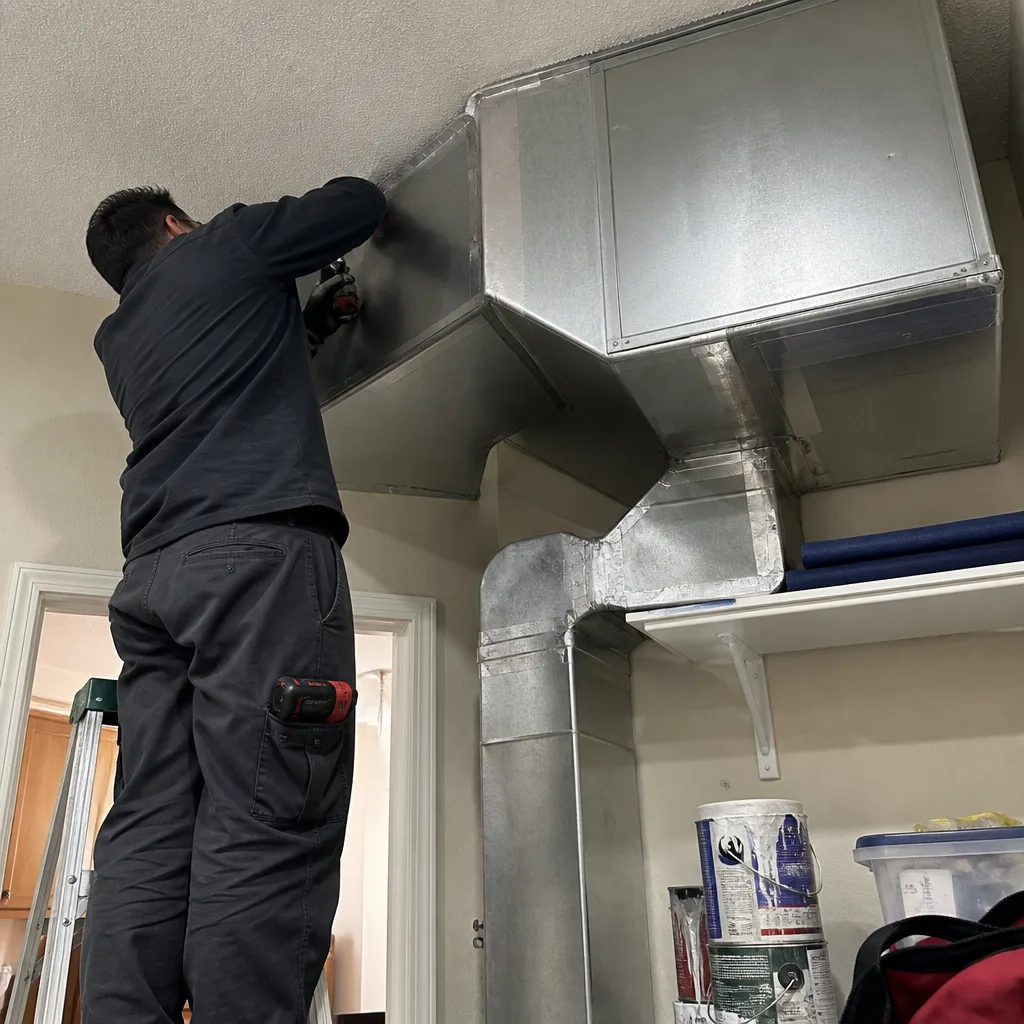 After
AfterAir Duct Cleaning Cost Breakdown: The Dallas Homeowner’s Reference for 2026
The average air duct cleaning quote in Dallas in 2026 ranges from $300 to $1,200 for the same house. That spread is not market variation, and it is not explained by neighborhood or home age alone. It is the gap between a scoped, documented job and a visit that ends with a vacuum hose in one hand and an upsell clipboard in the other. In this guide, we will show you what each line item on a legitimate Air Duct Cleaning estimate actually costs, what five upsells are worth paying for and which ones are not, and how to read a written scope of work so you know what was done before the crew leaves your driveway.
Quick Answer
Air duct cleaning in Dallas costs between $300 and $1,200 for a typical single-family home in 2026, with most whole-system flat-rate jobs falling in the $450-$750 range. The final price depends on system size, duct material, access difficulty, and whether the scope includes the plenum (the main distribution box), all return and supply runs, and the registers themselves. Per-vent pricing models often produce lower initial quotes but higher final invoices once the crew counts every register in the house.
Table of Contents
- Why Quotes Vary So Widely for the Same Dallas Home
- Dallas Air Duct Cleaning Price Reference Table for 2026
- Per-Vent Pricing vs. Flat-Rate Whole-System Pricing
- The Five Most Common Line-Item Upsells Explained
- What Drives Legitimate Price Variation in Dallas
- The True Cost of the $79 Coupon
- How to Structure a Written Estimate Review
- Common Mistakes to Avoid
- When to Call a Professional
- Frequently Asked Questions
- The Bottom Line
BeforeAfterWhy Quotes Vary So Widely for the Same Dallas Home
We have delivered written estimates in Dallas homes where the homeowner showed us three other quotes ranging from $89 to $1,400. The house did not change. What changed was what each contractor planned to do, how they planned to document it, and whether they planned to do it at all.
The Dallas market amplifies this confusion for two reasons. First, the metro’s housing stock spans 70 years of construction, from postwar ranch homes in Lakewood and Kessler Park to 5,000-square-foot builds in Frisco and McKinney that went up in 2022. A 1,200-square-foot home with six sheet-metal duct runs and a crawl-space furnace presents a radically different job than a 4,000-square-foot home with 24 flex-duct runs, a zoned system, and a third-floor attic unit in August heat. Second, Dallas’s climate - hot, humid summers that run HVAC systems 10-12 hours daily for months - produces heavier debris loads and more microbial growth in supply plenums than drier markets. A quote that ignores local climate conditions is a quote that ignores what is actually inside the ducts.
Three pricing models dominate the Dallas market, and they produce three different outcomes:
- Coupon model: A low entry price, typically $79-$149, with per-vent add-ons that push the final invoice to $600-$900. The scope is rarely defined in writing before arrival.
- Per-vent model: A base fee plus $25-$65 per register. This appears transparent but rewards the contractor for finding more vents than the homeowner expected, and it often excludes the plenum and main trunk lines.
- Whole-system flat rate: One price for the complete system - supply and return plenums, all duct runs, all registers - scoped by square footage or duct run count. This is the model CleanRun Air Duct Cleaning Dallas uses under Haven Standard Clause 1, because it aligns the contractor’s incentive with completing the job, not extending it.
The variation is not dishonesty in every case. Some contractors genuinely include more work. The problem is that most homeowners cannot tell the difference from the quote alone. This guide closes that gap.
Dallas Air Duct Cleaning Price Reference Table for 2026
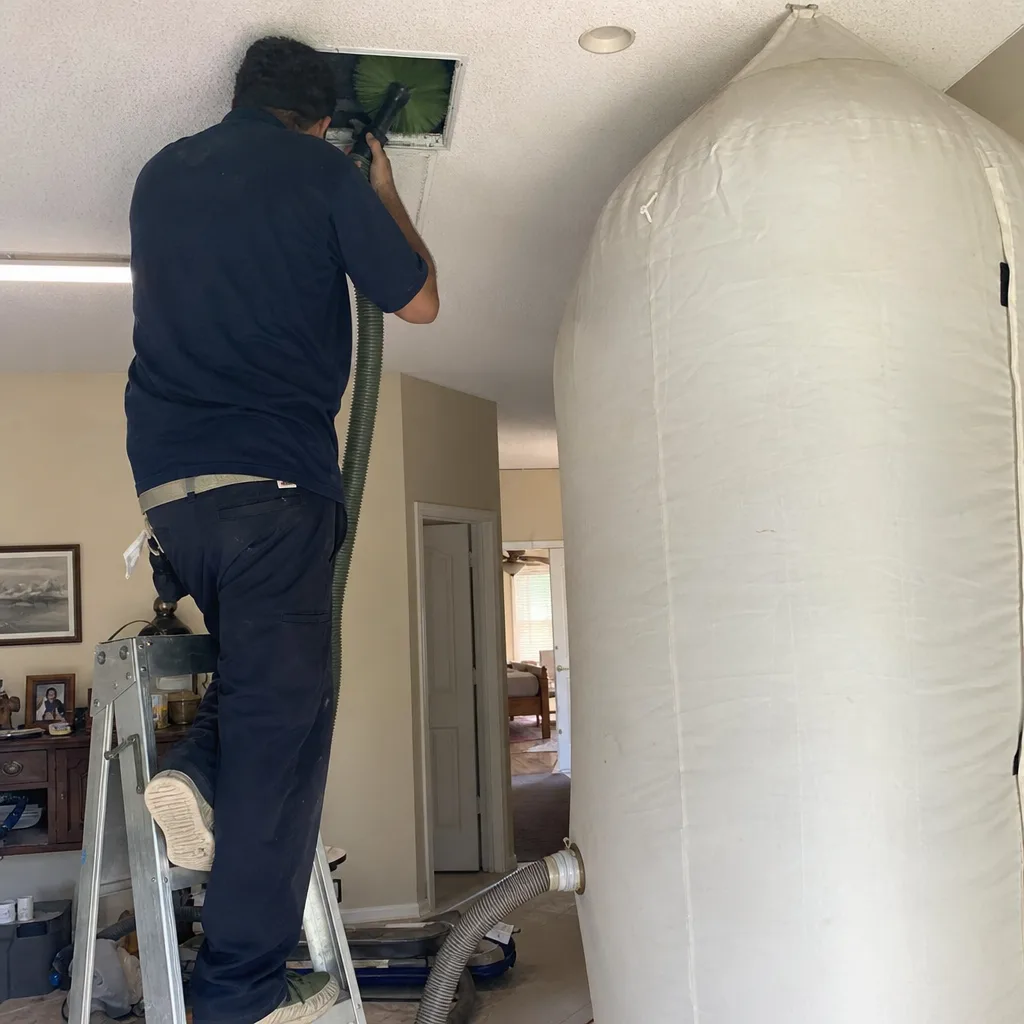
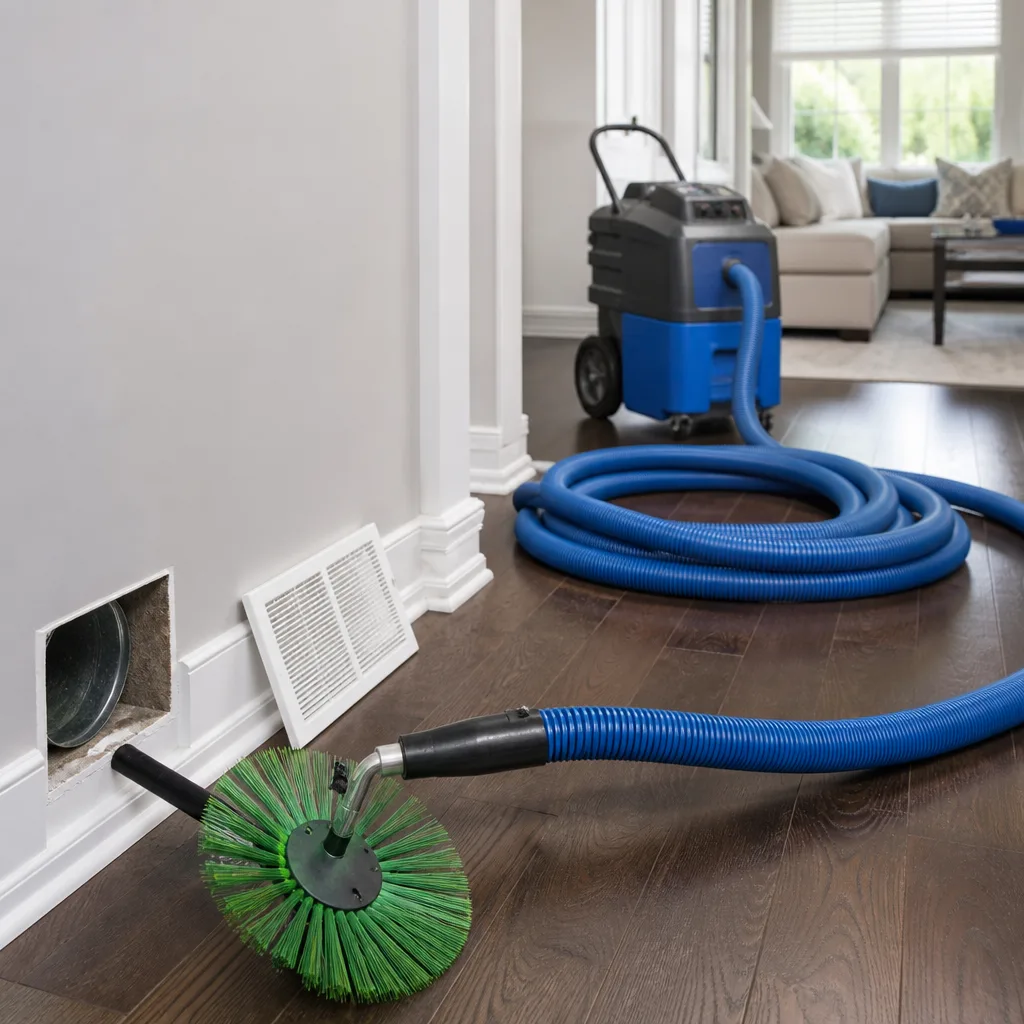
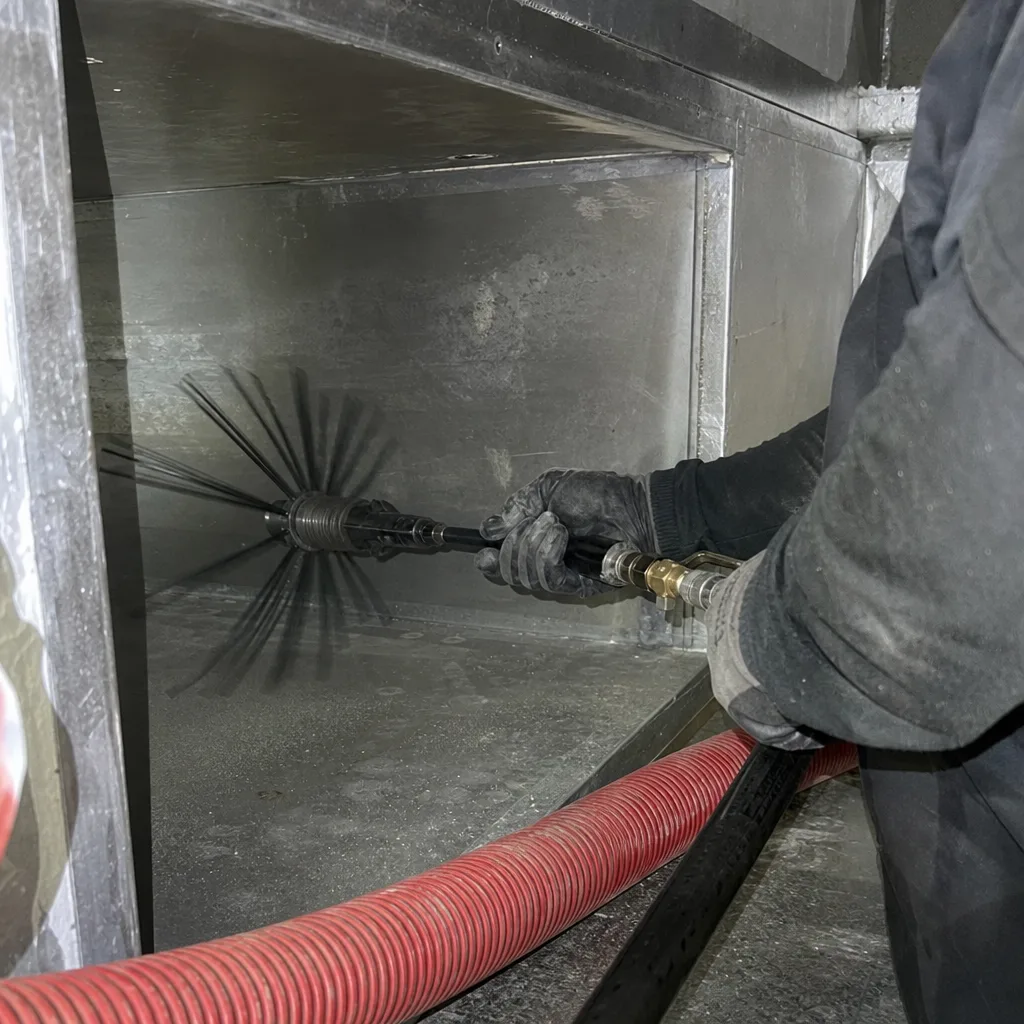
The table below reflects actual 2026 pricing for professional-grade air duct cleaning in the Dallas market, based on square footage tiers and system complexity. These are whole-system flat-rate ranges, not coupon entry points. Equipment referenced includes negative-pressure extraction systems from Nikro and Rotobrush, with HEPA filtration on the vacuum collection side.
| Home Size / System Type | Typical Flat-Rate Range | What Is Included |
|---|---|---|
| Under 1,500 sq ft, single HVAC system, 6-10 duct runs | $300-$500 | Supply and return plenums, all duct runs, all registers, basic debris removal |
| 1,500-2,500 sq ft, single system, 10-16 duct runs | $450-$650 | Full system as above, plus camera inspection of main trunk lines |
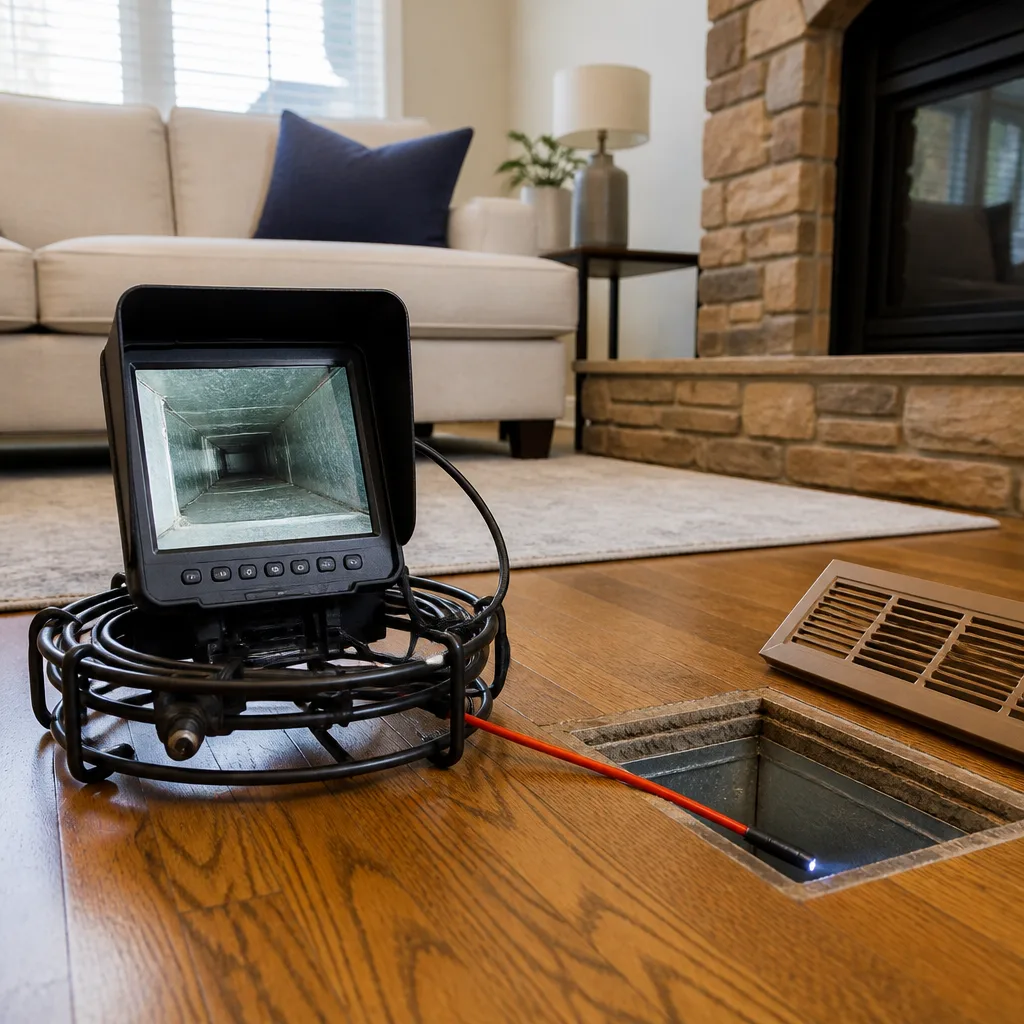
| 2,500-4,000 sq ft, single or zoned system, 16-24 duct runs | $600-$850 | Full system, camera inspection, documented photo record of each run |
| 4,000+ sq ft, multi-zone or dual-furnace system | $800-$1,200 | Full system, all zones, photo documentation, extended access labor for attic or crawl space |
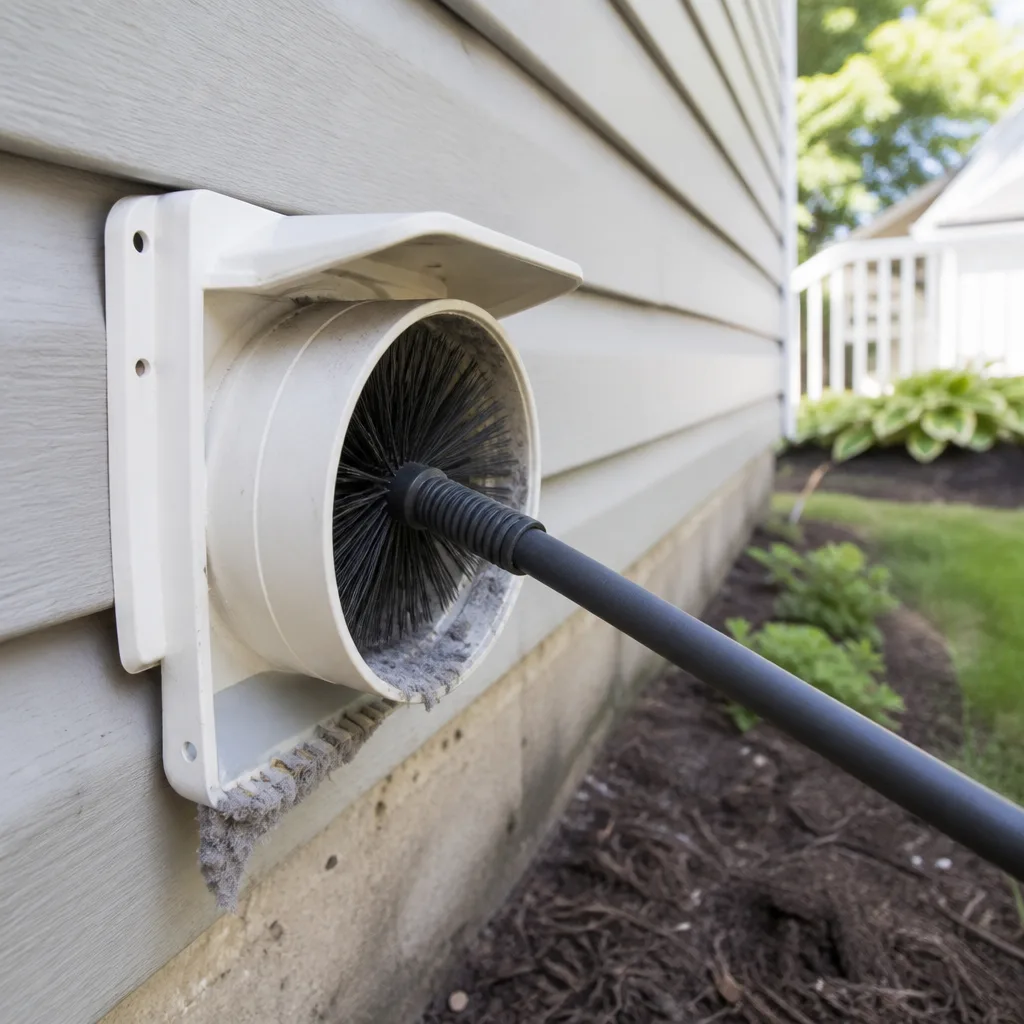
| Dryer vent cleaning (add-on or standalone) | $120-$250 | Full vent run from dryer to exterior termination, lint removal, airflow verification |
| Coil cleaning (evaporator or condenser) | $150-$350 | Chemical-free or manufacturer-approved treatment, access panel removal and reseal |
These ranges assume standard access - basement, closet, or first-floor attic. Jobs requiring rooftop access in July, crawl-space work in older Dallas homes with 18-inch clearances, or removal of custom built-ins to reach registers will fall at the high end or above. The documented photo record, which CleanRun includes on every visit, is what separates a quoted range from a verified outcome.
Per-Vent Pricing vs. Flat-Rate Whole-System Pricing
Per-vent pricing sounds logical. You have 12 registers, the contractor charges $40 per vent, you do the math. The problem is that registers are not the system. They are the visible endpoints. The plenum, the trunk lines, the elbows where debris actually accumulates - these are where the work happens, and they are rarely included in per-vent quotes.
In our experience across Dallas, from the M Streets to Preston Hollow to newer builds in Prosper, per-vent pricing produces three predictable outcomes:
- The count surprise: The homeowner believes they have 10 vents. The crew counts 14, including returns, basement registers, and the utility room vent the homeowner forgot. The $400 quote becomes $560 before work starts.
- The trunk line exclusion: The quote covers “vents.” The plenum and trunk lines, which carry 80% of the system’s air volume, are excluded. The homeowner pays for register cleaning while the main distribution box remains untouched.
- The upsell pivot: Once the crew is in the home, the “basic” package is revealed to exclude sanitizing, deodorizing, or the return side of the system. The low initial price was a visit fee, not a job price.
Flat-rate whole-system pricing eliminates these dynamics. Under Haven Standard Clause 1, CleanRun delivers a written price before any work starts, scoped by square footage and system configuration, with every component named. The price does not change because the crew found more registers than expected. The incentive shifts from finding billable items to completing the documented scope.
Per-vent pricing can work in the homeowner’s favor in one narrow case: a very small system with known, easily counted registers, where the homeowner has verified that trunk lines and plenums are included. In every other scenario, flat-rate pricing produces more predictable costs and more complete work.
The Five Most Common Line-Item Upsells Explained
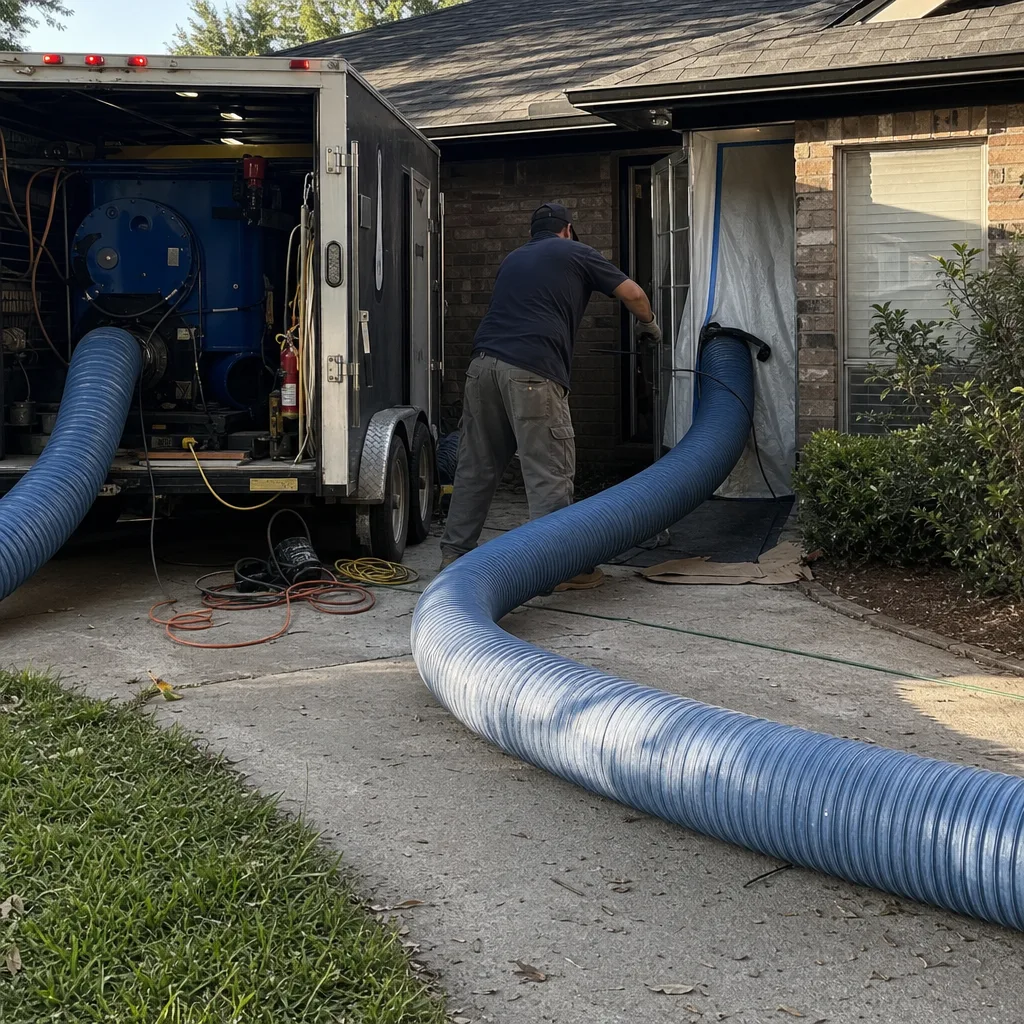
Upsells are not inherently unethical. A legitimate contractor may recommend coil cleaning because the evaporator is visibly clogged, or dryer vent work because the lint load presents a fire hazard. The problem is the timing and the documentation. An upsell presented after work has begun, without photographic evidence, and without a written amendment to the scope, is a revenue tactic, not a service recommendation.
Here are the five upsells we encounter most often in Dallas homes, with plain-language explanations of what each actually does and when it is worth paying for.
1. Sanitizer Application
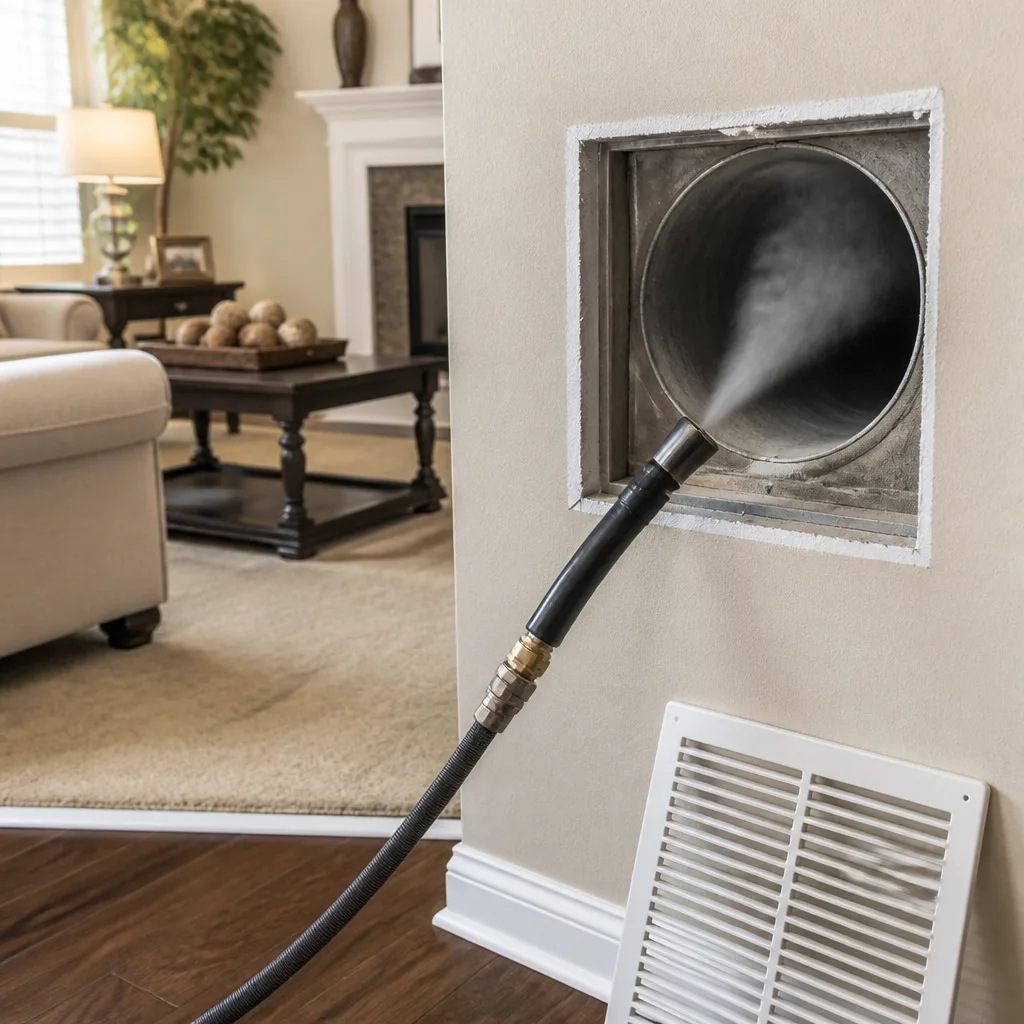
What it is: An EPA-registered antimicrobial solution, typically applied as a fog or mist into the duct system after mechanical cleaning. It is designed to reduce bacterial and fungal growth on interior duct surfaces.
When it is legitimate: After visible mold or heavy microbial growth has been found and photographed during inspection, or in homes with documented water intrusion history. In Dallas’s humid summer climate, supply plenums in attic installations can develop surface mold that mechanical cleaning alone does not address.
When it is not: As a routine add-on to every job, or when the contractor cannot show you the growth that justifies it. “Deodorizing” sprays without EPA registration are not sanitizers. They mask odors without addressing cause.
Typical Dallas price: $75-$200, depending on system size and product used.
2. Dryer Vent Cleaning Add-On
What it is: Cleaning of the full dryer exhaust run, from the back of the dryer to the exterior termination, removing lint accumulation that restricts airflow and creates fire risk.
When it is legitimate: Always, if it has not been done in the past 12-18 months. The U.S. Fire Administration identifies clothes dryer fires as a leading cause of residential fires, and lint accumulation is the primary factor. In Dallas, where heavy cotton use and long vent runs through exterior walls are common, this is not an upsell. It is maintenance.
When it is not: When priced as a surprise add-on after the crew is already in the home, rather than offered as a scheduled, scoped service. Dryer vent cleaning in Dallas should be a separate line item with its own written scope.
Typical Dallas price: $120-$250 as standalone; $75-$150 as a bundled add-on to duct cleaning.
3. UV Light Installation
What it is: An ultraviolet-C lamp installed in the supply plenum or near the evaporator coil, designed to inhibit microbial growth on wet surfaces by disrupting DNA replication in bacteria, viruses, and mold spores.
When it is legitimate: In systems with chronic microbial issues, documented coil contamination, or homeowners with severe allergy or immunocompromised conditions. The lamp must be properly sized to the duct dimensions and airflow rate to achieve effective dosage.
When it is not: As a default recommendation for every system, or when the contractor cannot specify the lamp’s output, replacement bulb cost, or expected lifespan. UV lamps require annual bulb replacement at $50-$100 per lamp, a cost many contractors omit.
Typical Dallas price: $400-$800 installed, including first-year bulb.
4. Coil Cleaning (Evaporator or Condenser)
What it is: Removal of dirt, dust, and microbial growth from the HVAC system’s indoor evaporator coil or outdoor condenser coils, restoring heat transfer efficiency and airflow.
When it is legitimate: When visual inspection shows fin blockage, when system airflow has measurably declined, or when the coil is downstream of a contaminated plenum and will immediately recontaminate clean ducts. In Dallas, where systems run continuously from May through October, coil loading is common and measurable.
When it is not: When recommended without inspection access or photographic evidence, or when bundled as a “complete package” without itemization. Coil cleaning requires access panel removal and proper resealing; rushed work can damage fins or create air leaks.
Typical Dallas price: $150-$350 for evaporator; $100-$200 for condenser.
5. Mold Treatment
What it is: Remediation of visible mold growth inside ductwork, typically involving mechanical removal, HEPA vacuuming, and application of an EPA-registered fungistatic coating.
When it is legitimate: When mold is visible, documented by photograph, and identified by type if extensive. In Texas, mold remediation above 25 contiguous square feet requires a licensed Mold Remediation Contractor under Texas Occupations Code Chapter 1958, as outlined in our Air Duct Cleaning Permits, Codes & Inspections in TX: What You Need to Know. Small, contained duct treatments may not trigger this threshold, but the contractor should know the distinction.
When it is not: When “mold” is identified by flashlight speculation without sampling or photography, or when the treatment is a spray product applied prophylactically to every system. The Texas Department of Licensing and Regulation maintains a list of licensed mold professionals; homeowners can verify credentials independently.
Typical Dallas price: $500-$2,000+, depending on extent and whether licensed remediation is required.
What Drives Legitimate Price Variation in Dallas
Not all price differences are deceptive. Some reflect real variation in labor, equipment, and job complexity. Understanding these factors helps homeowners evaluate whether a high quote is inflated or a low quote is incomplete.
System Size and Duct Run Count
A 2,000-square-foot home with a single furnace and 12 duct runs is a half-day job for a two-person crew. A 4,000-square-foot home with zoned systems, 24 runs, and dual plenums is a full day. The equipment runs longer, the crew hours double, and the documentation - a photo record of every run - scales proportionally. In Dallas’s luxury market, homes in Highland Park and University Park often have complex zoned systems with custom millwork around registers, adding access time.
Duct Material Type
Three materials dominate Dallas construction:
- Sheet metal: Rigid, durable, and cleanable with aggressive mechanical brushing. Found in homes built before 1990 and in high-end custom construction. Cleaning is straightforward but requires care at seams and joints.
- Flex duct: Flexible fiberglass duct with a plastic liner, common in post-2000 construction. The liner can be damaged by overly aggressive brushes, requiring lower-pressure, contact-light methods. Flex duct systems often have more runs and more elbows, increasing total linear footage.
- Duct board: Fiberglass board with a foil facing, used in some 1980s-1990s construction and in attic plenums. The porous surface can harbor debris and is difficult to clean without damaging the facing. Replacement is sometimes more cost-effective than cleaning.
Flex and duct board require more technician time and gentler equipment, increasing cost. A contractor who does not ask about duct material before quoting is guessing at the job.
Access Difficulty
Dallas’s housing geography creates real access challenges. Attic units in July, when roof deck temperatures exceed 140°F, require early-morning scheduling and shorter work cycles. Crawl spaces in East Dallas homes built on pier-and-beam foundations may have 18-inch clearances. Custom built-ins in newer homes may need partial disassembly to reach registers. Each of these extends labor hours and justifies higher pricing.
Actual Debris Load
The camera does not lie. In our work across Dallas, we have documented systems with light dust accumulation that required routine maintenance, and systems with 2-inch debris build-ups at duct elbows, rodent nesting material, and construction debris from 2019 remodels that was never removed. The latter requires extended agitation, multiple HEPA filter changes, and sometimes sectioned access that the former does not. A legitimate contractor inspects before finalizing scope and documents the finding.
The True Cost of the $79 Coupon
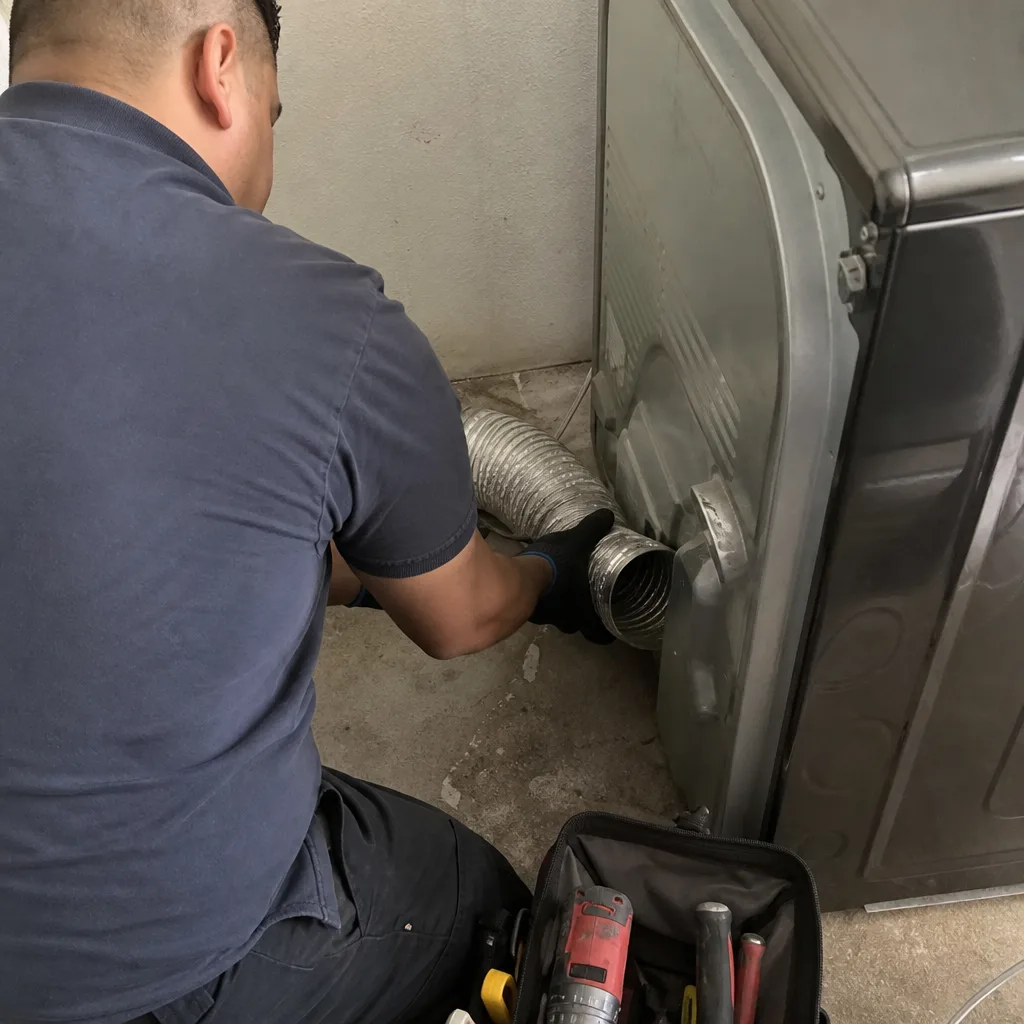
The $79 duct cleaning coupon is a fixture of Dallas mailers, social media ads, and coupon packets. It is also mathematically implausible as a complete service price.
Consider the actual costs of a legitimate duct cleaning operation in the Dallas market in 2026:
- Technician labor: Two technicians at $20-$30/hour, 3-4 hours on site = $120-$240
- Vehicle costs: Fuel, insurance, maintenance for a wrapped service van = $40-$60 per job
- Equipment: Negative-pressure extraction unit ($15,000-$40,000), HEPA vacuums, agitation brushes, camera systems - capital recovery and maintenance = $30-$50 per job
- Disposal, supplies, insurance, licensing = $20-$40 per job
The baseline cost to perform the work, before profit or overhead, is $210-$390. A $79 price does not cover labor and fuel. It covers a visit. The business model depends on converting that visit into a higher invoice through upsells, or performing work so minimal that it costs little to deliver.
What $79 typically accomplishes: A shop vacuum at the register, a cursory blower fan wipe, and a sales presentation for services that should have been included in the original scope. What it does not accomplish: Negative-pressure extraction of the plenum and trunk lines, mechanical agitation of debris, register removal and cleaning, or photographic documentation.
The homeowner who accepts a $79 coupon and declines upsells receives a service worth approximately what they paid. The homeowner who accepts upsells under pressure often pays $600-$900 for work that was quoted at $79, without the written scope and documentation that a legitimate $600-$900 flat-rate job would include. The true cost is not the money. It is the gap between what was paid and what was done, and the inability to verify either.
CleanRun Air Duct Cleaning Dallas has never offered a coupon price. Haven Standard Clause 1 requires a written price before any work starts, every time, with every component listed. The price is not a tactic to enter the home. It is the price of the documented job.
How to Structure a Written Estimate Review
A written estimate is a contract precursor. It should protect the homeowner more than the contractor. Here is how to read one, and what to demand if elements are missing.
Step 1: Verify the Scope Lists Every Component
A legitimate scope for air duct cleaning includes:
- Supply plenum (the main distribution box receiving heated or cooled air from the furnace)
- Return plenum (the collection box drawing air back to the system)
- All supply duct runs (the branches carrying conditioned air to rooms)
- All return duct runs (the branches drawing air back)
- All registers and grilles (the visible endpoints in each room), including removal and cleaning
- Blower fan and motor compartment (the fan that moves air through the system)
If any of these is omitted, the scope is incomplete. “Clean all vents” does not mean trunk lines. “Basic cleaning” does not mean registers removed.
Step 2: Confirm Equipment and Methods
The estimate should name the cleaning method - negative-pressure extraction, mechanical brush agitation, or compressed air - and the vacuum collection system. Professional-grade equipment from manufacturers like Rotobrush, Nikro, or Abatement Technologies should be referenced by name, not by generic description. HEPA filtration on the collection side is standard for legitimate operations; its absence is a red flag.
Step 3: Demand Documentation Terms
A scope without documentation terms is a scope without accountability. The estimate should state what photographic or video record will be delivered, when, and in what format. CleanRun’s documented photo record, included on every visit since 2013, shows the inside of every duct run before and after. This is not a premium service. It is the minimum standard for verifying that work occurred.
Step 4: Check for Price Lock and Amendment Terms
Haven Standard Clause 1 requires that the written price is the price. If conditions discovered during work justify additional scope - mold, damaged ductwork, inaccessible registers behind new construction - the contractor must stop, document the finding, and obtain written approval for the amendment before proceeding. “We found a problem” presented after work is underway, with pressure to decide immediately, is not legitimate process.
Step 5: Verify Insurance, Licensing, and Guarantee
The estimate should reference:
- State licensing (Texas requires Air Conditioning and Refrigeration Contractor licensing for HVAC-adjacent work; verify through TDLR)
- General liability and workers compensation insurance
- Written guarantee terms - not “satisfaction guaranteed” but specific remedy language
CleanRun’s 365-Day Done Right Promise, backed in writing on every job, specifies that if the work is not right, we make it right. This is not subject to manager discretion. It is a contractual term.
Common Mistakes to Avoid
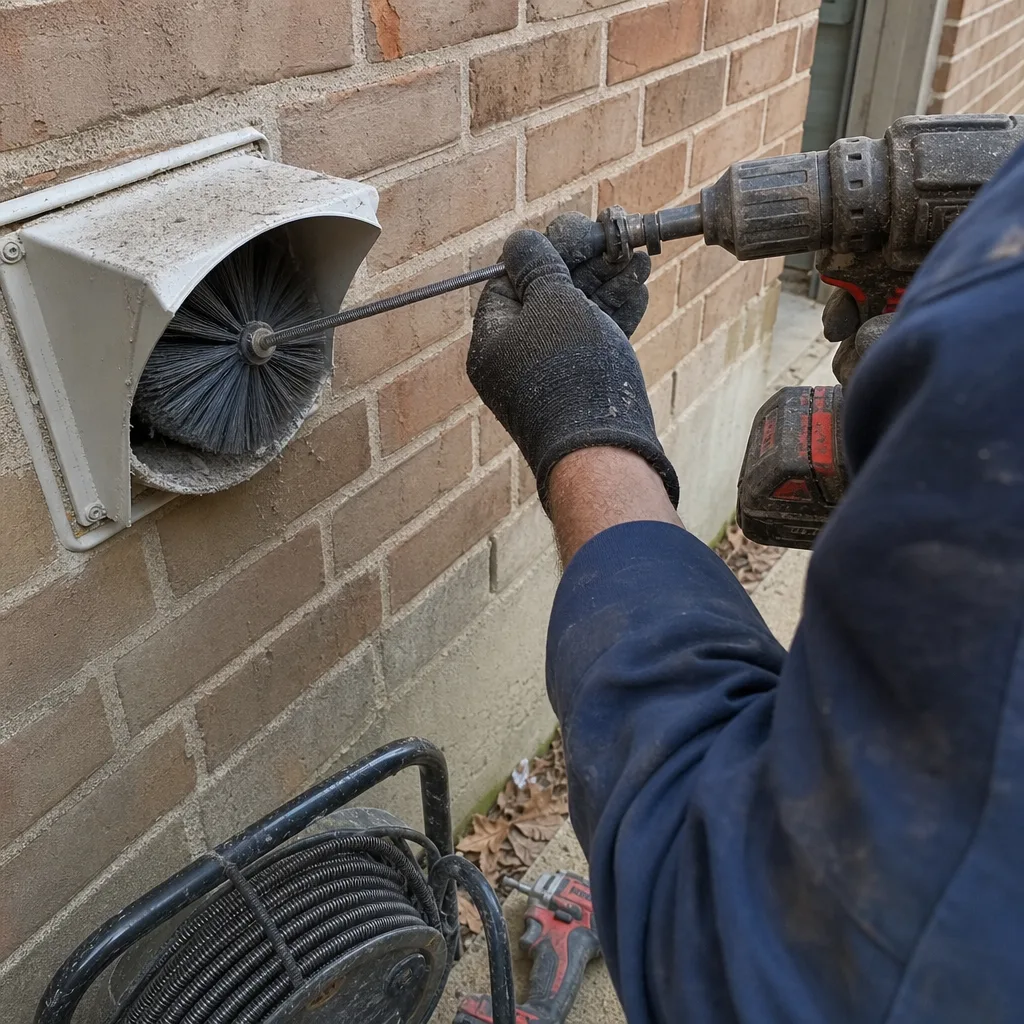
- Accepting a phone quote as final. A legitimate Dallas duct cleaning estimate requires on-site inspection of system configuration, access, and debris load. Phone quotes are guesses, and guesses tend to be low.
- Counting registers yourself for a per-vent quote. Homeowners consistently undercount returns, basement vents, and utility room registers. The contractor who relies on your count knows this and prices accordingly.
- Ignoring duct material. Flex duct systems cleaned with sheet-metal methods can be damaged. A contractor who does not ask about duct material is not planning the job; they are planning the sale.
- Paying for “mold treatment” without photographic evidence. In Dallas’s humid climate, mold is real and common. It is also invisible to the naked eye in many cases. Demand photos, and verify Texas mold licensing if the area exceeds 25 square feet.
- Skipping the photo record review. The documented photo record is your proof of work. If the contractor promises one but delivers a single blurry image of a register, the work is unverified. CleanRun delivers images of every run, labeled by location, as a standard job record.
- Assuming all “HVAC cleaning” includes ducts. HVAC cleaning in Dallas may refer to coil and blower service only, with ductwork excluded. Read the scope. Ask explicitly.
- Choosing by price alone in a market with 4:1 variation. The lowest quote in a $300-$1,200 range is not a bargain. It is a different service described with the same words.
When to Call a Professional
Call for a professional duct cleaning assessment when you notice visible dust emission from registers, persistent musty odors when the system runs, uneven airflow between rooms, or a recent renovation that produced construction debris. In Dallas, where pollen counts peak in spring and fall and HVAC systems run continuously through summer, annual inspection is prudent for homes with allergy-sensitive occupants.
CleanRun Air Duct Cleaning Dallas offers free estimates in Dallas - call (469) 405-6133. Every estimate includes a written scope and price before any work starts, under Haven Standard Clause 1. We also provide a Free Second Opinion on any written estimate from another contractor, with our number next to theirs in writing.
Frequently Asked Questions
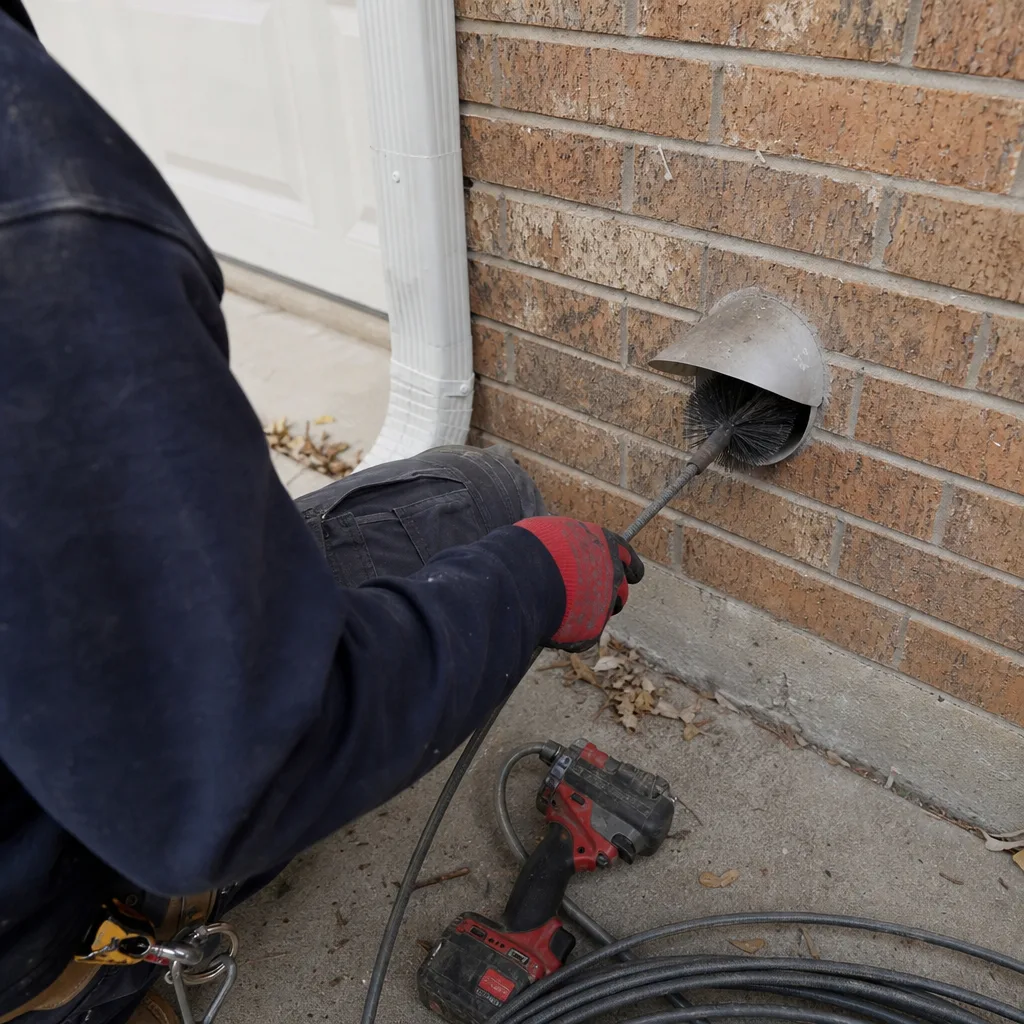
Whole-system air duct cleaning in Dallas costs $300-$1,200 in 2026, with most single-family homes falling in the $450-$750 range for a flat-rate, scoped job. The final price depends on home size, duct material, access difficulty, and debris load. Call (469) 405-6133 for an exact quote - estimates are free.
The $79-$149 quotes are entry points for upsell-based business models, not complete service prices. They typically exclude plenums and trunk lines, use portable equipment rather than truck-mounted or professional negative-pressure systems, and rely on per-vent add-ons to reach profitable invoice levels. A legitimate whole-system job cannot be performed at those prices given Dallas labor and equipment costs.
Demand a documented photo record of every duct run, before and after, delivered as part of the job record. Verbal assurance or a single post-cleaning image is not verification. CleanRun has photographed every run on every job since 2013; the images are labeled by location and included with the final invoice.
The National Air Duct Cleaners Association recommends cleaning every 3-5 years for typical residential systems. In Dallas, where heavy HVAC use, high pollen, and construction debris in newer homes accelerate accumulation, 3 years is a more practical interval for most homeowners. Homes with pets, recent renovations, or allergy-sensitive occupants may need more frequent service.
Per-vent pricing benefits the homeowner only in very small systems with known, easily verified register counts, where the quote explicitly includes plenums and trunk lines. In most Dallas homes, flat-rate whole-system pricing produces more predictable costs and more complete work, because it removes the contractor’s incentive to find billable items.
A legitimate written estimate lists every component to be cleaned (plenums, trunk lines, runs, registers), the equipment and methods to be used, the documentation to be delivered, the final price with no open-ended terms, and the guarantee or warranty language. Haven Standard Clause 1 requires this for every CleanRun job; contractors who resist written scope before work should be declined.
The Bottom Line
The cost of air duct cleaning in Dallas is not a mystery, and it is not a lottery. It is a function of system size, material, access, and debris load, performed with documented methods and delivered with a written record. The $300-$1,200 range is real, but the lower third of that range typically buys an incomplete visit, not a complete job. The homeowner who understands line-item pricing, demands written scope, and verifies work with photographic documentation closes the gap between price paid and value received. That is the purpose of this guide, and it is the standard CleanRun Air Duct Cleaning Dallas applies to every home we enter.
Written by Tomas Reyes, Owner at CleanRun Air Duct Cleaning Dallas, serving Dallas since 2013.