
Last updated September 23, 2026
Whole-system duct and dryer vent check with before-and-after photos - you see exactly what came out of your vents
That "$99 whole-house special" is a bait ad - the real number appears once they are in your hallway, or the "clean" is a shop-vac at the register. We photograph the inside of your ducts before and after instead.
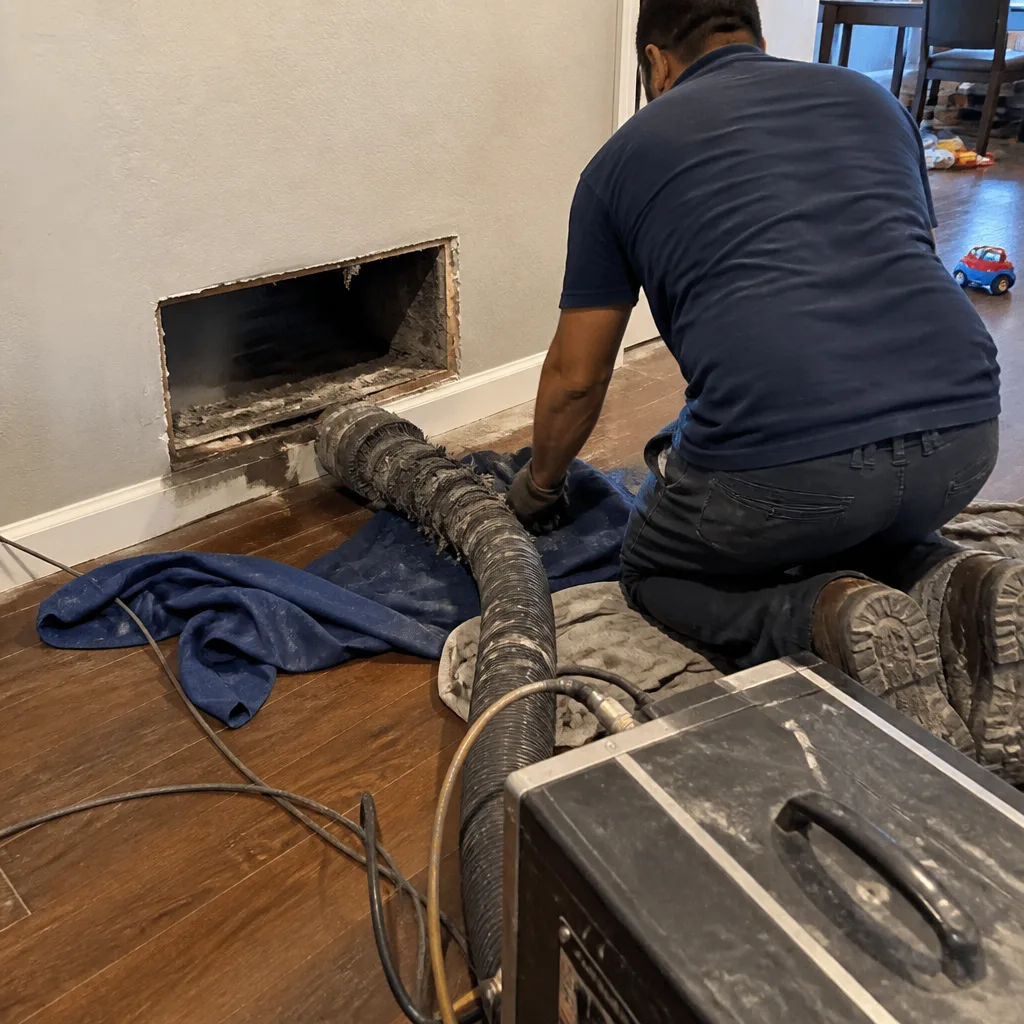 Before
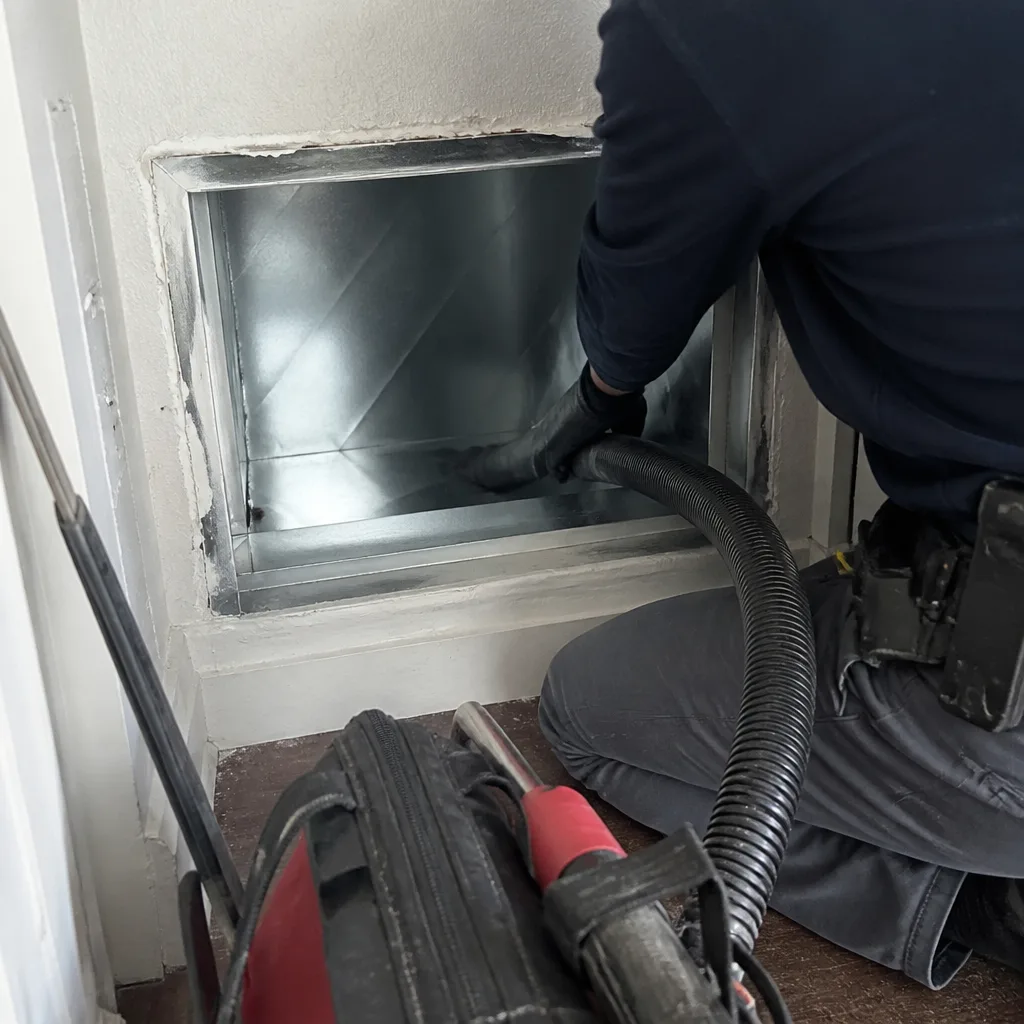 After
After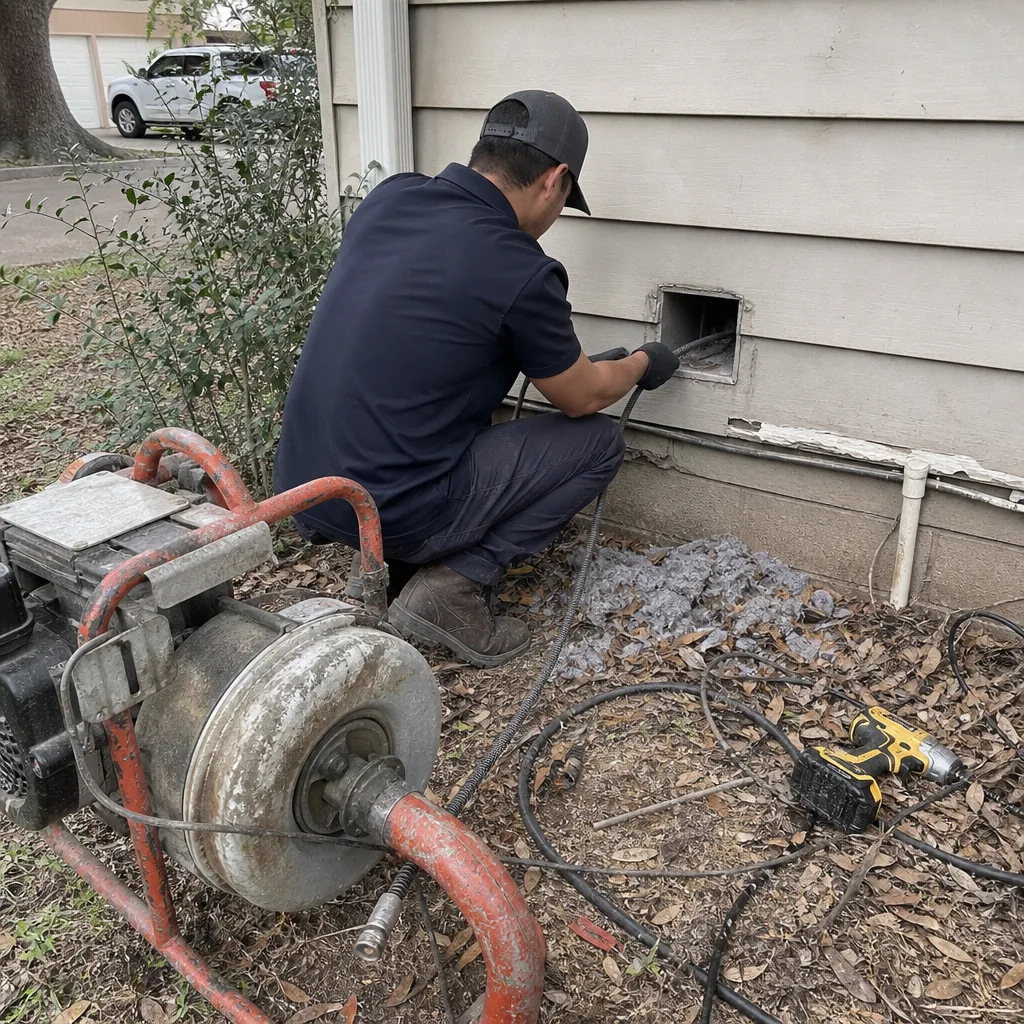 Before
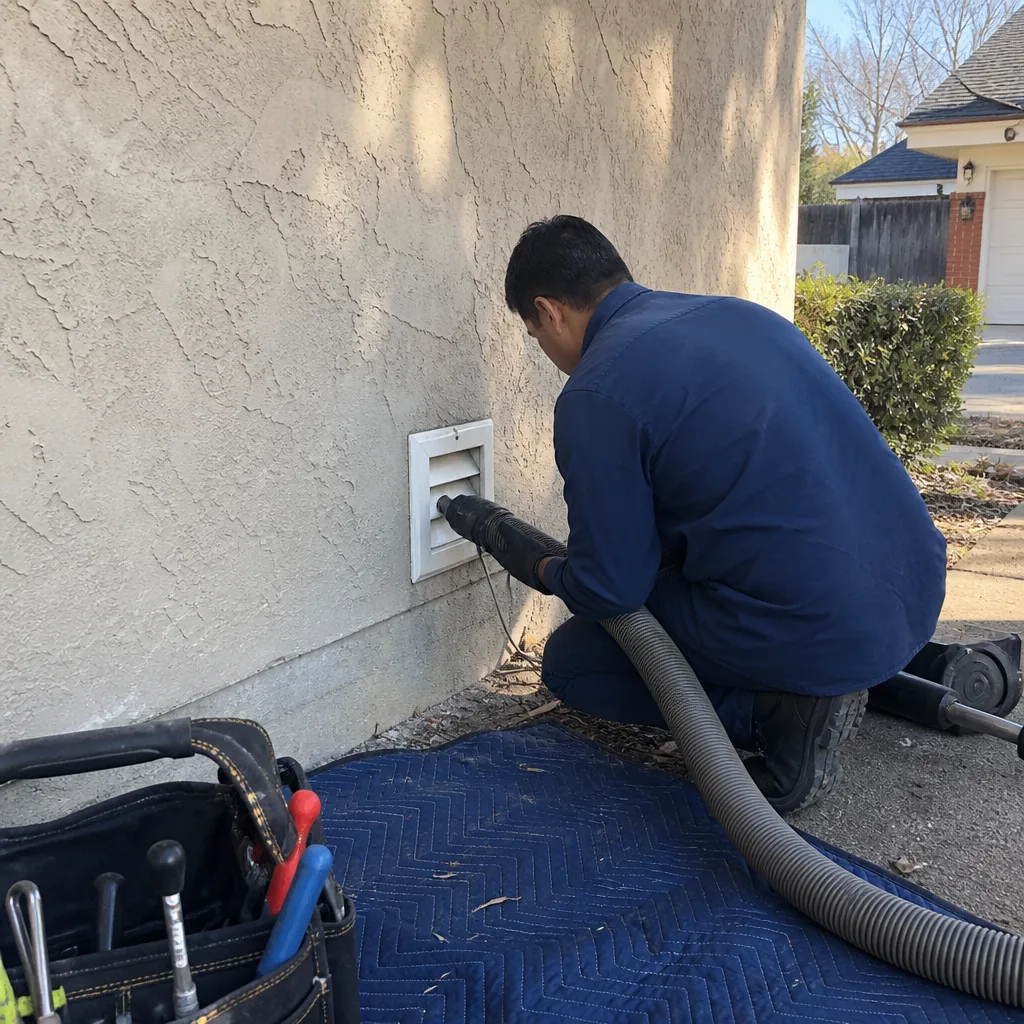 After
After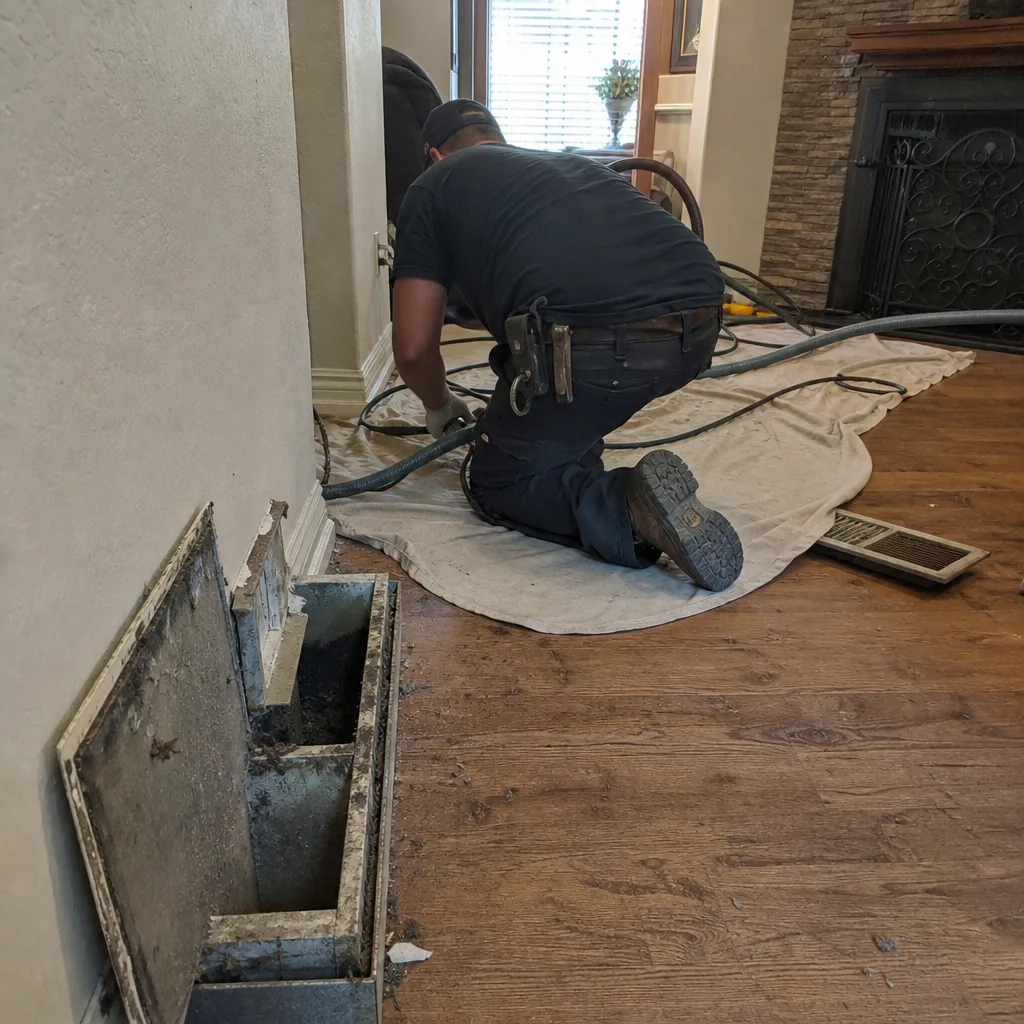 Before
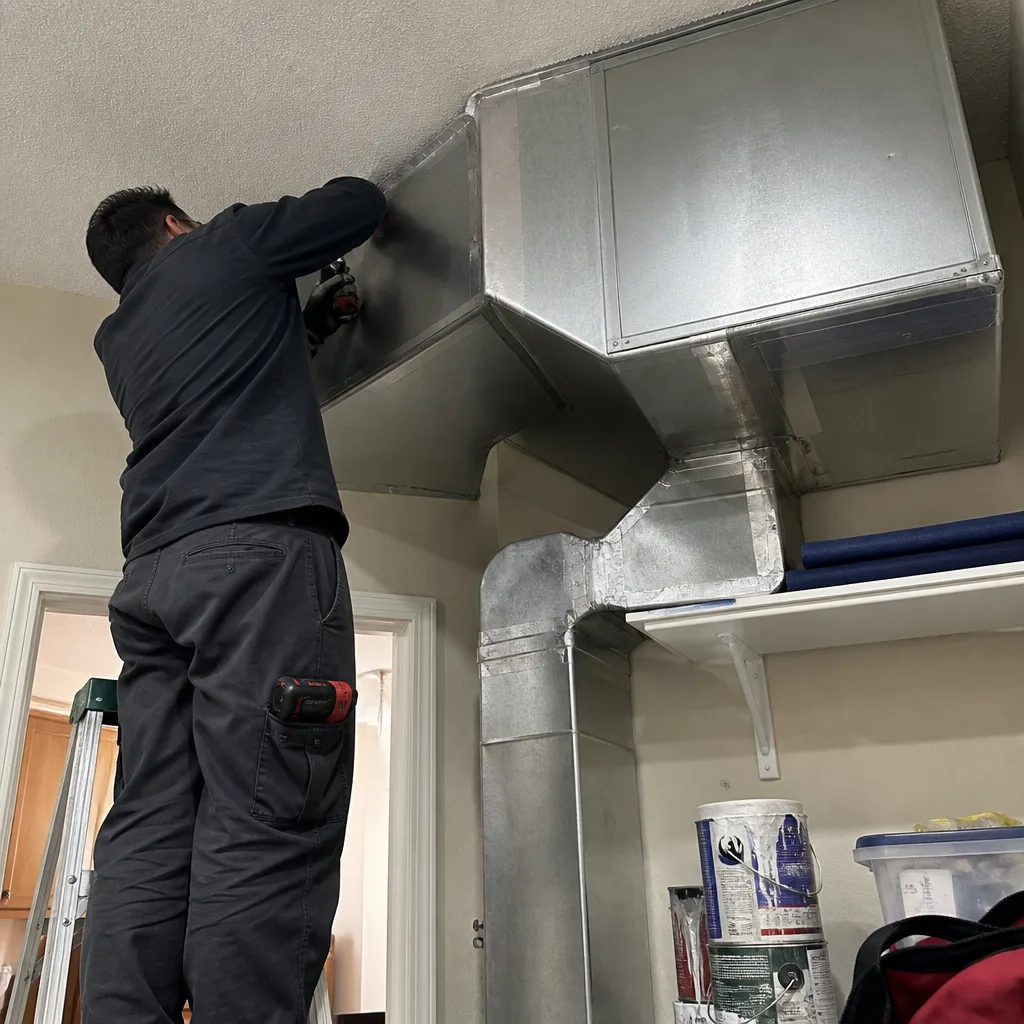 After
AfterHow to Hire a Air Duct Cleaning Contractor in Dallas: A Step-by-Step Guide
Texas does not require a license to clean air ducts. Anyone with a van and a shop vac can legally take your money and call it done. In Dallas, where clay soil shifts foundations, HVAC systems work harder than in milder climates, and the spring pollen season pushes particulate counts well above national averages, homeowners who skip proper vetting often pay twice: once for the coupon special, again for the real work. This guide shows exactly how to verify who’s legitimate, what equipment actually matters, and what written protections you should demand before a single panel comes off your system. For our Air Duct Cleaning services, we apply these same standards on every Dallas job.
Quick Answer
To hire a legitimate air duct cleaning contractor in Dallas, verify the company’s Texas business registration, demand a written whole-system price before booking, confirm the technician will photograph every duct run before and after, and ask what warranty applies in writing. Avoid per-vent pricing, any quote given without seeing your system, and contractors who cannot name their equipment brands or CFM ratings.
Table of Contents
- Why Dallas Has an Unregulated Duct Cleaning Market
- The Three Questions to Ask Before Booking
- How to Decode a Low-Price Quote
- What NADCA Membership Actually Means
- How to Verify a Contractor’s Business Legitimacy in Dallas
- What a Legitimate Pre-Job Walkthrough Looks Like
- Dallas-Specific Factors That Affect Your Ductwork
- Common Mistakes to Avoid
- When to Call a Professional
- Frequently Asked Questions
- The Bottom Line
BeforeAfterWhy Dallas Has an Unregulated Duct Cleaning Market
Texas licenses HVAC technicians through the Texas Department of Licensing and Regulation, but duct cleaning sits in a gap. The state does not classify it as HVAC repair, mechanical work, or any other regulated trade. A contractor can form an LLC this morning and book jobs this afternoon with no training requirement, no equipment standard, and no inspection afterward.
This matters more in Dallas than in many markets. Our cooling season runs from March through October, with systems cycling 2,000+ hours annually. The black clay gumbo soil common in neighborhoods like Lakewood and Preston Hollow shrinks and swells with moisture, stressing slab foundations and cracking duct seams in crawl spaces and attics. Combine that with the Trinity River basin’s humidity swings and the pollen load from Texas live oaks and cedar elms, and Dallas ducts accumulate debris faster than systems in drier, stabler climates.
We’ve been in Dallas homes where the previous “cleaning” consisted of a 90-second vacuum at each register. The homeowner paid $89, received no documentation, and two seasons later called us because airflow had dropped 40 percent. The camera showed the main trunk line still packed with construction debris from the 2017 build. That homeowner did nothing wrong except trust a low price in an unregulated market.
The burden of proof is entirely on you. Here’s how to carry it.
The Three Questions to Ask Before Booking
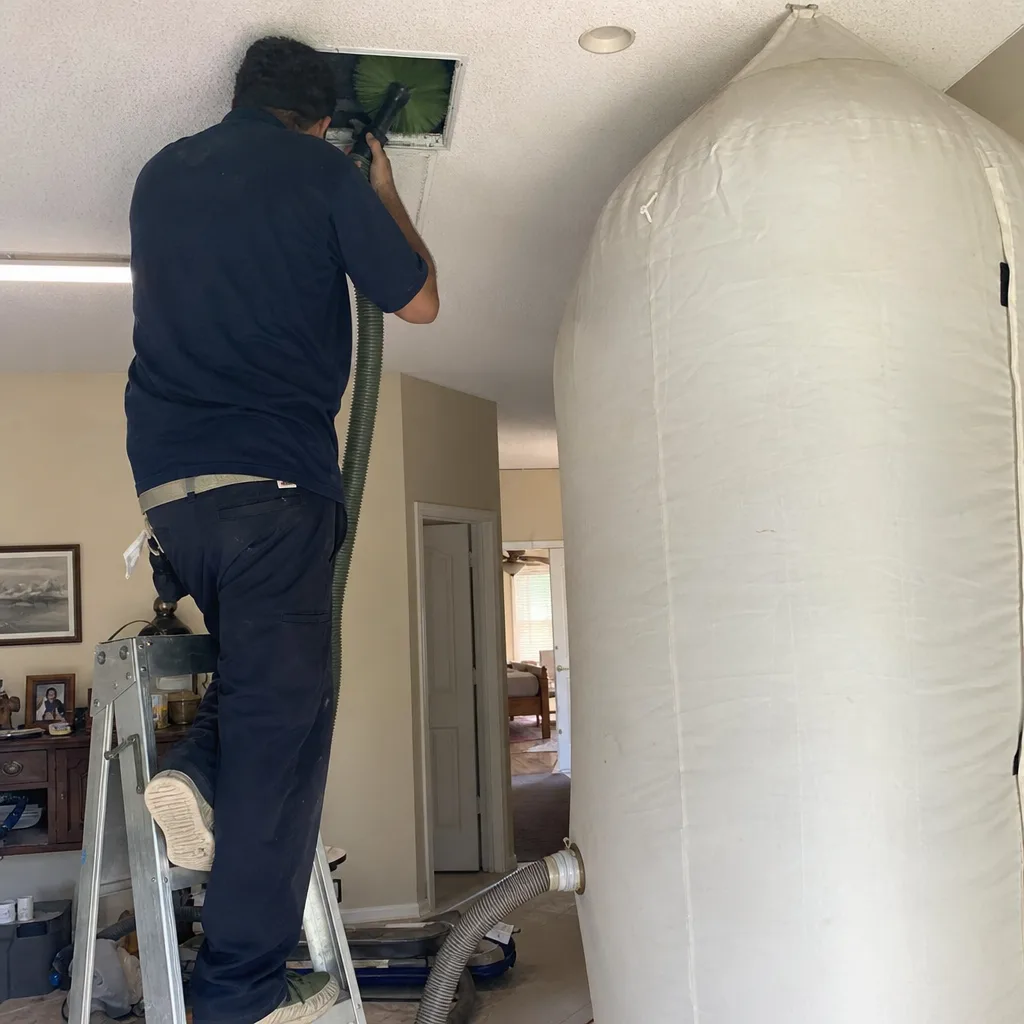
Every contractor you consider should answer these three questions completely, without deflection, before you schedule. If they hesitate, change the subject, or offer to “explain when we get there,” end the call.
Question 1: What exact equipment do you use, and what is its CFM rating?
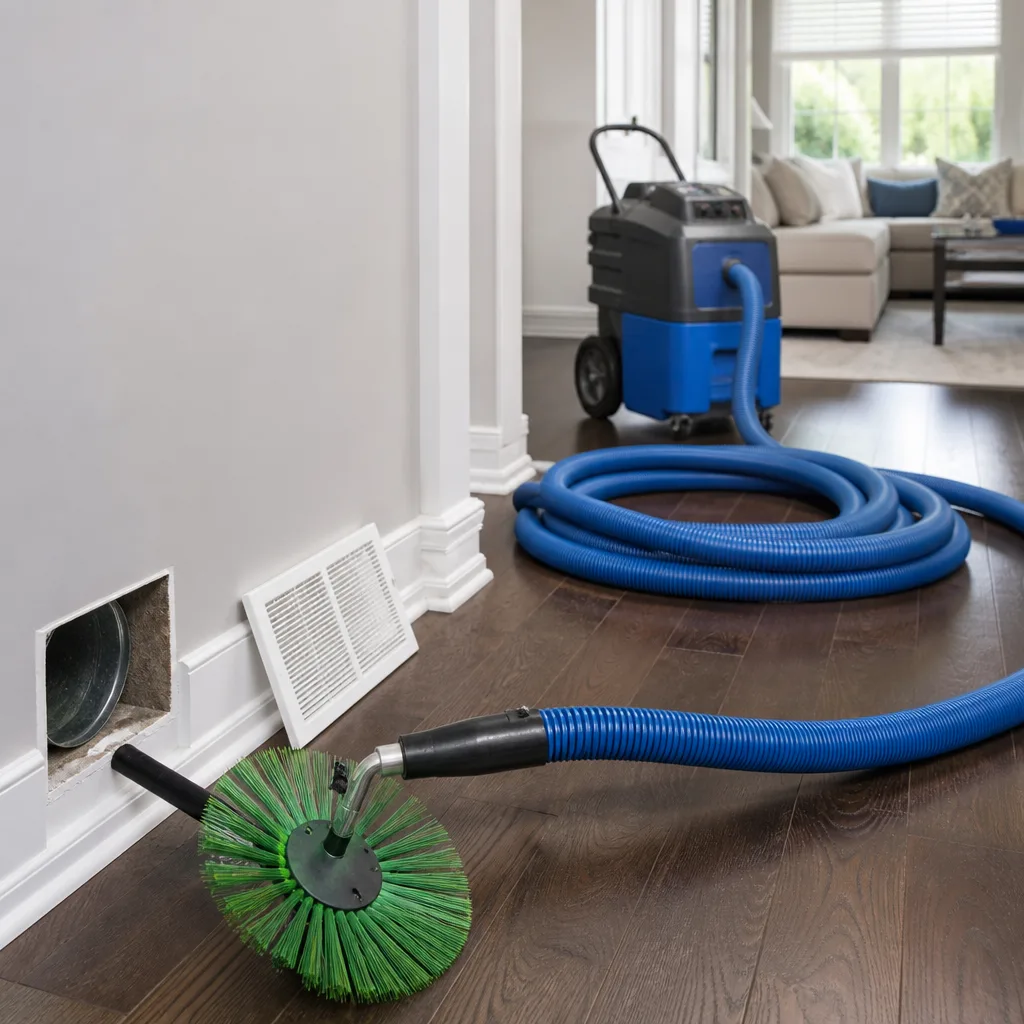
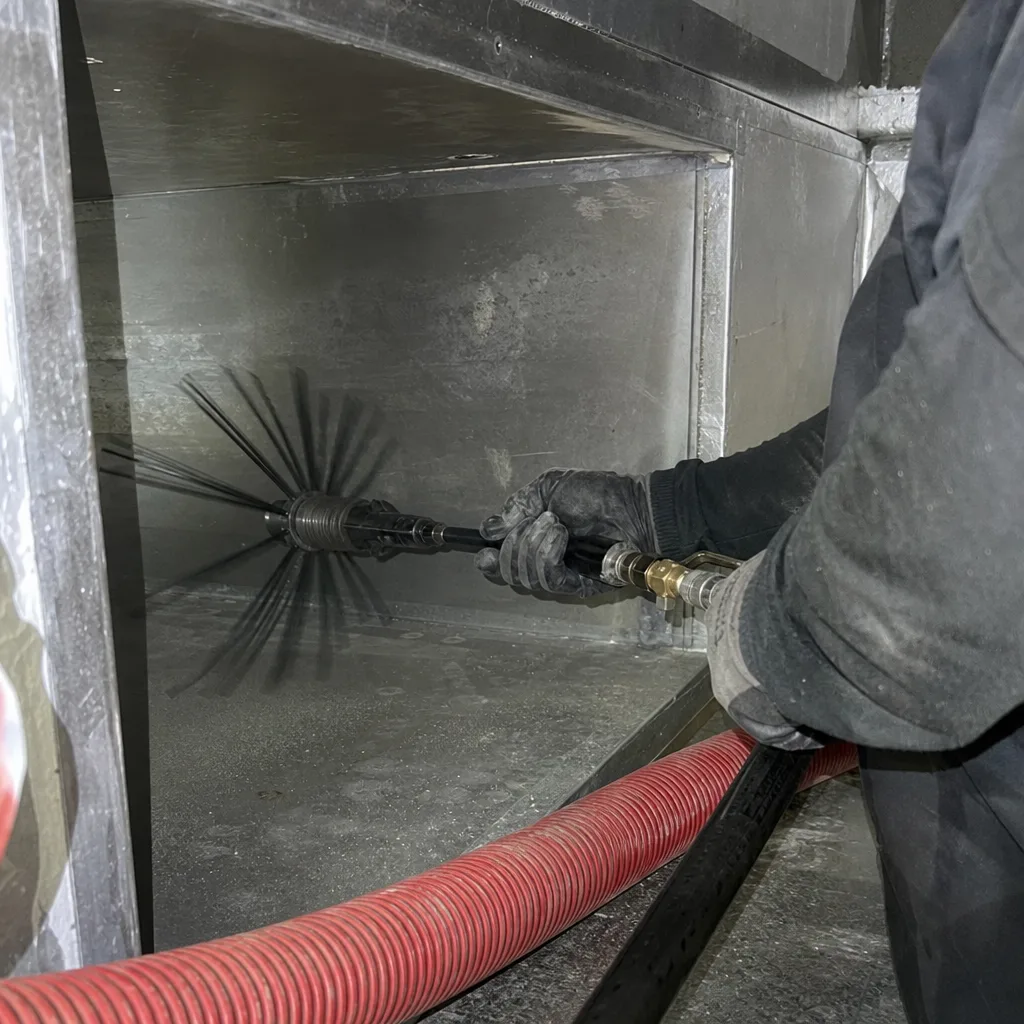
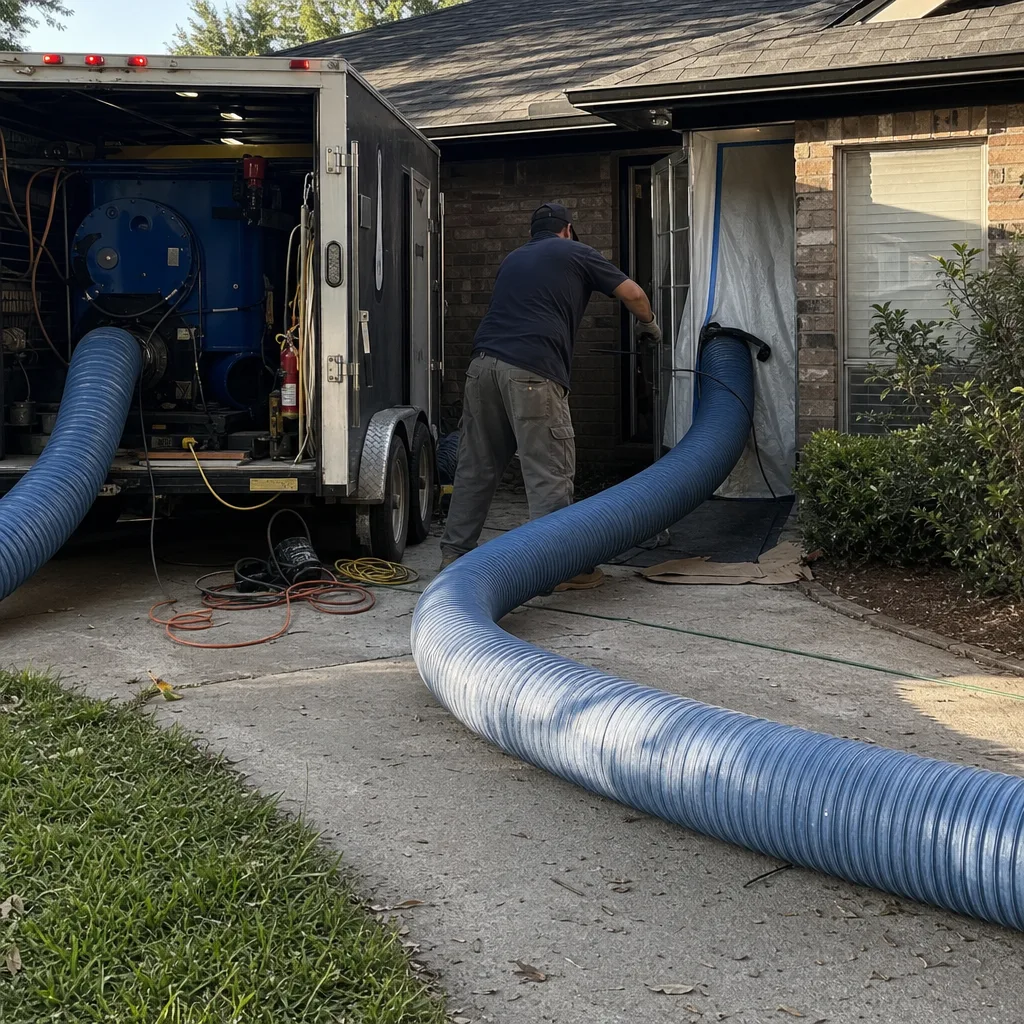
Professional duct cleaning requires negative-pressure extraction, meaning a vacuum system that pulls debris out of the ductwork rather than blowing it around your house. The equipment matters because CFM, or cubic feet per minute, determines whether the machine can actually move debris through long duct runs.
Ask for specific brands. Legitimate contractors use equipment from manufacturers like Rotobrush, Nikro, or Abatement Technologies. These are trade-recognized names you can verify independently. A Rotobrush system with a 500+ CFM vacuum paired with agitation brushes is a standard configuration for residential work. If the contractor says “commercial-grade equipment” without naming a brand, or mentions a shop vac with a duct attachment, you’re not talking to a professional.
At CleanRun Air Duct Cleaning Dallas home, our crews operate Rotobrush and Nikro systems, with CFM ratings published in our written scope before every job. Haven Standard Clause 1 requires this disclosure. We don’t expect homeowners to become equipment experts; we expect them to verify what we claim.
Question 2: Will every duct run be photographed before and after?
This is the single most effective fraud detector in duct cleaning. A “duct run” is the continuous path of ductwork from the plenum, the central distribution box, to a single register. A typical Dallas home built between 2015 and 2025 has 12 to 18 runs.
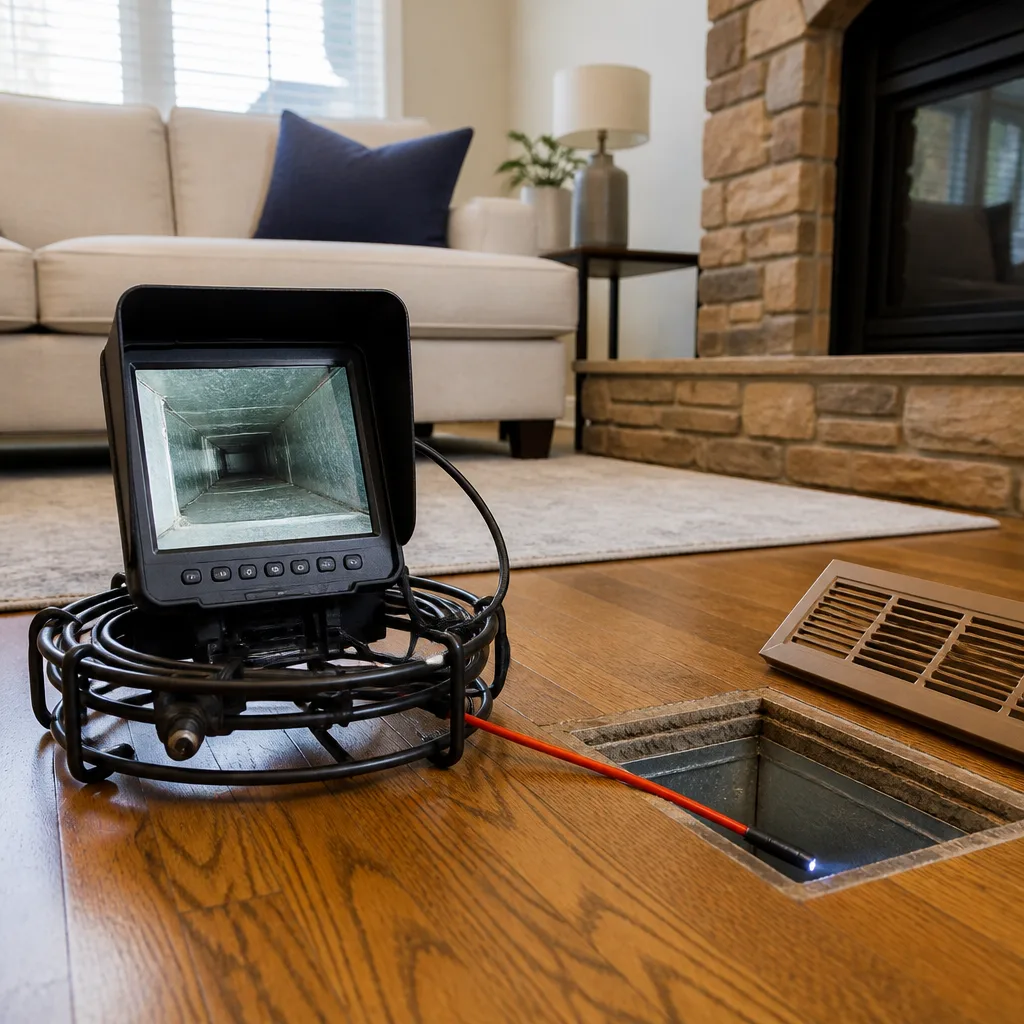
The contractor should insert a borescope camera, a flexible camera on a cable, into each run and capture dated images showing the interior condition. After cleaning, they should repeat the process. You should receive these photos as part of your job record, not as an upsell.
We introduced this practice at our first job in 2013 and have maintained it across 52,000+ homes. The photo record is not marketing; it’s documentation that protects both parties. When a customer in University Park questioned whether we’d cleaned the master bedroom run, we pulled the timestamped before-and-after from that morning’s job file. The debris layer was visible in the first image, gone in the second. No argument, no revisit, no doubt.
Question 3: What is the written warranty on the work?
Verbal promises expire when the truck leaves your driveway. Ask for the warranty in writing, with specific terms: what it covers, how long it runs, and how to invoke it.
Our 365-Day Done Right Promise, backed in writing on every job under Haven Standard Clause 5, states that if the work is not right, we make it right. Not “we’ll discuss it.” Not “manager approval required.” We return and correct the deficiency, with the photo record as our mutual reference point. Ask your candidate contractor to match this specificity. If they offer “satisfaction guaranteed” without defining the term, you have no protection.
How to Decode a Low-Price Quote
The Dallas market is saturated with $79 to $149 duct cleaning coupons. Understanding how these work protects you from the bait-and-switch structure that follows. For a detailed look at fair pricing, see our Air Duct Cleaning Cost Breakdown: The Dallas Homeowner’s Reference for 2026.
The Per-Vent Trap
Per-vent pricing quotes a low rate for each register in your home: “$15 per vent, 12 vents, $180 total.” This sounds transparent. It isn’t. Here’s why:
- The quote covers only the register, the visible grille where air enters your room, not the duct run behind it.
- The return air system, the large ducts that pull air back to your HVAC unit, is excluded or priced separately at arrival.
- The plenum, the central chamber where heated or cooled air mixes before distribution, is never included in per-vent quotes.
- The technician arrives, inspects the system, and presents a revised quote of $600 to $1,200 for “complete cleaning” that was always necessary.
You’re now in a high-pressure position. The technician is in your home, equipment unloaded, and you’ve already invested time in the appointment. Many homeowners pay the upsell rather than restart the search.
Whole-System Pricing: What It Actually Costs in Dallas
Legitimate whole-system cleaning in Dallas, including all duct runs, returns, the plenum, and the air handler cabinet, typically ranges from $450 to $850 for homes between 2,000 and 3,500 square feet. Larger homes, systems with multiple zones, or ductwork requiring repair may run higher. This is not a teaser; it’s the actual cost of labor, equipment depreciation, insurance, and documented accountability.
| Service Component | Typical Dallas Range | What’s Included |
|---|---|---|
| Whole-system duct cleaning (2,000-2,500 sq ft) | $450-$650 | All supply runs, returns, plenum, registers; photo record |
| Whole-system duct cleaning (2,500-3,500 sq ft) | $600-$850 | As above, plus multi-zone systems; photo record |
| Dryer vent cleaning (add-on or standalone) | $120-$200 | Full duct from dryer to exterior termination; airflow test |
| Duct repair/sealing (per linear foot) | $8-$15 | Mastic sealant or metal repair; before/after photo |
At CleanRun, we deliver a written price before any work starts, every time, under Haven Standard Clause 1. No per-vent pricing exists in our system. The price we write is the price you pay, with one exception: if we find damage requiring repair that wasn’t visible during the walkthrough, we photograph it, explain it, and write a separate scope with its own price. You approve or decline before we proceed. No surprises.
The Upsell Architecture
Bait-and-switch contractors typically deploy upsells in a predictable sequence:
- The “mold” discovery: A flashlight shows a dark streak in the plenum. The technician claims it’s toxic mold and quotes $400-$800 for “sanitizing.” In our experience, 90 percent of these discoveries are ordinary dust accumulation or oxidized metal. Actual mold requires laboratory testing, not a visual diagnosis from a salesperson with a flashlight.
- The “broken” component: A flex duct has a minor tear. The technician declares it “collapsing” and quotes replacement. We photograph every damage finding and show the customer the image. A 2-inch tear in flex duct often requires a $40 repair, not a $300 replacement.
- The “recommended” add-on: UV lights, ozone treatments, or “premium” filters sold at 300 percent markup. These have legitimate applications in specific medical or allergy scenarios, but they’re not standard maintenance. We discuss air quality upgrades only when a customer raises the issue, never as a pressure add-on.
What NADCA Membership Actually Means
The National Air Duct Cleaners Association is the closest thing to an industry standards body. NADCA publishes cleaning standards, offers technician certification through its Air Systems Cleaning Specialist program, and maintains a member directory. Homeowners often treat NADCA membership as a hiring shortcut: “They’re NADCA certified, so they’re legitimate.” This is a partial truth that can lead to poor decisions.
Here’s what NADCA membership actually guarantees: the company pays annual dues and agrees to follow NADCA’s Assessment, Cleaning, and Restoration of HVAC Systems standard. It does not guarantee that the technician who arrives at your Dallas home is individually certified, that the company follows the standard on every job, or that any enforcement mechanism exists for violations. NADCA does not inspect member jobs or maintain a complaint resolution process with teeth.
We’ve encountered NADCA member companies in Dallas that subcontract to uncertified crews, use equipment below NADCA’s own recommended specifications, and refuse photo documentation. The membership certificate on their website is real. Their operational standards are not.
Use NADCA membership as one data point among several. Verify the specific technician’s individual certification through NADCA’s online lookup. Ask whether the company follows NADCA’s ACR standard on every job or only “when requested.” And still demand the three questions above: equipment, photos, written warranty. NADCA membership does not replace your own verification.
For homeowners who want additional context, Air Duct Cleaning in Dallas explains how our H.A.V.E.N. Standard incorporates and exceeds industry benchmarks.
How to Verify a Contractor’s Business Legitimacy in Dallas
In an unregulated market, you become the regulator. These four checks take under 20 minutes and filter out most illegitimate operators.
Check 1: Texas Secretary of State Entity Lookup
Every legitimate Texas business must register with the Secretary of State. Search SOSDirect for the exact business name. Verify:
- The entity is active, not forfeited or dissolved.
- The registered agent address is in Texas, not a mail-forwarding service in Delaware or Nevada.
- The filing history shows continuous status, not repeated reinstatements after forfeiture.
We’ve found “companies” operating in Dallas whose SOS record shows dissolution two years prior. They’re still booking through Google Ads, using a different DBA, and disappearing after payment.
Check 2: Better Business Bureau Standing
The BBB is not a government regulator, but its complaint history reveals patterns. Look for:
- Complaint volume relative to years in business and stated size.
- Pattern complaints: repeated allegations of upselling, no-shows, or refusal to honor warranties.
- How the company responds to complaints. Defensive, evasive responses suggest how they’ll treat you.
A company with 50 complaints and 49 “resolved” notations may look good until you read the resolutions: “Customer accepted partial refund” or “Company provided explanation.” These are not necessarily satisfactory outcomes.
Check 3: Google Review Pattern Analysis
Fake reviews follow detectable patterns. Red flags in Dallas duct cleaning listings include:
- Clusters of 5-star reviews posted within days of each other, often with generic text: “Great service, very professional.”
- Reviewers with only one review in their profile history.
- Reviews that name the technician by first name in suspiciously similar language across multiple posts.
- No negative reviews at all. Even excellent companies have occasional dissatisfied customers; a perfect score often means aggressive review filtering or solicitation.
Look instead for reviews with specific details: neighborhood mentioned, equipment described, photo record referenced, time elapsed since service. A review from six months ago stating “the camera showed construction debris in our Lakewood home’s master run, and the after photo was clean” carries more weight than 20 generic 5-stars.
Check 4: Insurance and Bonding Verification
Ask for a certificate of insurance naming your property address as additional insured for the date of service. This is standard in trades and costs the contractor nothing to provide. If they “don’t do that for residential” or “the office handles it,” this is a refusal, not an explanation. CleanRun carries general liability and workers compensation coverage; our certificate is available on request under Haven Standard Clause 2: Verified Coverage.
What a Legitimate Pre-Job Walkthrough Looks Like
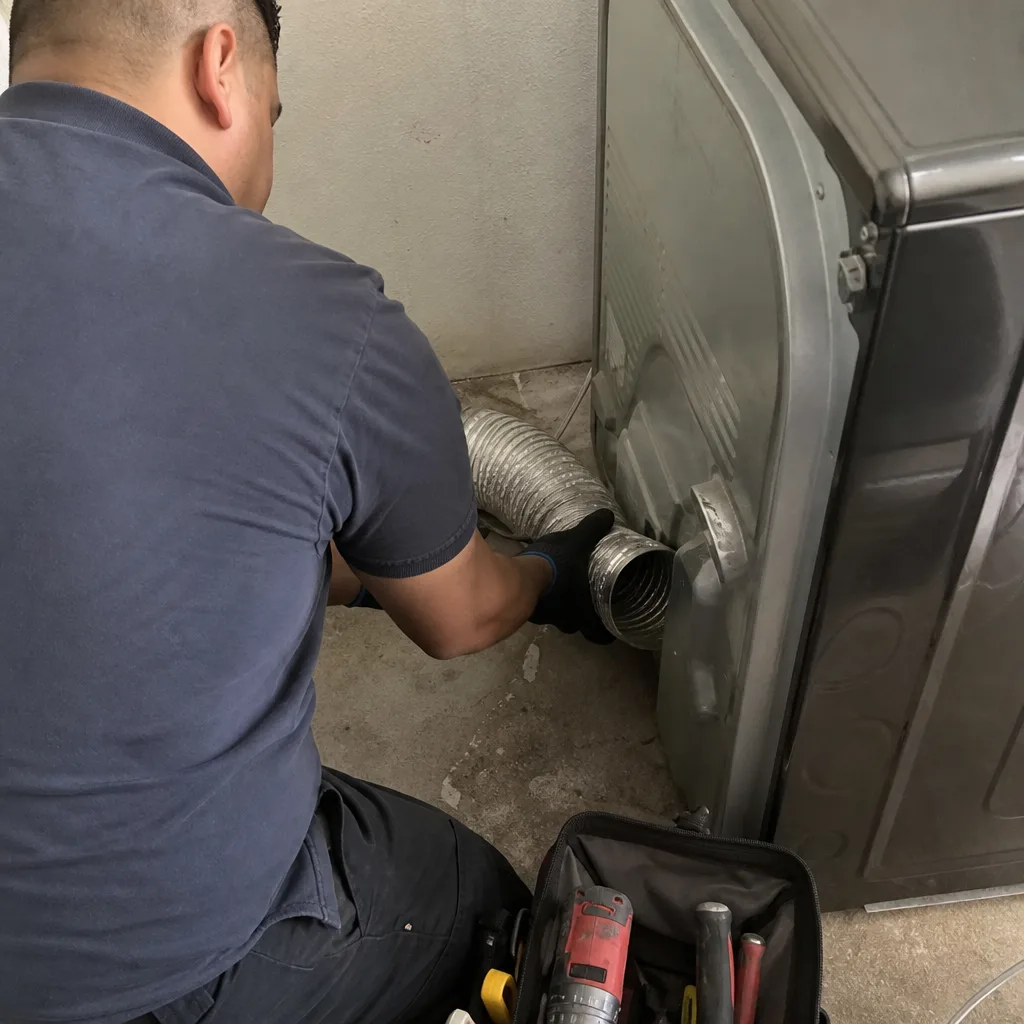
The walkthrough is where professionalism separates from performance. A legitimate contractor treats this as diagnostic, not theatrical. Here’s the sequence we follow on every Dallas job, which you should expect from any contractor you hire.
- System identification: The technician locates your HVAC unit, identifies manufacturer and model, and notes age and condition. This determines access points and potential complications. A 25-year-old Trane in a Lakewood attic requires different handling than a 5-year-old Carrier in a Frisco garage.
- Duct run count: The technician walks the home, counts supply registers and return grilles, and traces the likely duct path. In Dallas homes with additions or renovations, we’ve found “mystery runs” walled off during remodeling, still connected and accumulating debris. You can’t clean what you haven’t identified.
- Access inspection: The technician identifies how to reach the plenum and main trunk lines. Some Dallas homes built 2015-2020 have tight attic spaces or spray-foam insulation that limits access. We note these constraints in the written scope and explain how we’ll work within them.
- Damage documentation: Any visible duct damage, disconnected seams, or pest evidence is photographed and shown to you before pricing. In 2019, a Preston Hollow customer had a squirrel nest in a return duct. We photographed it, wrote a separate repair scope, and cleaned only after approval.
- Written scope and price: All findings are compiled into a one-page scope document: what we’ll clean, what equipment we’ll use, the guaranteed price, and the warranty terms. You sign or decline before work begins. No exceptions. This is Haven Standard Clause 1 in practice.
If a contractor skips any of these steps, starts equipment before presenting a price, or asks you to “just sign here” on a tablet showing only a total, stop the job. You are not being served; you being sold.
Dallas-Specific Factors That Affect Your Ductwork
Dallas geography and climate create conditions that duct cleaners in other markets may not encounter. Understanding these helps you evaluate whether a contractor actually knows local conditions or is reciting generic training. Our Seasonal Air Duct Cleaning Care for Dallas: Year-Round Homeowner’s Guide covers how to time maintenance around these local factors.
Foundation Movement and Duct Stress
The expansive clay soils in Dallas-Fort Worth shift dramatically with moisture. After the heavy rains of spring 2024, we saw a 40 percent increase in calls from North Dallas and Richardson for “low airflow” that traced to separated duct seams in crawl spaces. The foundation had shifted; the ductwork, rigidly attached, had pulled apart. Cleaning alone doesn’t fix this. A contractor who doesn’t inspect for separation may leave you with clean air leaking into your crawl space.
Humidity and Microbial Growth
Dallas summer humidity regularly exceeds 70 percent. Poorly insulated ductwork in attics can sweat, creating moisture that supports microbial growth on dust deposits. We use moisture meters during our walkthrough to identify this condition. If we find active moisture, we note it in the scope and recommend insulation repair before or alongside cleaning. A contractor who ignores humidity context is treating symptoms, not causes.
Pollen Load and Filter Sizing
The Dallas allergy season, February through May, delivers some of the highest pollen counts in the nation. Many homeowners upgrade to HEPA filters without verifying their system’s rated capacity. A 1-inch filter slot cannot handle a true HEPA’s airflow resistance; the strain damages blower motors and cracks heat exchangers. During our walkthrough, we verify filter sizing and MERV rating compatibility. This isn’t duct cleaning strictly, but it’s system integrity, and it’s part of our standard assessment.
Construction Debris in Newer Homes
Dallas’s building boom 2015-2025 produced thousands of homes with ducts full of drywall dust, wood chips, and fastener debris. We’ve photographed 2-inch deposits in “new” homes in Frisco and McKinney. The builder’s “duct cleaning” subcontractor often vacuumed registers only. If your home was built in this period and you’ve never had a documented cleaning with photo proof, assume your ducts need attention regardless of visible symptoms.
For related services, HVAC Cleaning in Dallas covers full system maintenance beyond ductwork alone.
Common Mistakes to Avoid
- Booking by price alone. The $79 coupon special in Dallas averages $487 after upsells, according to customer reports we’ve collected. The legitimate whole-system price is cheaper than the bait-and-switch final invoice.
- Accepting verbal warranties. “We’ll make it right” means nothing without written terms. Every promise should appear on the scope document you sign before work starts.
- Ignoring equipment specifics. “Commercial-grade” is not a brand. If the contractor cannot name the manufacturer and model, they may be using inadequate equipment or renting by the day with no maintenance history.
- Assuming NADCA membership equals quality. It’s one verification point, not a hiring decision. Check individual technician certification and operational practices separately.
- Skipping the photo requirement. Without dated before-and-after images of every run, you have no proof the work was performed. Demand this as a standard deliverable, not an upgrade.
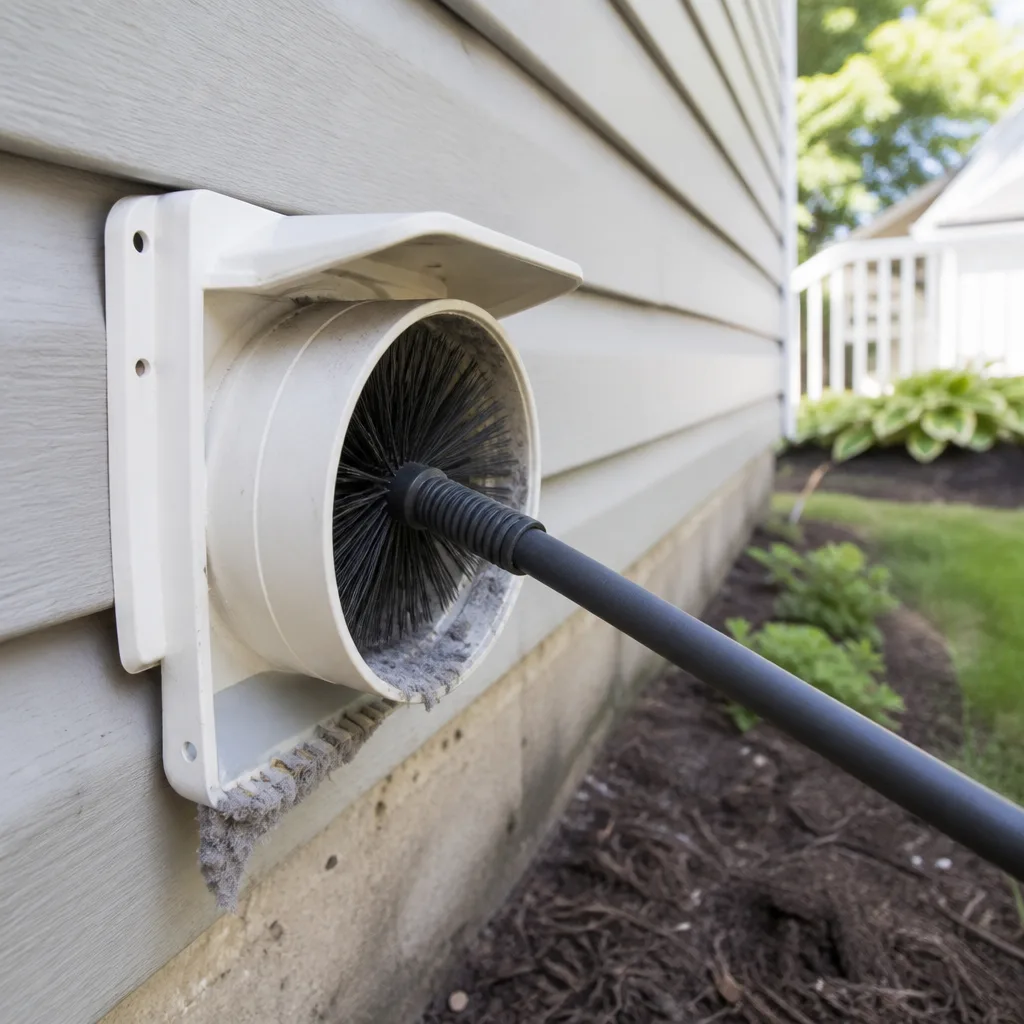
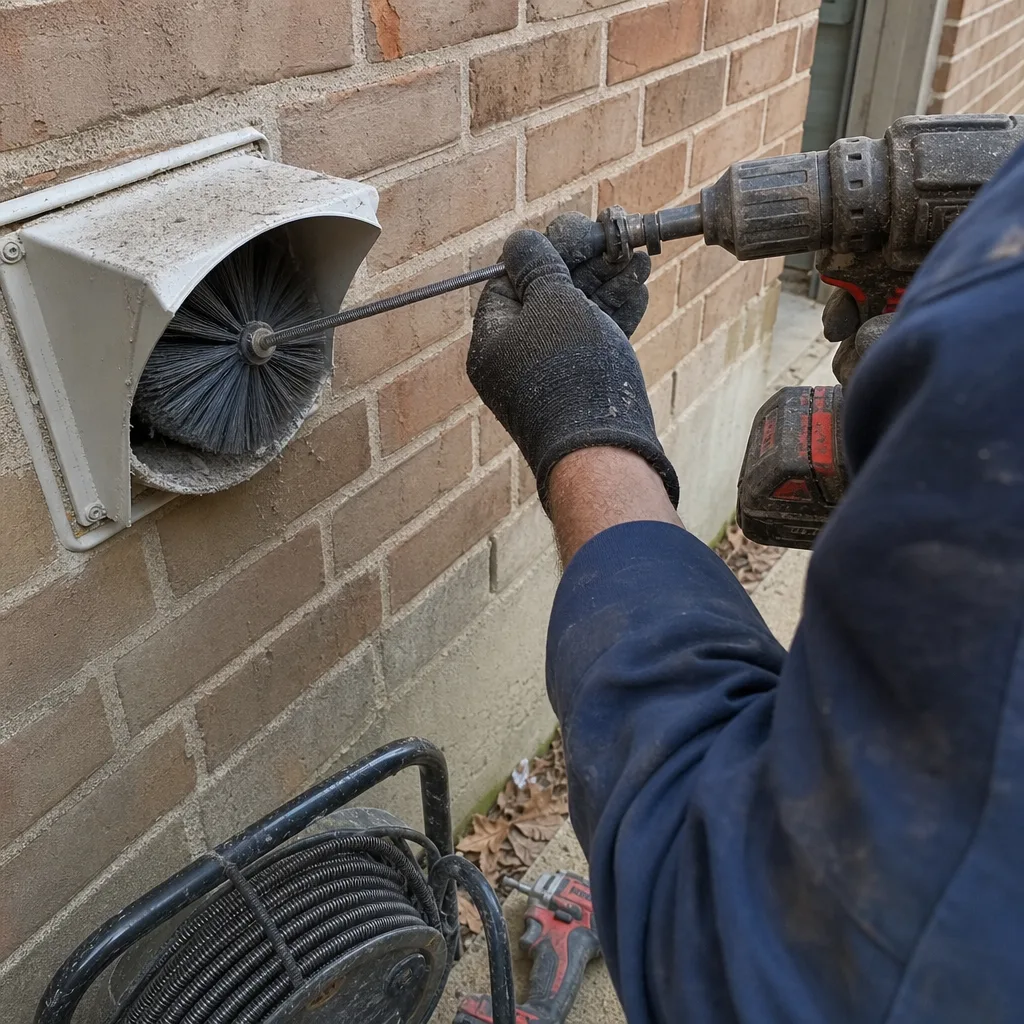
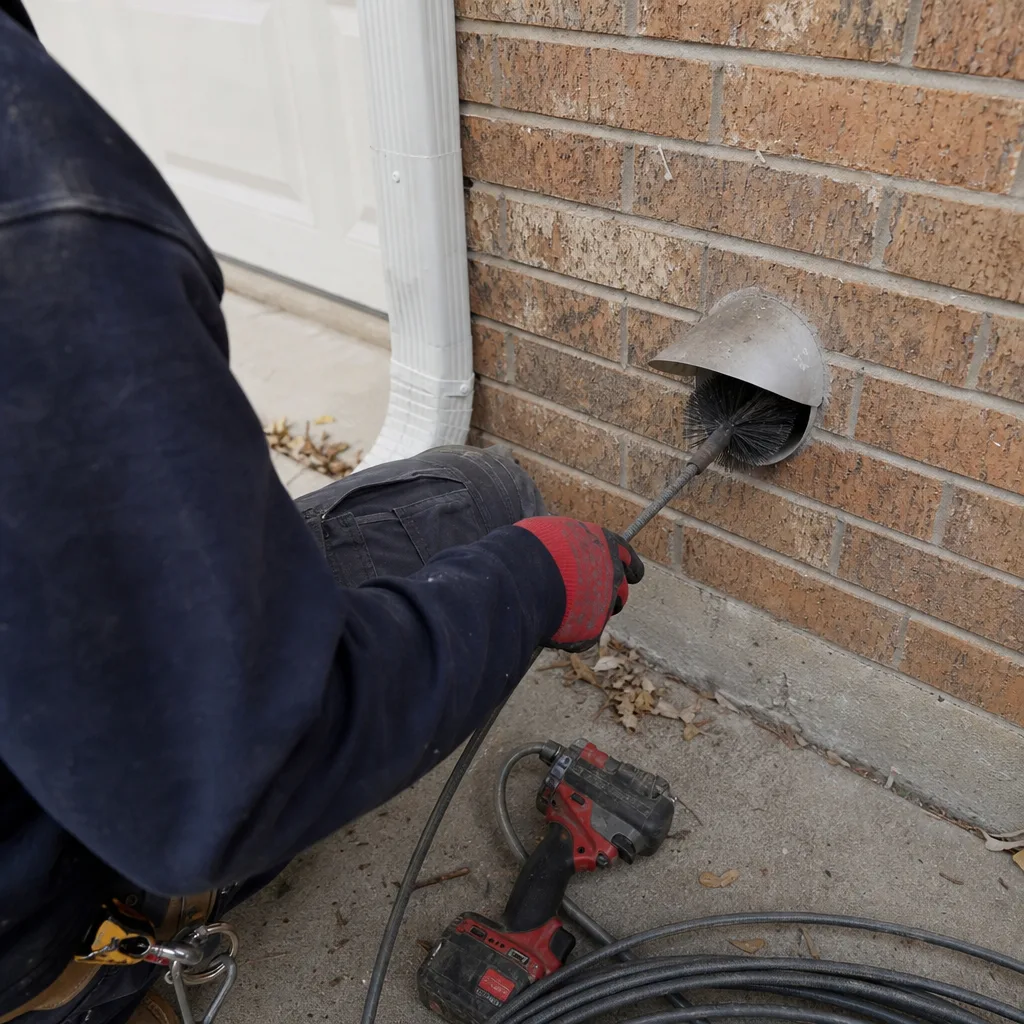
- Neglecting dryer vent cleaning. In Dallas, where dryers run heavily through humid summers, lint accumulation is a genuine fire hazard. Many duct cleaners treat this as an afterthought. Dryer Vent Cleaning in Dallas should be part of your home maintenance schedule.
- Hiring without SOS verification. Twenty minutes on the Secretary of State website filters out dissolved entities, out-of-state shells, and companies with forfeited status that are still advertising.
When to Call a Professional
Schedule a professional duct cleaning assessment if you notice reduced airflow at multiple registers, visible dust emission when the system cycles, musty odors that persist after filter changes, or if your home was built between 2015 and 2025 and has never had documented cleaning. In Dallas’s climate, we also recommend assessment after foundation repair, since structural shifts frequently disconnect duct seams.
CleanRun Air Duct Cleaning Dallas offers free estimates in Dallas. Our technician will perform the full walkthrough described above, present a written price before any work starts, and leave you with no obligation. For more guides & resources on protecting your home, visit our blog, or call (469) 405-6133 to schedule.
Frequently Asked Questions
Whole-system duct cleaning in Dallas typically costs $450 to $850 for homes between 2,000 and 3,500 square feet, depending on system complexity and accessibility. Per-vent pricing below $20 per register almost always excludes returns, the plenum, and the air handler, with upsells pushing final invoices to $600 or more. Call (469) 405-6133 for an exact quote - estimates are free.
Low quotes use per-vent pricing that covers only visible registers, exclude the main trunk lines and plenum where most debris accumulates, and rely on upselling once the technician is inside your home. The legitimate cost of labor, professional equipment, insurance, and documented accountability cannot be delivered at $79. We publish our whole-system pricing in writing before work starts, with no per-vent structure.
Demand a dated photo record of every duct run, before and after, delivered as part of your job file. Without this documentation, you have only the contractor’s word. Our Documented Photo Record, standard on every visit since 2013, shows the interior condition of every run with timestamps. If a contractor refuses or charges extra for photos, they are selling you uncertainty.
For most Dallas homes, every 3 to 5 years is sufficient with standard 1-inch pleated filters changed quarterly. Homes with pets, allergy-sensitive occupants, or recent construction may need more frequent service. The 2015-2025 build cohort in Dallas often needs initial cleaning within the first 2 years due to construction debris. We assess interval recommendations during our walkthrough based on your actual system condition, not a calendar template.
No. Texas licenses HVAC technicians but does not regulate duct cleaning as a standalone trade. This means anyone can legally offer the service regardless of training or equipment. Your protection comes entirely from your own verification: business registration, insurance, equipment specifics, photo documentation, and written warranties.
Demand laboratory testing before paying for any treatment. Visual identification of mold species is unreliable; dark staining can be dust, oxidation, or harmless soil bacteria. A legitimate contractor will photograph the finding, explain your options, and not pressure immediate treatment. We refer customers to independent environmental labs when mold is suspected, and we do not sell remediation services ourselves. This avoids the conflict of interest inherent in diagnosing and treating the same condition.
The Bottom Line
Hiring a duct cleaning contractor in Dallas requires active verification because the state provides none. Ask three questions before booking: what equipment and CFM rating, will every run be photographed, and what does the written warranty cover. Decode low prices by demanding whole-system scopes, not per-vent teasers. Use NADCA membership as one data point, not a shortcut. Verify business legitimacy through Texas SOS records, BBB patterns, and Google review analysis. And insist on a pre-job walkthrough that counts runs, identifies your system, and produces a written price before any equipment moves.
The contractors who resist these steps are telling you exactly who they are. The ones who welcome them, who document their work and put promises in writing, are the ones worth your trust and your money.
Written by Tomas Reyes, Owner at CleanRun Air Duct Cleaning Dallas, serving Dallas since 2013.