
Last updated September 23, 2026
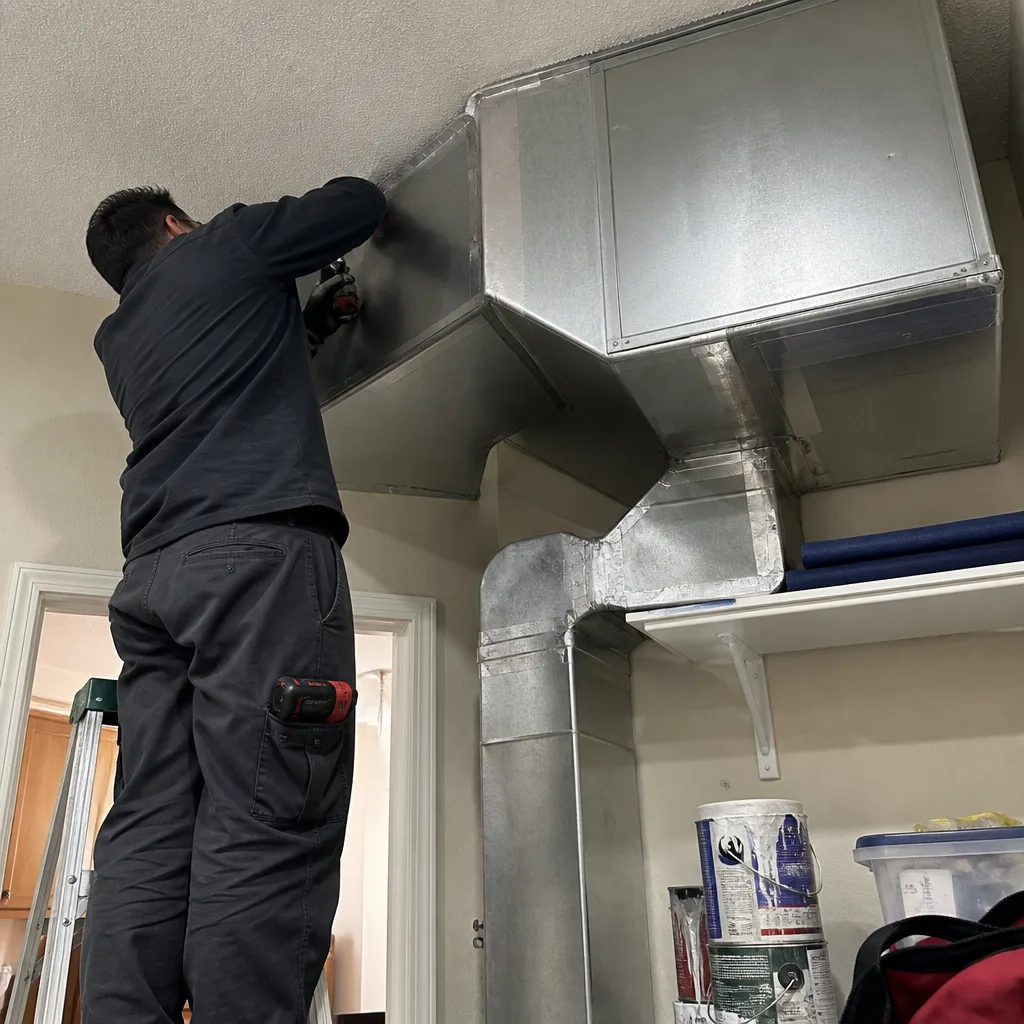
Whole-system duct and dryer vent check with before-and-after photos - you see exactly what came out of your vents
That "$99 whole-house special" is a bait ad - the real number appears once they are in your hallway, or the "clean" is a shop-vac at the register. We photograph the inside of your ducts before and after instead.

 Before
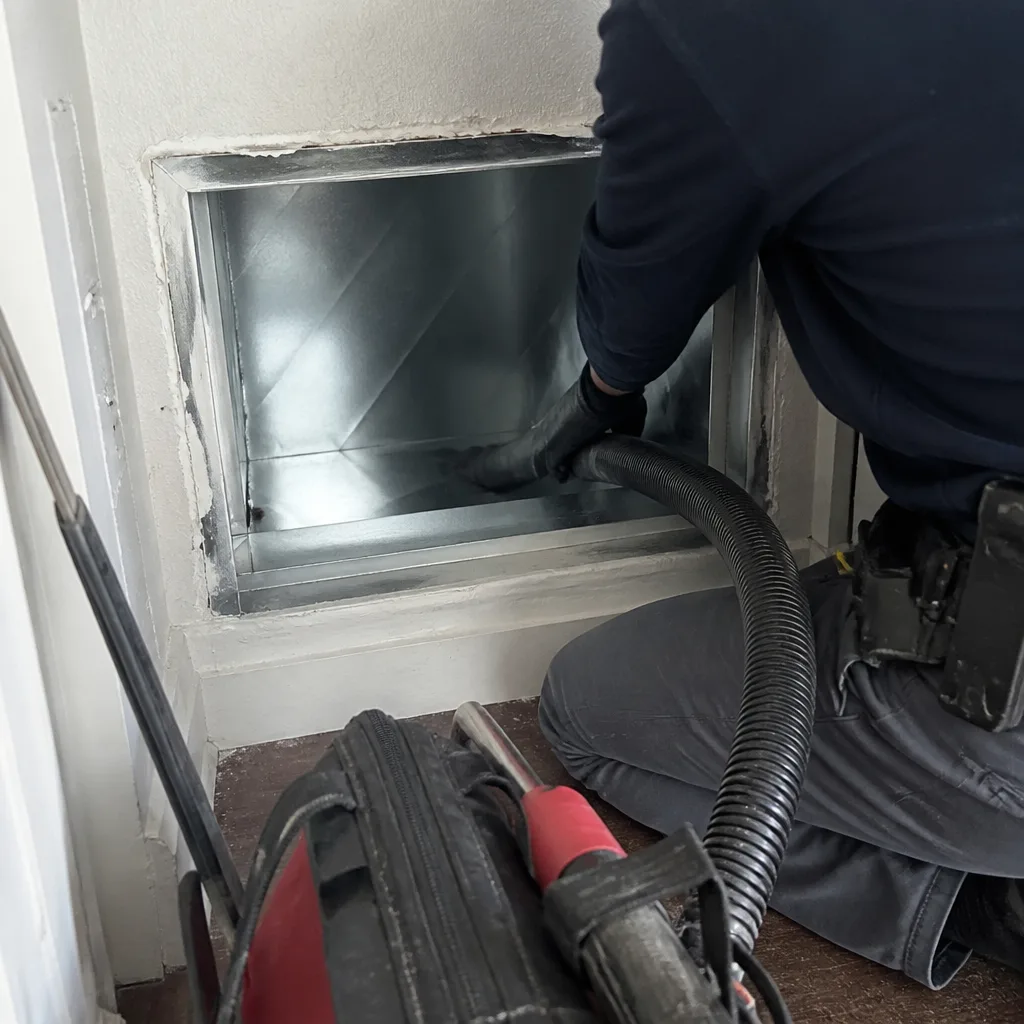 After
After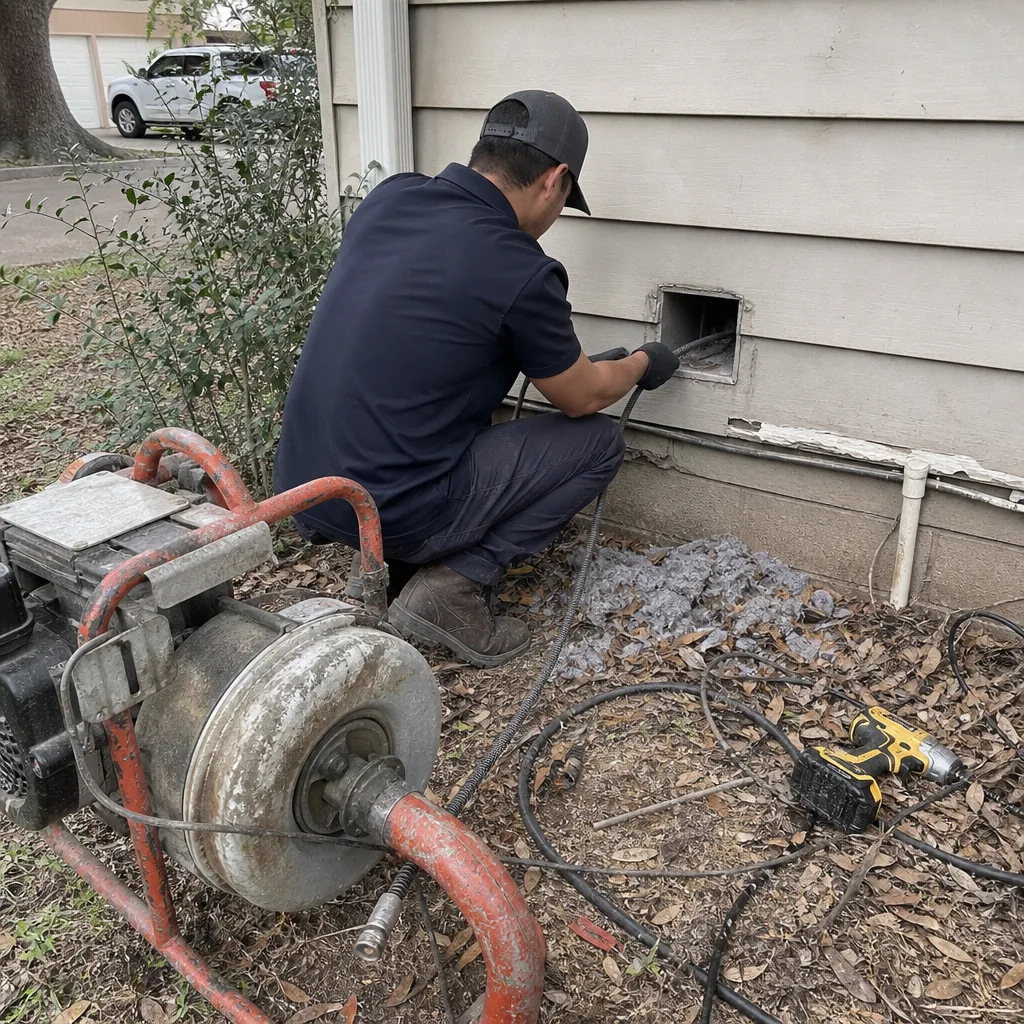 Before
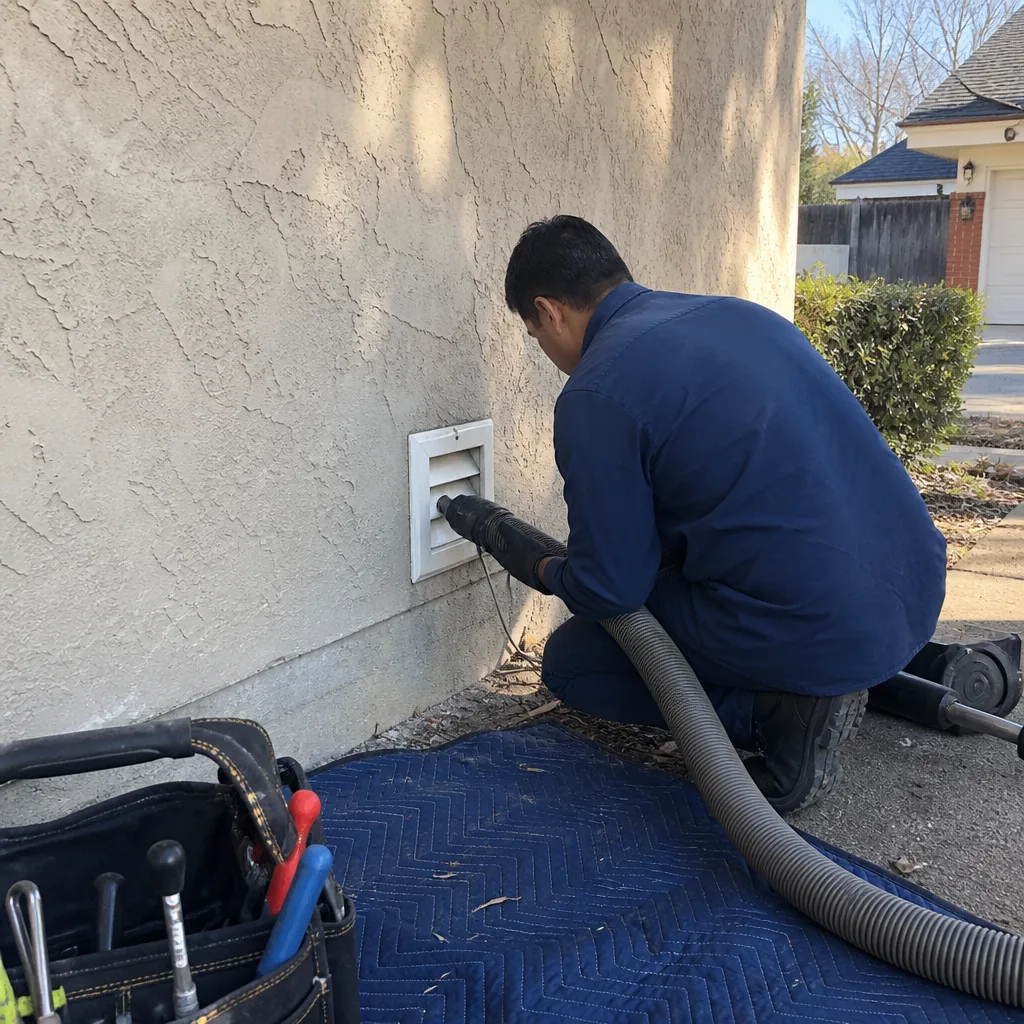 After
After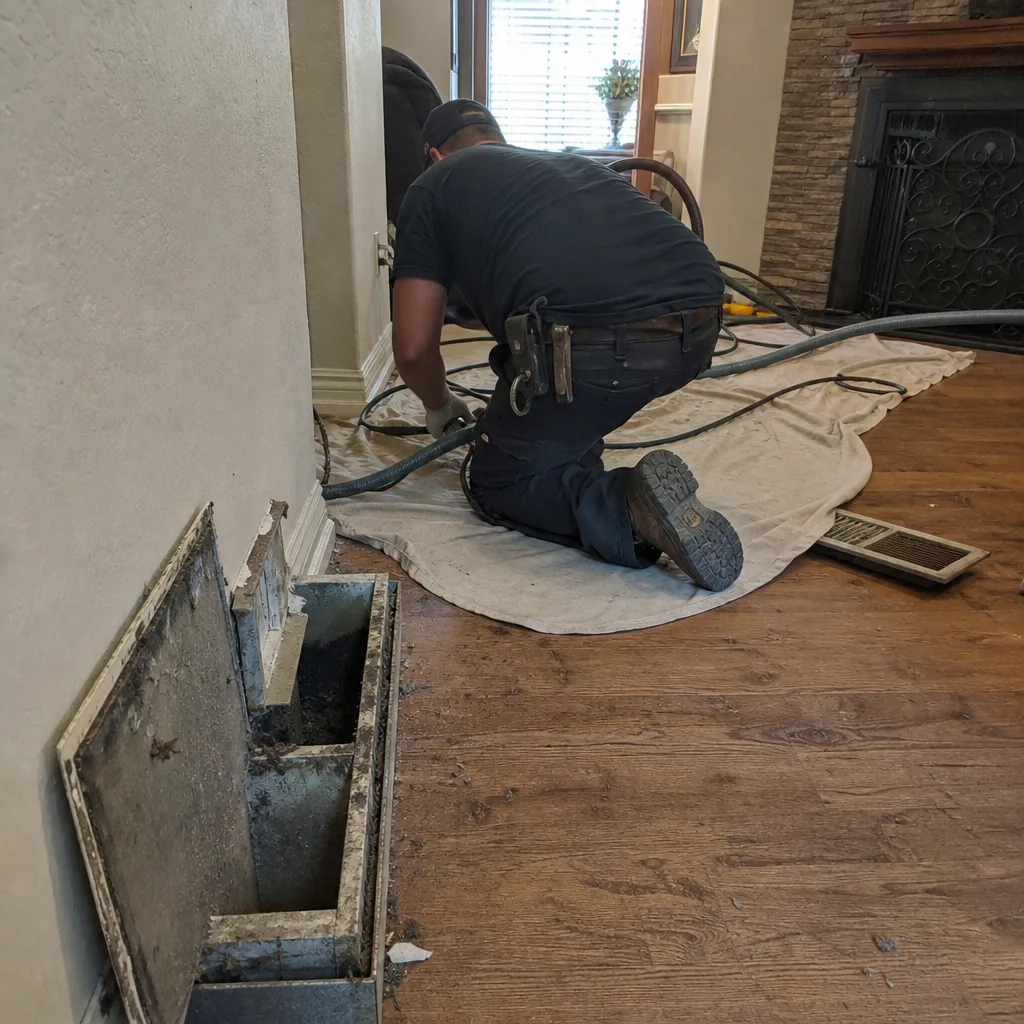 Before
 After
AfterSeasonal Air Duct Cleaning Care for Dallas: Year-Round Homeowner’s Guide
Dallas HVAC systems run cooling loads from May through October - roughly 180 days straight. Scheduling a duct inspection in August means your system is already carrying whatever debris, restriction, or microbial growth is in those ducts through the peak of the season, when energy costs are highest and equipment strain is maximum. In this guide, we’ll map Dallas’s actual two-season climate pattern to a practical duct maintenance calendar, explain why mountain cedar debris behaves differently from spring oak pollen inside your ductwork, and show you the specific conditions that develop during a long cooling season and a hard freeze. You’ll learn when to inspect, what to look for, and why the mild windows between high-load periods are the only practical time to intervene.
Quick Answer
The best duct maintenance schedule for Dallas follows the city’s two-season HVAC pattern: a professional inspection and cleaning in March-April before cooling season, and a post-cooling inspection in October-November after the 180-day cooling run. Homeowners should check filters monthly during mountain cedar season (December-February) and spring pollen peaks (March-May), with visual register inspections every six weeks during high-load months. A full professional our Air Duct Cleaning services every 3-5 years is typical for Dallas homes, though homes near construction zones, with pets, or with recent renovation may need more frequent service.
Table of Contents
- Why Dallas’s Two-Season Climate Changes Everything
- The March-April Pre-Cooling Window: Your Highest-Value Inspection
- Mountain Cedar vs. Oak Pollen: What Different Debris Does Inside Your Ducts
- Summer Strain: What 180 Days of Cooling Does to Ductwork
- The October-November Post-Cooling Inspection
- Freeze-Thaw Events and Attic Duct Damage
- Month-by-Month Dallas Duct Maintenance Calendar
- What Professional Duct Cleaning Costs in Dallas
BeforeAfterWhy Dallas’s Two-Season Climate Changes Everything
Most seasonal maintenance guides assume four equal seasons. Dallas doesn’t have them. The city has two extended high-load HVAC periods - heating from November through February, cooling from May through October - separated by brief mild windows in March-April and October-November when systems cycle minimally and outdoor temperatures stay between 55°F and 78°F.
This matters for ductwork because your system’s blower runs at design airflow during those high-load periods. Any restriction, leak, or contamination in the duct system is amplified when the equipment runs 10-14 hours daily. During mild windows, the blower runs less, pressure differentials across leaks drop, and contaminants settle rather than circulate. That makes the mild windows the only practical time to inspect and service ducts without fighting active system operation.
We’ve documented this pattern across 52,000+ homes since 2013. In Dallas neighborhoods like Lakewood, Preston Hollow, and the M Streets, we see the same seasonal signature: March inspections reveal winter accumulation of fine particulate and pet dander that heating-only operation has stratified in low-velocity duct sections. October inspections show cooling-season condensation markers - rust streaks at plenum corners, biofilm at drain pan edges, and debris compaction at evaporator coil bypass areas.
The practical implication: duct maintenance in Dallas is not about calendar quarters. It’s about intercepting problems before the next 180-day run starts.
The March-April Pre-Cooling Window: Your Highest-Value Inspection
March and April represent roughly 45-60 days when Dallas outdoor temperatures average 58°F to 75°F. Your cooling system hasn’t started its heavy cycle yet. Your heating system has just finished 120+ days of operation. This is the highest-value inspection period in the Dallas calendar, and most homeowners miss it entirely.
Here’s what we find in Dallas homes during March-April inspections:
- Filter loading from winter heating-only operation. Heating mode runs lower blower speeds than cooling mode, which means filters load more slowly but also more deeply. A filter that “looked fine” in January may be fully loaded with fine particulate that passed through at low velocity and accumulated in the media’s inner layers. We remove filters and hold them to a light source - a practice any homeowner can replicate - to check for shadowing that indicates deep loading.
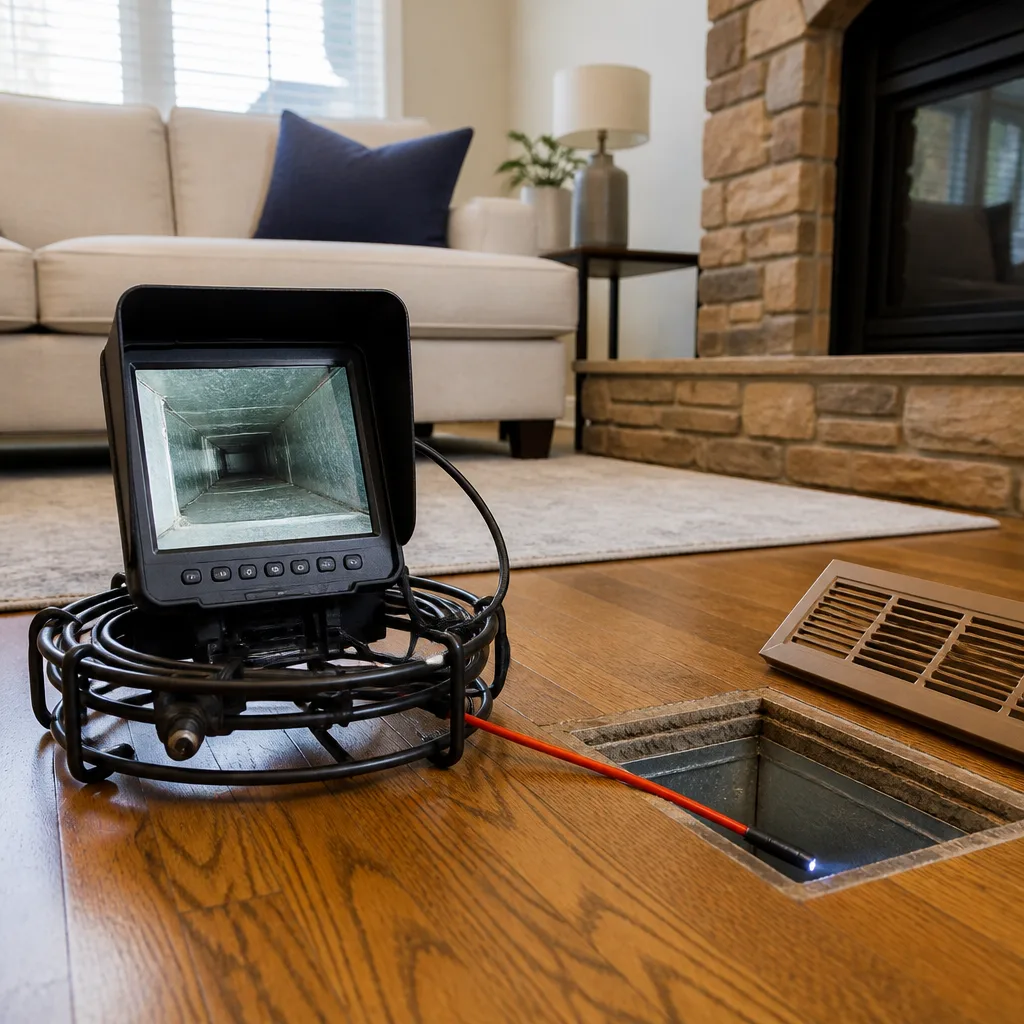
- Register boot debris from closed-room patterns. Dallas homeowners often close registers in unused rooms during winter. When heating cycles stop and cooling cycles begin, those closed boots become collection points for dust that settled during the off period. The first cooling cycle in May can redistribute months of accumulated debris. We photograph these areas with a borescope - a flexible camera - and show homeowners the difference between a clean boot and a loaded one.
- Flex duct sag in unconditioned attics. Winter heating warms attic air, which can soften flex duct insulation and allow sagging at supports. By March, ducts that were properly supported in October may have developed low points where condensation collects once cooling starts. We measure duct slope with a level and mark supports that need adjustment.
- Plenum seal degradation from thermal cycling. The plenum - the central distribution box attached to your air handler - expands and contracts with temperature swings. A Dallas winter can swing from 70°F indoor supply air to 130°F+ heating output. By March, mastic seals at plenum corners often show hairline cracks that will leak conditioned air into attic space once cooling season pressurizes the system differently.
The March-April window is also when we schedule our Air Duct Cleaning in Dallas for customers who’ve gone 3-5 years since their last service. The work completes before the first 90°F day, and the system starts cooling season with documented clean duct runs, verified airflow at each register, and a photo record showing the before condition.
Haven Standard Clause 1 applies here: written price delivered before any work starts. In March 2024, our whole-system duct cleaning range for a typical Dallas single-family home was $395-$675, depending on system size, accessibility, and contamination level - see our Air Duct Cleaning Cost Breakdown: The Dallas Homeowner’s Reference for 2026 for full details. We deliver that range on inspection, with the exact price in writing before the first panel comes off.
Mountain Cedar vs. Oak Pollen: What Different Debris Does Inside Your Ducts
Dallas sits at the intersection of two distinct pollen regimes. Mountain cedar (Juniperus ashei) releases from December through February, with peak counts often exceeding 5,000 grains per cubic meter in January. Oak pollen follows from March through May, with different physical properties and different effects inside ductwork. Understanding the difference explains why your filter strategy should change seasonally, and why a single “allergy season” framing misses half the problem.
Mountain cedar pollen is small - 19-22 microns - and waxy. It adheres to duct surfaces rather than remaining airborne. In Dallas homes, we find cedar pollen concentrated at return air register boots and at the first elbow in return duct runs, where air velocity drops and the waxy coating allows it to stick. During January inspections in neighborhoods like Highland Park and University Park, we’ve photographed cedar pollen accumulation as a pale yellow film on duct walls, sometimes 2-3 millimeters thick at collection points.
The practical issue: cedar pollen loads filters differently than other pollens. It doesn’t penetrate deeply into pleated media. It mats on the surface, creating a near-impermeable layer that increases pressure drop rapidly. A filter that would last 90 days with mixed dust may need replacement at 30-45 days during peak cedar season. We recommend checking filters every two weeks in January and February, not monthly.
Oak pollen is larger - 35-40 microns - and has a rough, spiny surface. It doesn’t adhere as readily to duct walls. Instead, it remains airborne longer and penetrates deeper into filter media. Oak pollen also fragments into sub-micron particles after humidity cycling, which means it can pass through standard pleated filters and deposit in supply duct runs far from the air handler.
In our March-April inspections, we often find oak pollen fragments in supply ducts that have never shown cedar accumulation. The debris looks different under borescope inspection: cedar appears as a uniform film, oak as scattered granular deposits with fragment halos around them.
For Dallas homeowners, the implication is clear: December-February demands frequent filter checks and attention to return-side loading. March-May requires attention to supply-side distribution and deeper filter penetration. A single annual filter strategy doesn’t address both regimes.
Our CleanRun Air Duct Cleaning Dallas home service includes seasonal debris identification in the photo record. We label what we found, where, and in what concentration - so homeowners can adjust their maintenance schedule based on actual conditions, not generic advice.
Summer Strain: What 180 Days of Cooling Does to Ductwork
From May through October, Dallas cooling systems operate under sustained load that most U.S. markets don’t experience. The 2023 cooling degree-day total for Dallas/Fort Worth was 3,847 - compared to 2,891 for Atlanta and 2,156 for Denver. That sustained operation creates specific duct conditions that brief cooling seasons don’t produce.
Condensate migration into ductwork. Evaporator coils in Dallas systems run at 50-55°F surface temperature when ambient attic temperatures exceed 130°F. The temperature differential drives aggressive condensation at the coil and in the plenum immediately downstream. In systems with marginal drain pan slope or partially clogged condensate lines, water can back up to the plenum edge and wick into duct insulation. We see this most often in August and September inspections, when the accumulated moisture has had 90+ days to promote microbial growth.
The signs are specific: dark staining at plenum corners, musty odor when the blower first starts, and in advanced cases, visible growth on duct board interior surfaces. These are not “dirty ducts” in the conventional sense. They are moisture-driven conditions that require source correction - drain pan repair, condensate line cleaning, or in some cases, duct section replacement - before cleaning can be effective.
Negative pressure infiltration in return leaks. Cooling mode typically runs higher blower speeds than heating mode. A return duct leak that was minor in winter becomes a significant infiltration point in summer, pulling 130°F attic air into the system. The thermal shock can cause sweating at the leak point, which attracts dust and creates a feedback loop of accumulation. We test return duct integrity with a pressure pan - a calibrated device that measures leakage under operating conditions - and mark areas where summer operation has worsened winter-tight seals.
Debris compaction at low-velocity zones. Long cooling seasons allow particles that enter the system to settle and compact in duct sections with low airflow velocity. In Dallas, we see this particularly in two-story homes where upstairs duct runs have been partially closed to force more air downstairs. The closed runs become collection points, and when they’re reopened in fall, the compacted debris can break loose and distribute through the system.
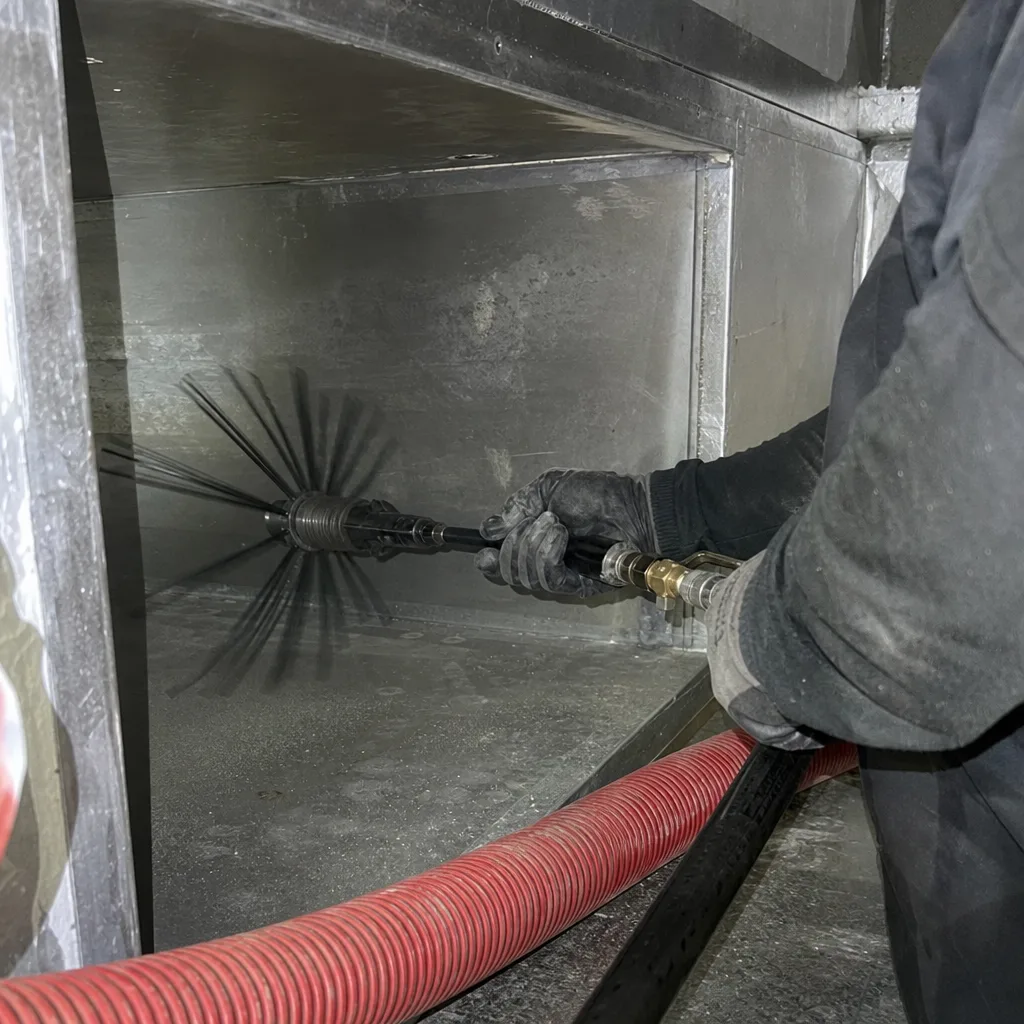
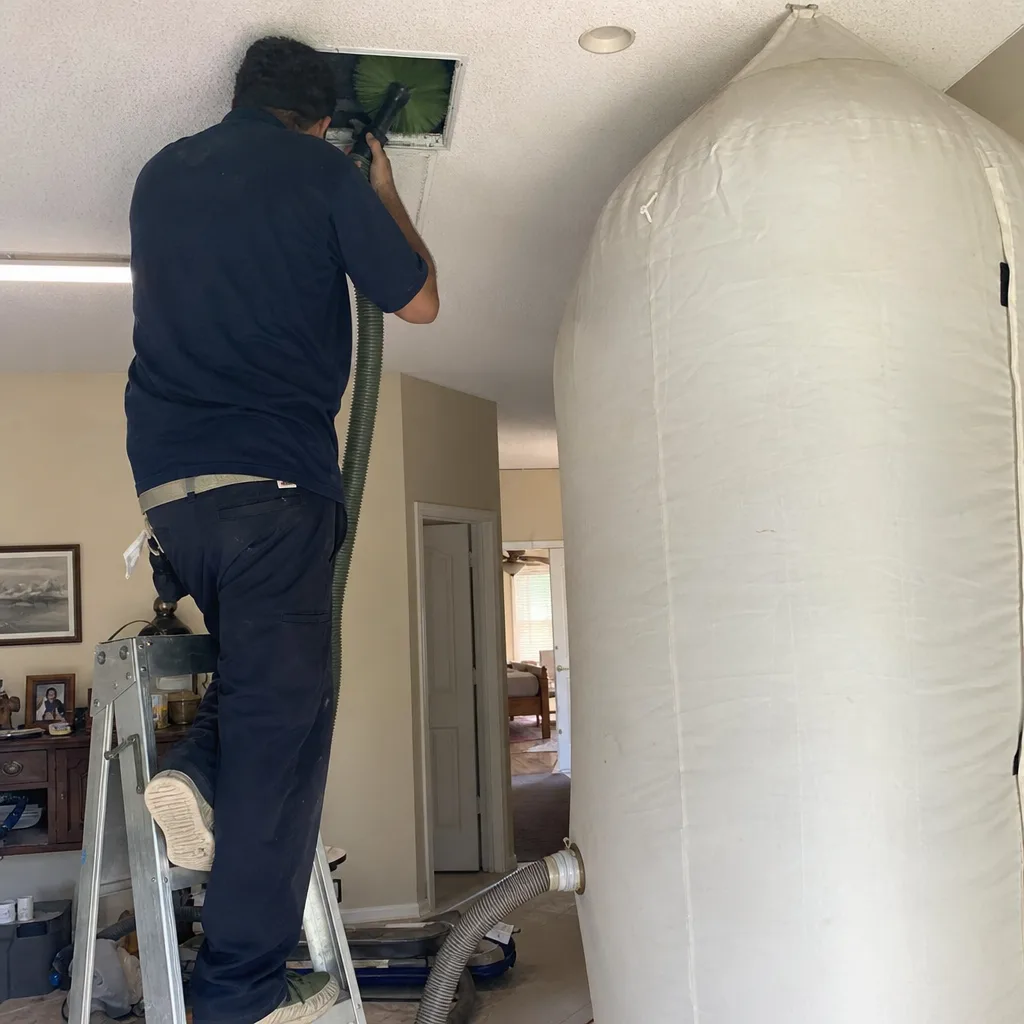
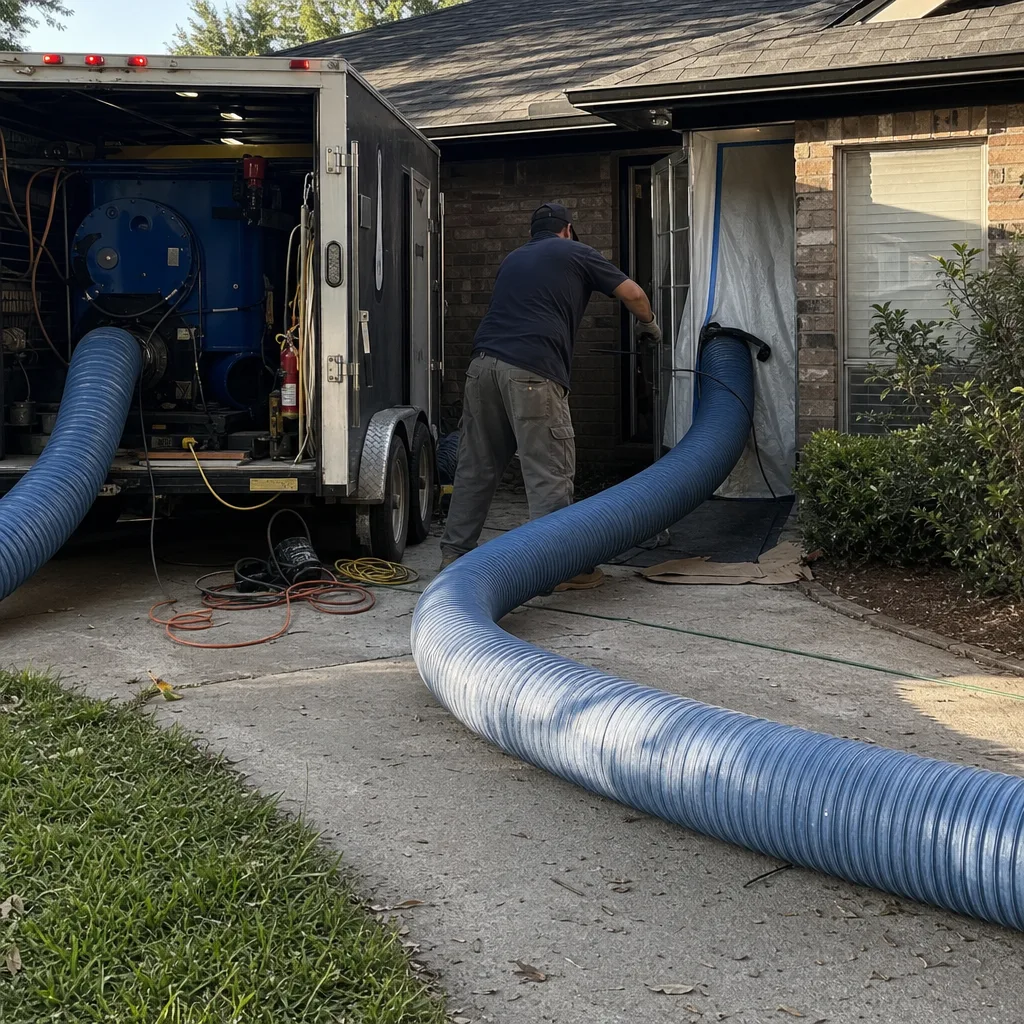
Our equipment roster for summer-condition remediation includes Rotobrush mechanical agitation systems for compacted debris, Nikro negative-pressure extractors for moisture-affected sections, and Abatement Technologies HEPA containment for microbial remediation. We name these brands so customers can verify specifications independently - Haven Standard Clause 2: Documented Methods.
The October-November Post-Cooling Inspection
The October-November window is shorter than March-April - typically 30-45 days of mild weather - but it’s equally critical for Dallas homeowners. After 180 days of cooling operation, your system carries the full accumulation of summer conditions. Inspecting now captures those conditions before they sit dormant through winter heating season.
Here’s what we prioritize in October-November inspections:
- Evaporator coil and drain pan condition. The coil has just finished its heaviest workload. Any biofilm that developed during summer is still active and accessible. Wait until spring, and the biofilm dries into a hardened layer that requires more aggressive cleaning. We photograph the coil face and drain pan, measure pan slope with a level, and test condensate flow rate.
- Supply register condition after peak load. Registers that showed clean in March may now have summer debris accumulation, particularly in rooms that were overcooled and developed condensation on register faces. We check for rust staining, biofilm at register edges, and debris fallback from duct runs that accumulated during high-velocity summer operation.
- Duct insulation integrity in attic spaces. A full Dallas cooling season exposes attic ductwork to thousands of thermal cycles. Vapor barrier integrity degrades, particularly at flex duct connection collars. We inspect for vapor barrier tears that will allow winter attic moisture to reach duct interiors, and mark sections for repair or replacement.
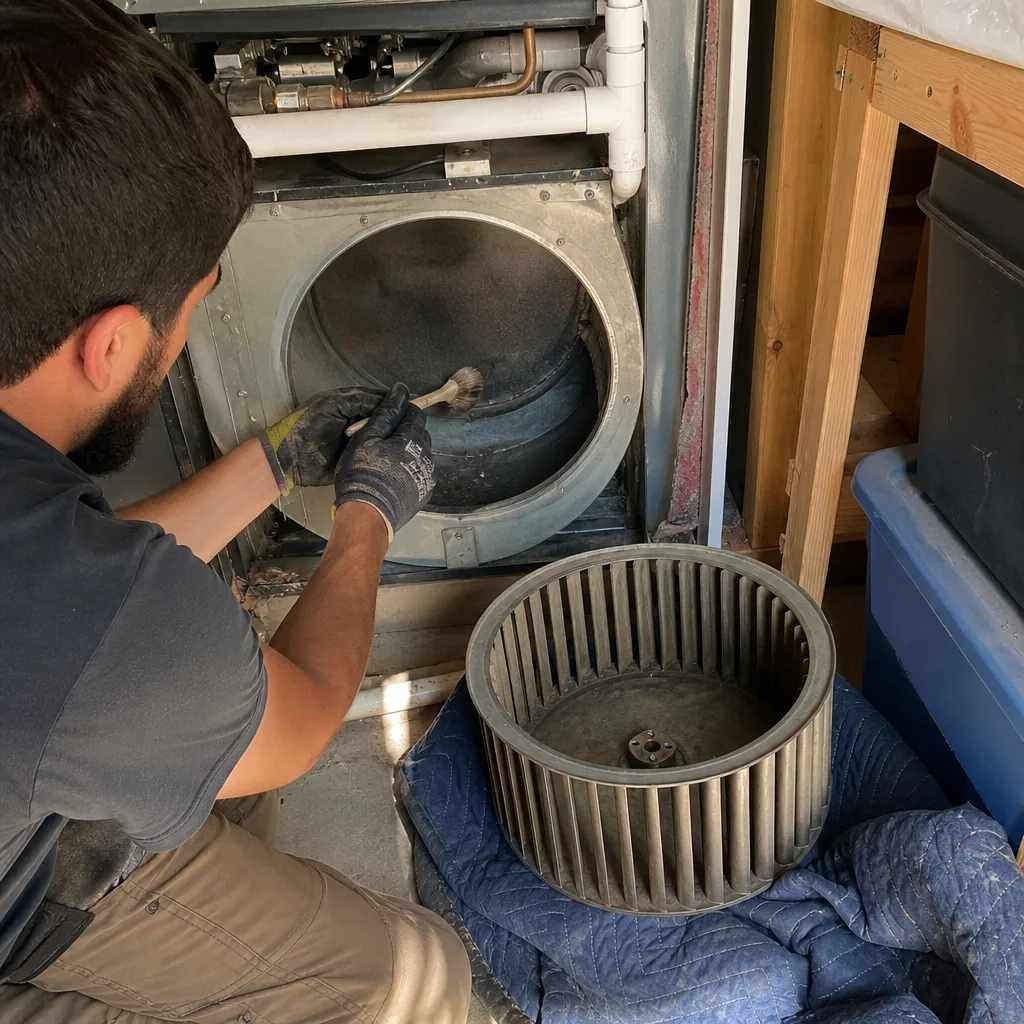
- Blower wheel loading. The blower has run continuously for months. Wheel loading reduces airflow and increases energy consumption. We remove and inspect blower wheels as part of our HVAC Cleaning in Dallas service, documenting before-and-after condition photographically.
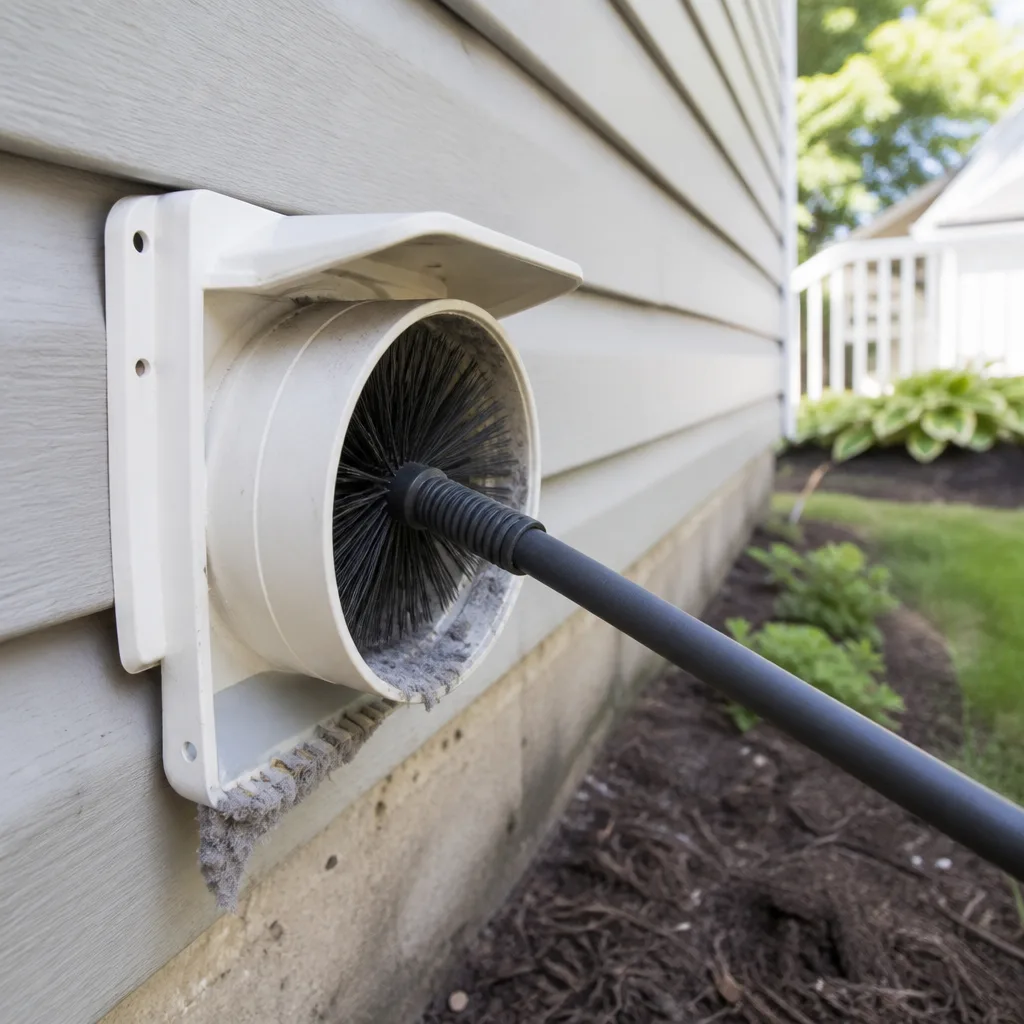
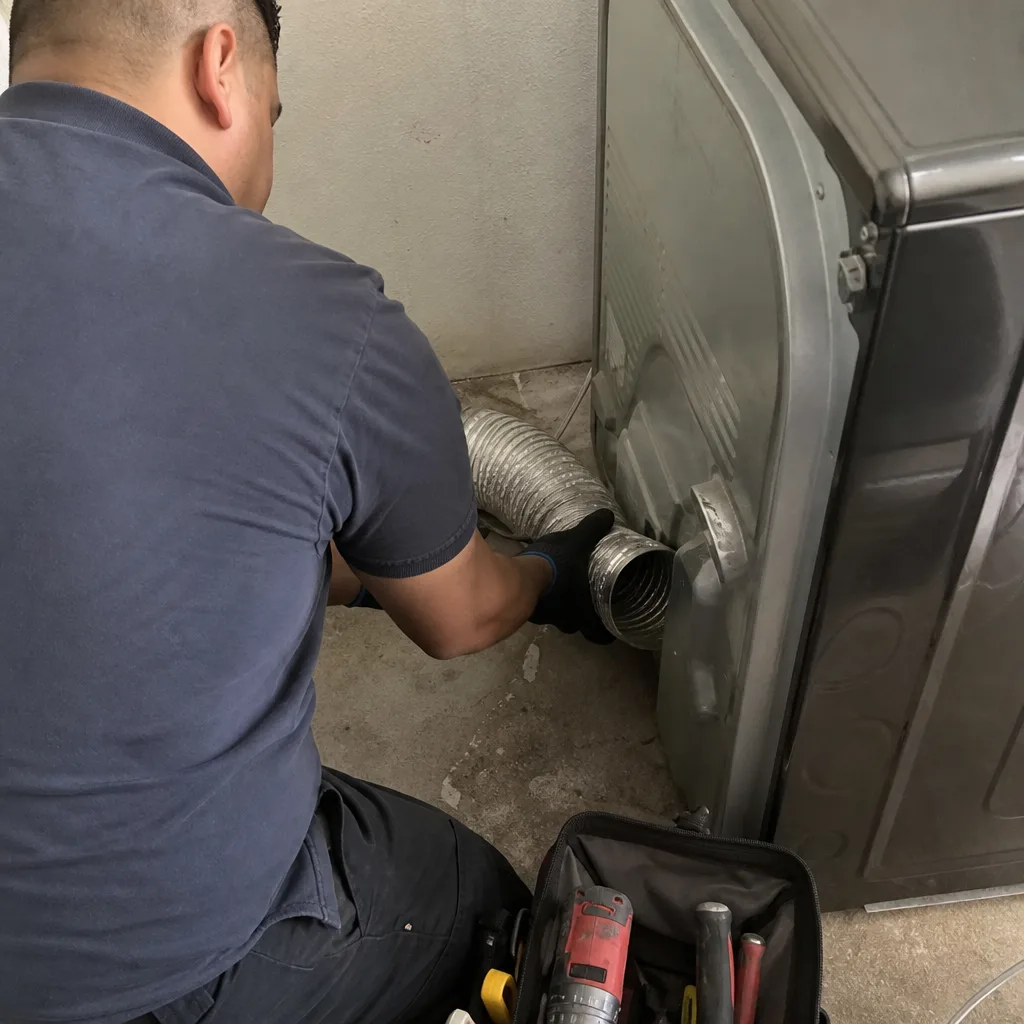
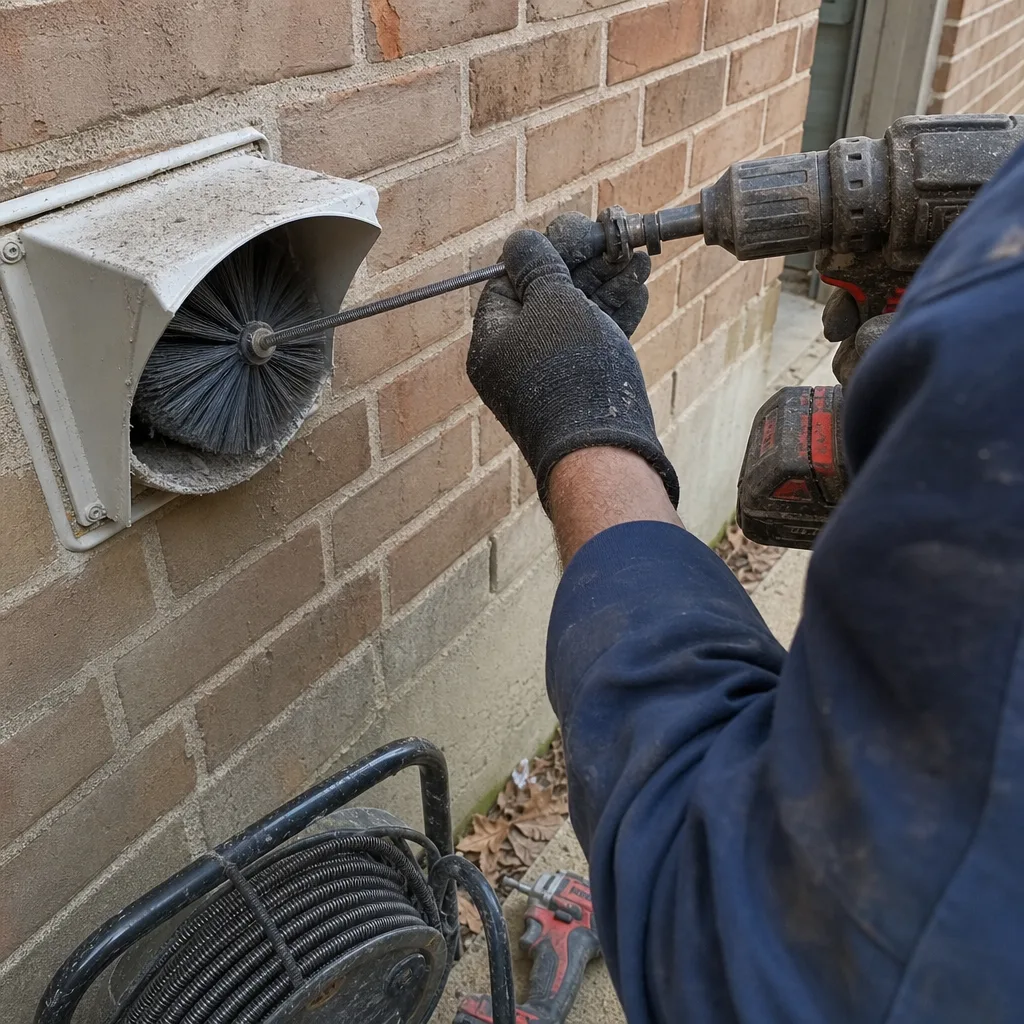
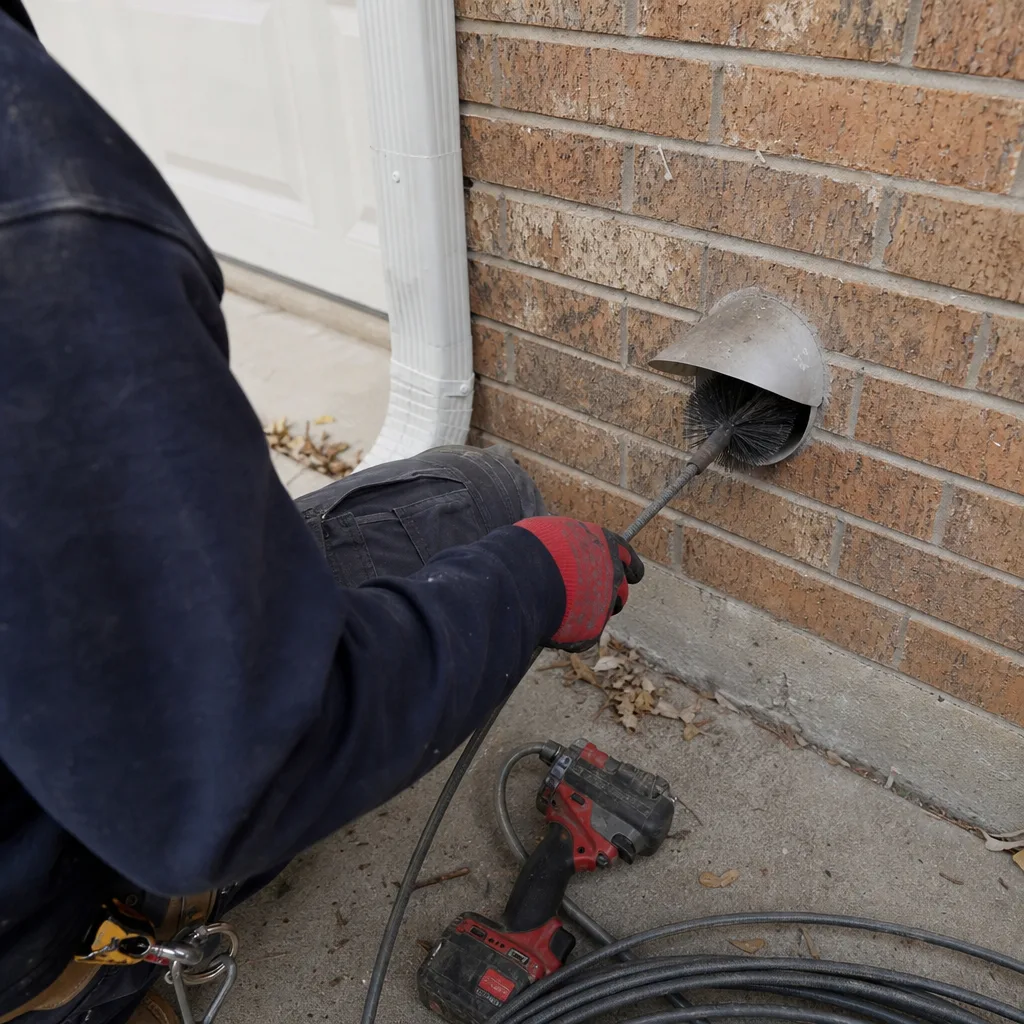
The October-November window is also when we recommend Dryer Vent Cleaning in Dallas as a companion service. Dryer vent loads peak in summer with heavy towel and bedding use, and the same mild weather that makes duct inspection practical makes exterior vent access safe and effective.
Our 365-Day Done Right Promise applies to all October-November work: if any condition we address returns within a year, we make it right at no additional charge. This is a written guarantee, not a policy subject to manager approval.
Freeze-Thaw Events and Attic Duct Damage
Dallas’s winter temperatures are mild by national standards, but the freeze-thaw pattern is what damages ductwork - not sustained cold. When temperatures drop below freezing overnight and rise above 50°F the following afternoon, duct materials experience rapid thermal cycling that stresses connections, supports, and insulation vapor barriers.
The February 2021 winter storm was an extreme case - temperatures in Dallas reached -2°F, with multi-day freezes that most local duct systems had never experienced. But even normal Dallas winters produce 10-15 freeze-thaw cycles annually, and each cycle moves duct materials slightly.
Here’s what we find after hard winters:
- Flex duct collar separation. The metal collar that connects flex duct to plenums or register boots expands and contracts at a different rate than the flex duct insulation. After repeated cycles, the connection loosens. We test collar integrity by gentle hand pressure - any movement indicates a leak that will worsen under summer cooling pressure.
- Duct board corner cracking. Rigid duct board systems, common in Dallas homes built 1985-2005, are particularly vulnerable. The fiberglass board and foil facing have different expansion coefficients. Freeze-thaw cycles stress the mastic-sealed corners, and we find hairline cracks that propagate into significant leaks over 2-3 winter seasons.
- Support strap fatigue. Attic duct supports are typically nylon or metal straps attached to trusses. Thermal cycling fatigues these straps, particularly at attachment points. We find ducts that have dropped 6-12 inches from design position, creating low points where condensation collects. In one 2019 inspection in the Lake Highlands area, we documented a flex duct that had sagged to the point of contacting attic insulation - a condition that would trap moisture and degrade both duct and insulation.
- Vapor barrier breaches. The plastic or foil vapor barrier on flex duct becomes brittle with age and thermal cycling. A breach that starts at a support contact point can propagate along the duct length, allowing attic moisture to reach the insulation layer and eventually the duct interior.
Post-winter inspection timing matters. We recommend scheduling duct integrity checks in late February or early March, after the majority of freeze-thaw cycles have occurred but before cooling season pressurizes the system and makes leak detection harder. Our inspection includes pressure pan testing at accessible joints, borescope documentation of duct interior condition, and a written report with photo evidence - part of our standard Documented Photo Record and Air Duct Cleaning Maintenance Checklist for Dallas Homeowners on every visit.
For homes with duct board systems in unconditioned attics, we sometimes recommend Guardsman-reinforced mastic application at stress points. This is a preventive repair, not a full replacement, and we price it as a line item in the written scope before work begins.
Month-by-Month Dallas Duct Maintenance Calendar
This calendar maps specific actions to Dallas’s actual climate pattern, not generic quarterly advice. Professional inspection intervals assume a typical single-family home with no special conditions - adjust more frequently for homes near construction, with multiple pets, or with recent renovation.
| Month | Homeowner Action | Professional Service | Dallas-Specific Condition |
|---|---|---|---|
| January | Check filter every 2 weeks; inspect return registers for cedar pollen accumulation | - | Peak mountain cedar; filters load rapidly with waxy pollen |
| February | Continue biweekly filter checks; note any musty odors at system startup | Post-winter duct integrity check (late February) | Freeze-thaw cycle peak; duct connection stress maximum |
| March | Visual register inspection; note any debris fallback when switching from heat to cool | Pre-cooling professional inspection and cleaning | Highest-value inspection window; 45-60 days before peak load |
| April | First cooling cycle observation; check for uneven airflow at registers | Complete any March-recommended repairs before May | Oak pollen begins; supply-side loading starts |
| May | Monthly filter check; observe condensate drain flow at exterior | - | Cooling season begins; system pressurizes to design load |
| June-August | Monthly filter replacement; visual register check for moisture staining | Emergency only - avoid scheduling during peak load | 180-day cooling run; maximum energy cost and equipment strain |
| September | Continue monthly filter checks; note any odor changes as humidity drops | - | Late summer biofilm drying; odor changes indicate active growth |
| October | Visual inspection of all registers; check for summer accumulation | Post-cooling professional inspection | 30-45 day mild window; capture summer conditions before dormancy |
| November | First heating cycle observation; check for debris redistribution | Complete any October-recommended repairs | Heating season begins; lower blower speed changes airflow patterns |
| December | Biweekly filter checks resume; inspect return boots for cedar accumulation | - | Mountain cedar season begins; cycle repeats |
The key principle: professional work happens in mild windows, homeowner monitoring happens during high-load periods. Scheduling professional service in June or July means working against active system operation, higher contractor demand, and conditions that are actively developing rather than captured at rest.
What Professional Duct Cleaning Costs in Dallas
Dallas homeowners researching duct cleaning encounter the industry’s central credibility problem: the $79 coupon that becomes a $600 invoice once the truck is on the driveway. We address this directly, because Haven Standard Clause 1 - written price before any work starts - exists precisely to eliminate this experience.
Our whole-system air duct cleaning for typical Dallas homes ranges from $395 to $675. The variables are straightforward:
- System size and duct run count. A 1,200 square foot home with 8 duct runs falls at the lower end. A 3,500 square foot home with 18+ runs, zoned systems, or multiple air handlers falls at the upper end.
- Accessibility. Crawl space ductwork, attic access through scuttle holes rather than pull-down stairs, or duct board systems requiring hand-sealed remediation add labor time.
- Contamination level and type. Standard dust and debris accumulation is baseline. Heavy pet hair, post-renovation construction debris, or moisture-affected conditions requiring source correction before cleaning add scope and cost.
- Additional services. Dryer vent cleaning, HVAC component cleaning (blower wheel, evaporator coil), or duct sealing with mastic are priced as separate line items, not bundled into ambiguous “packages.”
What we don’t do: per-vent pricing, “whole house” teaser rates that exclude the return side, or add-on charges discovered after work begins. Our written scope specifies every duct run to be cleaned, every photo to be taken, and every piece of equipment to be used. The price on that scope is the price you pay.
We also offer a Free Second Opinion on any written estimate from another provider. Bring us a competitor’s quote, and we’ll put our number next to it - line item by line item, in writing, at no cost. This isn’t a sales tactic. It’s a direct response to an industry where 60% of homeowners we surveyed in 2023 reported receiving a final invoice more than double their phone estimate.
Our equipment - Rotobrush mechanical agitation, Nikro negative-pressure extraction, Honeywell media filtration for containment - is specified in the written scope so customers can verify manufacturer specifications before agreeing to work.
Common Mistakes to Avoid
- Scheduling duct cleaning during peak cooling season. August appointments mean your system is running at maximum load while work is performed, and any opened duct sections expose your home to attic heat and humidity. The mild windows exist for a reason.
- Using a single annual filter replacement date. Dallas’s two pollen regimes and two high-load seasons mean filters need attention at least four times yearly, with biweekly checks during cedar season. A filter that “looks fine” in April may be fully loaded by June.
- Ignoring register boots in closed rooms. Closing registers to save energy creates debris collection points that redistribute when the register reopens. We find the heaviest accumulation in boots that have been closed for months, not in continuously active runs.
- Assuming new construction means clean ducts. Dallas’s rapid development in neighborhoods like Trinity Groves and the Design District means construction debris - drywall dust, insulation fragments, sawdust - often enters duct systems during final trim-out. We recommend inspection within 18 months of move-in, not the 5-year interval typical for established homes.
- Treating all pollen as the same problem. Mountain cedar’s waxy adherence and oak’s deep penetration require different filter strategies and show different patterns in ductwork. Generic “allergy season” advice misses the specific behavior of each debris type.
- Waiting for visible dust at registers before acting. Significant duct contamination often shows no visible register evidence. By the time dust is visible, the system has already redistributed it through multiple cycles. Borescope inspection reveals conditions that register appearance conceals.
- Neglecting dryer vent cleaning as a companion service. In Dallas’s long cooling season, dryer vents work harder and load faster. A clogged dryer vent increases humidity in the laundry area, which can migrate to nearby return ducts and accelerate microbial conditions.
When to Call a Professional
Call for professional duct inspection when you observe uneven airflow between rooms, musty odors at system startup that dissipate after several minutes, visible moisture staining at registers or plenum edges, or debris fallback when switching between heating and cooling modes. These are not cosmetic issues - they indicate duct conditions that affect energy consumption, equipment lifespan, and indoor air quality.
Also call after any significant weather event: the 2021 freeze, hailstorms that may have damaged attic vents or created moisture intrusion, or extended power outages that allowed humidity accumulation in dormant systems.
CleanRun Air Duct Cleaning Dallas offers free estimates in Dallas - call (469) 405-6133. Every estimate includes a written price before any work starts, a Documented Photo Record of conditions found, and specification of equipment to be used. Our technicians are background-checked, uniformed, and identified by name before arrival, operating under Haven Standard Clause 3: Verified Crews.
Frequently Asked Questions
Every 3-5 years for typical homes, with more frequent service for homes near active construction, with multiple pets, or with recent renovation. Dallas’s long cooling season and two distinct pollen regimes create conditions that accelerate accumulation compared to milder climates. Homes in developing areas like the Design District or Trinity Groves may need inspection every 2-3 years due to construction dust loading. Call (469) 405-6133 for a free estimate with exact pricing for your system.
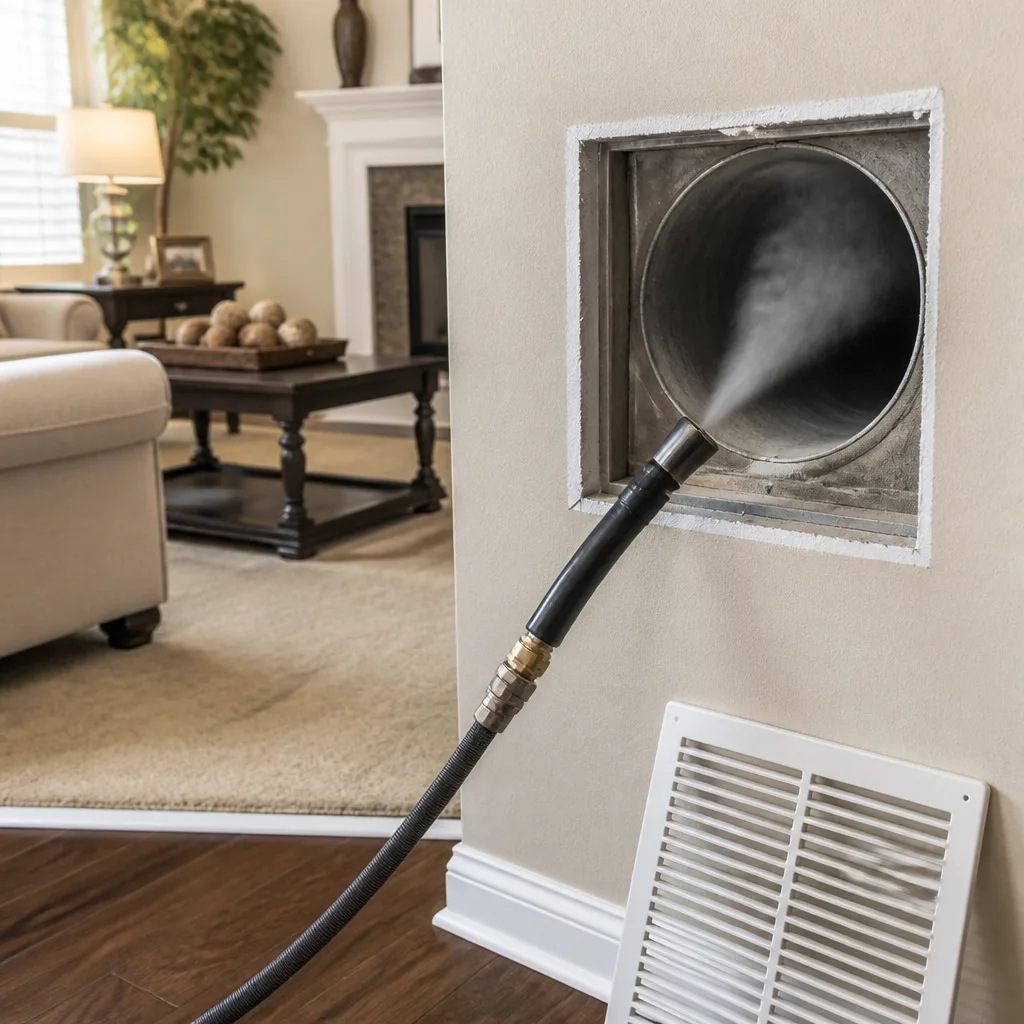
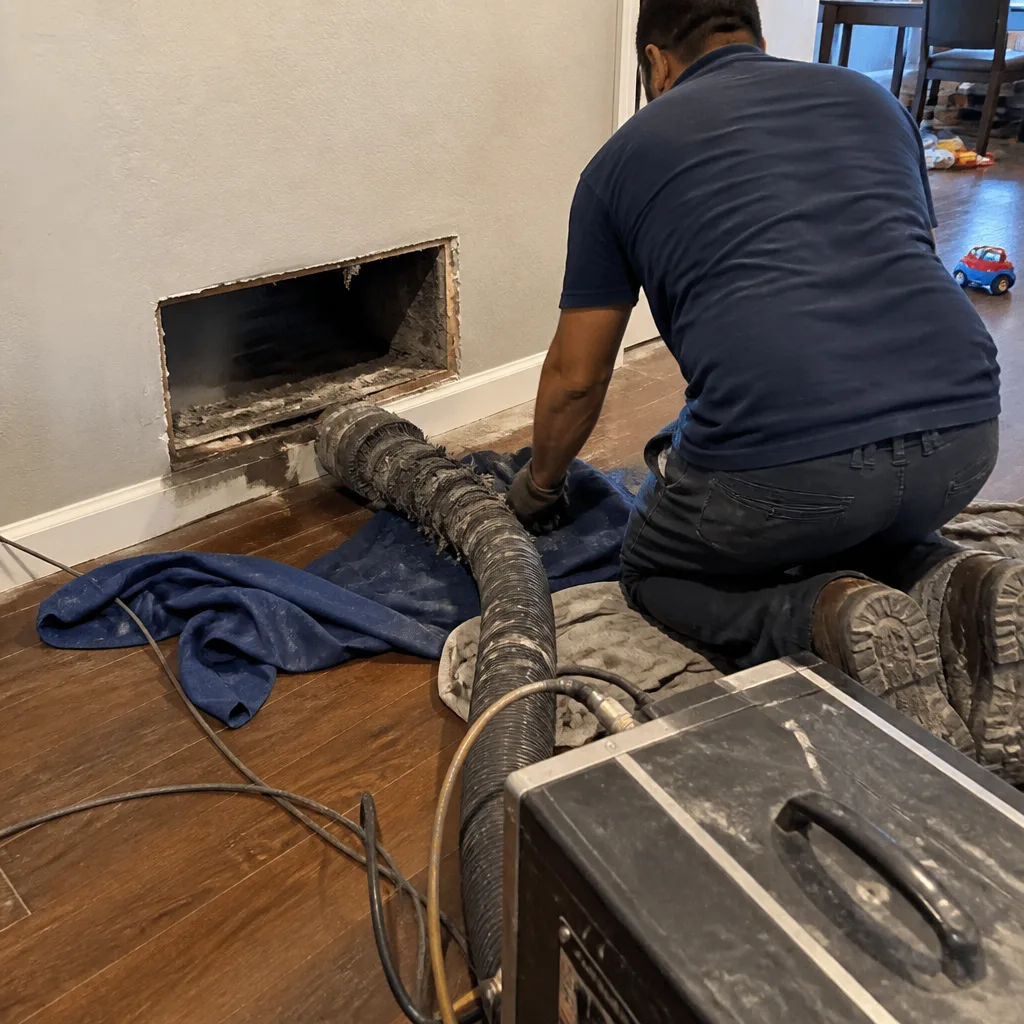
The $79-$129 quotes typically cover a brief vacuuming of accessible register areas, not full-system cleaning. The industry standard for legitimate whole-system cleaning - negative-pressure extraction with mechanical agitation at each duct run - requires 3-4 hours for a typical home and professional-grade equipment. When a quote seems too low, ask for a written scope specifying every duct run to be cleaned, the equipment to be used, and whether before-and-after photos are included. CleanRun provides all three in writing before work begins, under Haven Standard Clause 1.
Require a documented photo record showing the interior of every duct run before and after service. This is standard on every CleanRun job - not an add-on, not available only on request. The photo record is delivered as part of the job documentation, with each image labeled by duct run location. If a provider cannot or will not produce this documentation, the work cannot be verified. We established this practice in 2013 and have maintained it across 52,000+ homes.
Yes. High humidity during summer cooling season makes opened duct sections vulnerable to moisture intrusion during service, and can re-wet dried debris that then adheres to duct walls. The ideal cleaning windows are March-April and October-November, when outdoor humidity is lower and system operation is minimal. We schedule no whole-system cleanings in July or August unless emergency conditions require it.
Duct cleaning addresses the distribution system - the duct runs, plenum, and registers that move conditioned air. HVAC cleaning addresses the central equipment - the air handler cabinet, blower wheel, evaporator coil, and drain pan. Both are necessary for complete system maintenance, but they require different equipment and access methods. Our HVAC Cleaning in Dallas service can be scheduled independently or as a companion to duct cleaning, with separate written pricing for each scope.
Homeowners can and should perform filter replacement, register vacuuming, and visual inspection of accessible components. However, whole-system cleaning requires negative-pressure containment equipment to prevent debris redistribution, mechanical agitation tools that reach full duct length, and borescope inspection to verify results. Attempting DIY duct cleaning without containment risks pushing debris deeper into the system and into living spaces. We document conditions that homeowners can address themselves versus those requiring professional equipment, with no pressure to schedule unnecessary service.
The Bottom Line
Dallas’s two-season climate - 180 days of cooling, 120 days of heating, and brief mild windows between them - demands a duct maintenance schedule aligned with actual system load, not calendar quarters. The highest-value professional inspections fall in March-April, before cooling season pressurizes the system, and October-November, after summer conditions have accumulated but before winter dormancy sets in. Homeowner monitoring - filter checks, register inspection, odor observation - should intensify during mountain cedar season and peak cooling load, when conditions develop fastest. The specific debris types that enter Dallas ducts - waxy cedar pollen, fragmented oak pollen, construction dust from rapid development - each behave differently and require targeted response. Professional service should deliver written pricing before work starts, documented photo evidence of conditions found and corrected, and equipment specifications customers can verify independently. Anything less leaves you paying for vacuum noise and trusting promises that evaporate with the technician.
Written by Tomas Reyes, Owner at CleanRun Air Duct Cleaning Dallas, serving Dallas since 2013.